We have a dream, a vision of what can be, whom it can have an impact on, how far we think it can reach, but have we prepared for the success of even the failure of it?
An idea is great, but how to implement it so it can grow and exceed our expectations is in the preparations. So make sure that foundation is deeply rooted, and that the structure is strong, and that it can cope with expansion and weather any storms.
I am a visualizer, I see the finished product and whom it can serve, but I have not always had the patients to plan or prepare for the building of it, leaving that up to others who were more skilled than me. But, now I am wearing all the hats and that means I must step into all the roles and make sure that I have everything in order so that I can reach those stars.
JOIN ME HERE TO HEAR MY VIEWS ON PREPARATIONS
VIDEO
We are on 4 sites and 14 audio and 2 video platforms as seen here.
So with the tools of preparation in your kit, roots firmly rooted, foundation strong and sturdy, and the structure for the building in view and prepared for expansion, you can reach for those stars and step into your KNOWINGNESS (Knowing what you need to know when you need to know it) because you are prepared to jump, leap, or walk when you need to without fear of everything collapsing around you.
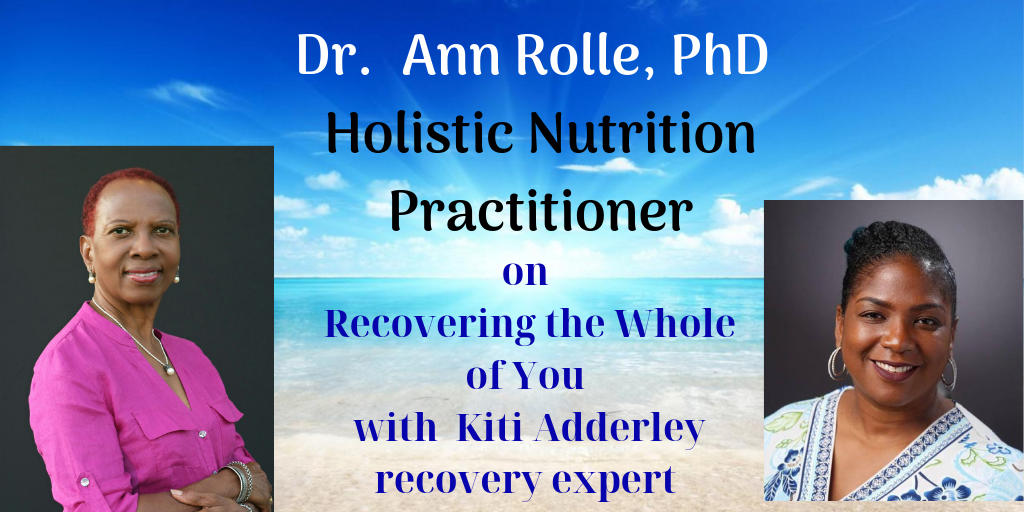
Recovering the Whole of you with Kiti Adderley and her guest Dr. Ann Rolle, on air July 30th
Learn to Eat for Your Metabolic Type.
Ann empowers health-minded, busy women, to manage their hormones, digestive issues, stress, weight, and help them boost energy levels, so that they can be their healthiest, and look and feel their best.
JOIN KITI AND ANN HERE TO LEARN MORE ON METABOLIC TYPES
As a Holistic Nutrition Practitioner. Ann’s interest and passion for natural health began over thirty years ago while working as a Registered Nurse Midwife in the Bahamas. After observing the positive outcome of a natural plant-based diet in active seniors, she initiated this diet in herown family. So intrigued with the importance of nutrition in health, she earned a PhD in Holistic Nutrition, while still working as a Public Health Nurse/Health Educator. Since retirement, Ann delved full time into holistic nutrition and offers clients a healthier alternative in managing lifestyle diseases such as hypertension, diabetes, and obesity. She now helps clients get to the root cause of their health issues and not merely address the symptoms. Today she will share with you how the Metabolic Typing diet can powerfully improve your health. Ann is a Certified Metabolic Typing Advisor, Functional Diagnostic Practitioner Transformational Coach and also a certified member of the American Association of Drugless Practitioners.
I empower health-minded, busy women, to manage their hormones, digestive issues, stress, weight, and help them boost energy levels, so that they can be their healthiest, and look and feel their best.
All of our shows/interviews are done by donation, if you enjoyed this show please support us here with either a one-time donation or subscribe and support onPatreon.
Could your Fibromyalgia Actually be Ehlers-Danlos Syndrome? No
Fibromyalgia symptoms can overlap with autoimmune diseases and other arthritis conditions making it difficult to diagnose. The defining symptoms of fibromyalgia are often associated with other subjective and objective symptoms which occur in combination. The cause of fibromyalgia is considered as complex as its clinical presentation. The exact cause of fibromyalgia is still not well understood but mechanisms that have been suggested include
Abnormal circulating levels of central neurochemical substances
Skeletal muscle abnormalities, structural or functional
It has also been suggested that joint hypermobility (JH) may be associated with the pathology of fibromyalgia.
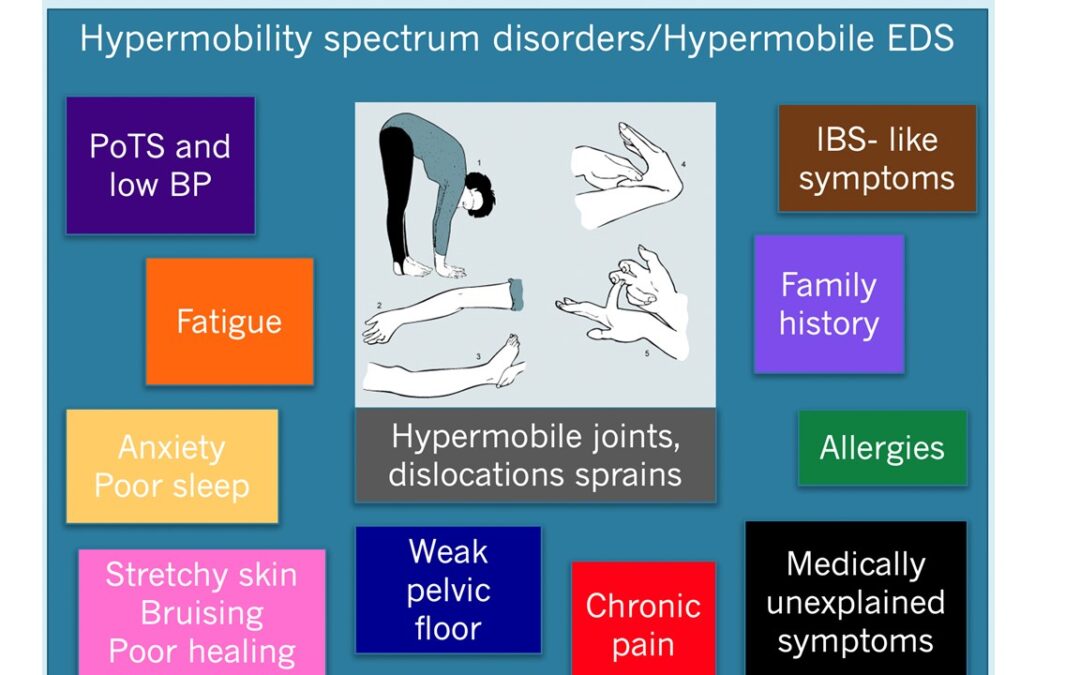
Joint Hypermobility (EDS)
Joint hypermobility is defined as “abnormally increased mobility of small and large joints beyond the limits of their physiological movement.” Joint hypermobility is common among in young females and is seen in about 5% of the healthy adult population. When musculoskeletal symptoms occur in hypermobile people in the absence of any other systemic rheumatological disorder, it is called “hypermobility syndrome.” Joint hypermobility is also a feature of a medical condition called Ehlers-Danlos syndrome (EDS) that is characterized by weakness of the connective tissues of the body.
What makes EDS different from fibromyalgia?
One with this condition has deformed collagen, the glue of the body. Therefore, ligaments and tendons do not have the strength to function effectively to work correctly and muscles must work on overload to compensate for their lack of effectiveness. This causes looseness in the joints that allow for bones to shift. One lives with many subluxations (partial dislocations) and even full dislocations. A simple twist, turn, a hug can all cause things to shift. Unfortunately, this shifting of the structure creates pain that one must learn how to live with. Remember, it IS NOT a Systemic Autoimmune Disorder or a Collagen Vascular Disorder.
The Study
In a study reported in the Journal of Rheumatology, the association between joint hypermobility and primary fibromyalgia was investigated. The study group was comprised of 88 patients (all female, median age 34 years old) with widespread pain clinically diagnosed as fibromyalgia and 90 healthy controls (all female, median age 36 years old). Excluded from the study were
Patients with any other rheumatological or systemic disorder.
Patients with any other inflammatory process or degenerative arthritis.
Anyone who had been receiving medications.
The patients had not been diagnosed with having fibromyalgia by a rheumatologist prior to the study and had not been treated for fibromyalgia.
Study Process
All patients were admitted based on widespread pain lasting longer than 3 months. Patients and controls were then initially evaluated by a rheumatologist. The patients underwent further and more specific evaluation by two other clinicians (who were blinded to the initial evaluation) for the determination of fibromyalgia and joint hypermobility.
Fibromyalgia was assessed in all patients by questioning about common complaints associated with the disease. They were diagnosed with fibromyalgia if they met the American College of Rheumatology (ACR) criteria for the classification and diagnosis of fibromyalgia. Joint hypermobility was considered present in patients based on the Beighton modification of Carter and Wilkinson criteria for joint hypermobility.
Study Results
Fifty-six of the 88 patients with widespread pain initially resembling fibromyalgia met the ACR criteria for fibromyalgia, while 6 of the 90 healthy controls also met the ACR criteria. Patients with or without fibromyalgia were also compared for the frequency of joint hypermobility. The frequency of joint hypermobility was:
8% in patients with fibromyalgia.
6% in patients without fibromyalgia.
Joint hypermobility was also recognized in 10 of the 32 patients with fibromyalgia who did not exactly meet the ACR criteria. The presence of joint hypermobility was more common in this group than in the controls.
Conclusions
The association between fibromyalgia and joint hypermobility is not totally understood. Joint hypermobility may cause widespread arthralgia in patients due to misuse or overuse of hypermobile joints.
Data from this particular study indicated:
That the typical complaints of fibromyalgia were primarily observed in the patients that did meet the ACR criteria.
Some patients who exhibit fibromyalgia symptoms clinically but do not meet the ACR criteria could actually have joint hypermobility misdiagnosed as fibromyalgia.
Joint hypermobility was first featured in rheumatology literature in 1967. Today, joint hypermobility is better understood and more widely recognized. However, further investigation and research are still needed to learn even more about the interaction between joint hypermobility and fibromyalgia.
You have inside you a cloak of gossamer connective tissue that surrounds and supports everything and functions like fiber optics. This tissue is called fascia.
Fascia is a specialized system of the body that has an appearance similar to a spider’s web or a sweater. Fascia is very densely woven, covering and interpenetrating every muscle, bone, nerve, artery and vein, as well as, all of our internal organs including the heart, lungs, brain, and spinal cord. The most interesting aspect of the fascial system is that it is not just a system of separate coverings. It is actually one continuous structure that exists from head to toe without interruption. In this way, you can begin to see that each part of the entire body is connected to every other part by the fascia, like the yarn in a sweater.
Trauma, inflammatory responses, and/or surgical procedures create Myofascial restrictions that can produce tensile pressures of approximately 2,000 pounds per square inch on pain-sensitive structures that do not show up in many of the standard tests (x-rays, myelograms, CAT scans, electromyography, etc.) A high percentage of people suffering from pain and/or lack of motion may be having fascial problems, but are not diagnosed.
Caring for Our Wisdom Keepers. Our Elder Citizens who have contributed to
building our respective society’s, giving birth to the next generation, and
have fought on our behalf in wars on foreign soils, deserve respect, dignity,
quality of life and quality of care as they continue life’s journey into their
advancing years, especially in the over 15,000 of our nationals nursing homes.
JOIN SARA AND PHYLLIS HERE FR A LOOK AT ELDERLY CARE
Phyllis Ayman, an author of the international best-selling book “OVERDUE Quality Care for Our Elder Citizens”, published February 8, 2019, has become known as “The Voice for Eldercare Advocacy”. Her first book “Nursing Homes to Rehabilitation Centers…What Every Person Needs to Know” was published in December 2017.
She
is an Eldercare Advisor/Coach, Advocate, Keynote and Breakout Speaker,
Speech & Language Pathologist and Certified Dementia Practitioner who
brings an insider’s view into the nursing home industry after working in 40+
skilled nursing/short-term rehabilitation facilities for over 25 years.
Phyllis provides the necessary information and valuable unique insight from an insight perspective for individuals and families so they can become more effective advocates when seeking care for themselves or their loved ones in a short-term rehabilitation, traditional long-term or memory care stay within a skilled nursing facility.
As a speech & language pathologist and Certified Dementia Practitioner, Phyllis has been known for her empathy and high standards of care while building and creating innovative programs in an effort to improve the quality of life and quality of care for all nursing home residents. Her specialties have included working with patients having all stages of respiratory disease, including those who are ventilator dependent or have tracheostomy tubes, Parkinson’s Disease, strokes, and other neurologic impairments, Alzheimer’s Disease and other dementias, and impairments in swallowing.
Phyllis has been a regular guest on WGCH AM Greenwich Business Talk Radio since November 2018 and now brings her own guests whom she interviews on the “Darby and Friends” show. She was also interviewed on the Sustainable Success Show and the Amplified Radio Show on the Voice America’s Influencer Channel. She joined the team at HPATV as the host and Associate Producer of “The Golden Years….Understanding Better Living” in April 2019. She has been interviewed on other podcasts and blogcast radio shows, independent TV stations, and has plans to launch her own radio show on the Voice America channel September 5th.
She conducts Webinars and Seminars on Caregiving and “The Sandwich Generation” for national insurance providers, small business and major corporations in the public and private sector, and is a keynote and breakout speaker on Aging and Eldercare in America, Caregiving, Communication, Empathy and Cultural diversity. She serves as a board member of the Massachusetts Advocates of Nursing Home Reform.
All of our shows/interviews are done by donation, if you enjoyed this show please support us here with either a one-time donation or subscribe and support, thank you. and please support Our Forgotten Children’s anthology and help to bring this book in to awareness.
Ever feel like this? You have achy pain all over your body, especially in your muscles. When you sleep — whether it’s five hours or 14 — you never feel refreshed and you’re always tired. Sometimes you forget where you just put your keys or your brain is in a fog. You might feel worse in the morning, when it’s cold or when the weather changes. If this sounds familiar, you may have fibromyalgia, a chronic illness with three main symptoms — widespread pain, chronic fatigue and cognitive trouble.
Fibromyalgia is a complicated illness that’s not well understood. In the past, it was mischaracterized as a mental health disorder. Even today, some doctors wave off fibro symptoms as being “all in your head.” This isn’t the case. Fibromyalgia involves alterations in the function of your nervous system and how your brain processes pain. It also causes a response in your hormone and immune systems that can lead to many different changes, including neuroinflammation or inflammation in the tissues in your nervous system.
Many doctors refer to fibromyalgia as a “hypervigilant” or “fight-or-flight” illness because your nervous system stays in alarm mode all the time. If someone in your family has fibromyalgia, you’re more likely to have it. If you’ve experienced trauma, such as sexual or physical abuse, a bad car accident or combat, you also have a higher chance of developing fibromyalgia.
It’s common to have fibromyalgia and other chronic conditions as well as mental illness, though fibromyalgia is not a mental health condition itself. These conditions could include:
Currently, there is no cure for fibromyalgia. Though fibromyalgia can be debilitating, there are many treatments to try. These might include:
Medications
Exercise programs
Pain management regiments
Cognitive-behavioral therapy (CBT)
Natural and integrative medicine therapies
Lifestyle changes
It can take a while to find a combination of treatments that help. Researchers are working to find the cause of fibromyalgia, a potential cure and additional treatment options.
Who Gets Fibromyalgia?
An estimated 3 to 6 percent of the U.S. population lives with fibromyalgia, and it’s considered the most common chronic pain condition.9 Fibro is twice as common in those born female.10 Doctors believe women get fibromyalgia more often because of the construction of their nervous system. Male and female nervous systems operate differently because of the variations in male and female genes.2
People of all ages can get fibromyalgia. However, fibromyalgia is most common among young adults in their 20s and 30s. Today, doctors more frequently make the diagnosis in teenagers, but many still go undiagnosed until much later.7Fibromyalgia also occurs among all ethnic groups.
Where Does Fibromyalgia Come From?
We don’t know what exactly causes fibromyalgia. In the past, doctors found the symptoms of fibromyalgia mysterious — their patients didn’t look sick but they reported constant pain and fatigue. Doctors couldn’t find a source of the pain, so they dismissed their patients as having a mental health condition or said their symptoms were “all in their head.” Unfortunately, there are still doctors who may dismiss your symptoms because they don’t understand the latest research on the condition.
In their work to understand fibromyalgia, researchers first thought it was an autoimmune disorder. Autoimmune diseases occur when your body attacks healthy cells. However, that’s not what scientists observed in fibromyalgia. People with fibromyalgia had symptoms in their nervous system and their immune system that couldn’t be explained by any other chronic illness or mental illness. Fibromyalgia is best understood as a pain processing disorder in your nervous system caused by your fight-or-flight alarm system going off all the time. Fibromyalgia also impacts the immune system, and it is likely passed through families.
The Nervous System
Your nervous system, made up of several different systems, is a complex web that regulates the body’s functions. Fibromyalgia affects your autonomic nervous system. This controls the “automatic” functions in your body thanks to two separate branches — the sympathetic nervous system and parasympathetic nervous system.
Your parasympathetic system takes charge when you’re relaxed. Your muscles loosen up, the brain calms down and the digestive process begins. Your sympathetic nervous system revs up when it feels you are under attack. It activates your body’s fight-or-flight mode, tensing your muscles, pumping up your heart rate and increasing your attention and awareness.
When your hypothalamus, a part of the brain that coordinates your autonomic nervous system, senses danger, it sends a signal to the sympathetic nervous system to prepare the body to react: fight, flight or freeze. In a healthy nervous system, once the perceived threat ends, the hypothalamus signals the parasympathetic nervous system to take back over and calm the system back to a resting state. In fibromyalgia, however, your alarm system gets stuck in the “on” position.
Fibromyalgia causes you to stay in that hypervigilant state much longer than you’re supposed to. As a result, you experience chronic muscle tension (pain), trouble getting good sleep, issues with digestion and an overall sense of fatigue.7
In addition, fibromyalgia affects the complex systems in your brain that process pain. The systems in your spinal cord designed to reduce pain don’t work well if you have fibromyalgia and the ones that amplify pain work overtime. Pain that wouldn’t bother most people is amplified when you have fibromyalgia.6 Scientists can see from neuroimaging brain scans that people with fibro process sensory information, especially pain, differently than the average person.10
Trauma
When you hear “fight-or-flight response,” your mind might automatically think of trauma. Many fibro patients report the sexual or physical assault at some point in their life, often that happened during childhood. There’s also a strong overlap between fibromyalgia and the trauma-related mental illness post-traumatic stress disorder (PTSD). Nearly half of men diagnosed with combat-induced PTSD also meet the criteria for a fibromyalgia diagnosis.8
The link between trauma and fibro, however, isn’t so straightforward. Fibromyalgia tends to develop when you experience high amounts of psychological stress during trauma or a physical illness — and this is common in any traumatic situation. Fibromyalgia also can run in families (more on this later), which means your parents pass the genes on to you. However, having a gene for fibromyalgia doesn’t necessarily mean you will get the condition. You may never get fibromyalgia and never know you carry the gene. But if you have a gene, you have a much higher risk of developing the condition.
Trauma like abuse, wartime combat, a bad car accident or violence, can be enough to trigger your fibromyalgia. It’s like a one-two punch. You have a genetic predisposition for fibromyalgia. Then a trauma triggers the gene to express itself and you develop the condition. The timing of when you experience a trauma also seems to factor into whether you will get fibromyalgia, though it’s unclear why. Women who experience trauma in their adolescence seem particularly prone to having fibromyalgia.
Not everyone who has survived trauma will develop fibromyalgia, and you can still have fibromyalgia even if you can’t identify a traumatic experience in your life. Other incidents, like bad auto accidents where you experienced whiplash, have a strong connection to fibromyalgia. If you have another chronic illness, like Lyme disease or chronic fatigue syndrome, that can also trigger fibromyalgia.7
The Immune System
Fibromyalgia also affects your immune system. It’s not an autoimmune disorder — it doesn’t cause your body to attack healthy cells — but it does cause immune system dysregulation. When immune cells become inflamed, they send a signal that something is wrong in the body. With fibromyalgia, your inflammation signals aren’t firing right — they send the wrong signals at the wrong time to the wrong places. This is why sometimes, especially when your fibro flares, you feel achy like you have the flu. Researchers have confirmed that inflammation can occur in the brain and nervous system as well.1
Genetic Causes
There’s evidence that fibromyalgia runs in families. If your parents, siblings or children have the condition, you’re more likely to be at risk. Researchers haven’t identified all the genetic markers linked to fibromyalgia yet, however, they have identified differences in genes linked to the pain control systems.
They have found that fibromyalgia patients often have a gene related to a dysfunctional enzyme — a substance in the body that facilitates chemical reactions between cells. This enzyme should break down the chemicals involved in the fight-or-flight process, but something goes awry when you have fibromyalgia. You’re also more likely to have genes programmed for abnormal receptors in the fight-or-flight or pain nerves.
Other Research
Researchers continue to discover new information about fibromyalgia. For example, they’ve found that fibromyalgia could be related to an area of your brain called the default mode network (DMN). The DMN helps us reflect on our lives, and is typically most active when you’re at rest or daydreaming.
When you’re doing a goal-oriented cognitive task, the DMN is usually quieter. Using brain scans, researchers found that the DMN in patients with fibromyalgia seems to be online more than usual during cognitive tasks. It was caught communicating with the insula, another part of the brain that influences sensory processing like pain when it should be quiet.10
Long-Term Outlook
Fibromyalgia can be a serious illness. Many have such severe symptoms it impacts their ability to go to work or school or even complete basic tasks around the house. When you have fibromyalgia, you’re twice as likely to be hospitalized versus someone without the condition.3 Approximately 30 percent of those diagnosed with fibromyalgia qualify as disabled.4 Your experience may be different.
It can also be expensive and difficult to afford the care you need with fibromyalgia. Treating the disease often requires experimenting with different medications and doctors, which can be costly even if you have insurance. One 2007 study found that those with fibromyalgia typically spent between $100 to $1,000 a month out of pocket for medical costs related to the condition. Another study revealed that fibromyalgia patients paid nearly $1,500 for alternative treatments and spent a total of about $5,300 annually out of pocket for all medical expenses.4
Despite the lifelong challenges of living with fibromyalgia, it’s a misconception that nothing can be done to help. There are many treatment options for managing your symptoms even though it can be hard to find what will work for you. However, many people find they do better and experience some improvement or relief from their symptoms with the right combination of treatments.5Fibromyalgia is a painful and frustrating condition, but there is hope.
Related: Here are some ways people describe what it’s like living with fibromyalgia.
The Mighty’s Condition Guides combine the expertise of both the medical and patient community to help you and your loved ones on your health journeys. For the fibromyalgia guide, we interviewed five medical experts, read numerous studies and surveyed 13,997 people diagnosed with the condition. The guides are living documents and will be updated with new information as it becomes available.
The Mighty’s Condition Guides combine the expertise of both the medical and patient community to help you and your loved ones on your health journeys.










You must be logged in to post a comment.