Ignite your heart and soul with Sara Troy and her guest Deron Essex, on air from February 4th.
Deron Essex , Grounded Flight LLC. Spirituality, Mindset, Wellness, Mindfulness, Abundance, Transcendence coach. How To Transcend Your Traumatic Past, Become More Confident, and Step Into Your Divine Power.
In this conversation, Deron shares his life and how he has overcome the trauma from his past and stepping into his divine power and how he teaches others to do the same. He will share his tips and strategies and you will walk away from this conversation feeling powerful, unstoppable, and invincible.
JOIN SARA AND DERON HERE FOR A TALK ON TRAUMA AND DIVINE EMPOWERMENT.
Deron Essex is an international life coach, keynote speaker, and workshop facilitator. He helps people to heal themselves from their trauma, and wounds from the past, recreate their self-image to be a more confident and braver, divine version of themselves. He also helps people start their own profitable coaching business. His mission in this lifetime is to help 1 billion people overcome their past and live the life of their dreams
My area of expertise is helping people to gain inner peace and happiness in their present life, by teaching them how to deeply and truly heal their past and reprogram 90% of their mind by installing empowering positive mental and habitual patterns into their daily lives.
I have a 13-week program, that helps people to heal every single traumatic wound and unresolved issues from the past in 6 weeks and in the last 7 weeks of the program I teach them how to recreate their self-image into the version of themselves that they truly desire the most and program all of their negative thinking and limiting beliefs to schedule a call with me go here to see if you are good fit go here:
Sara’s View of life with Sara Troy on air from February 4th
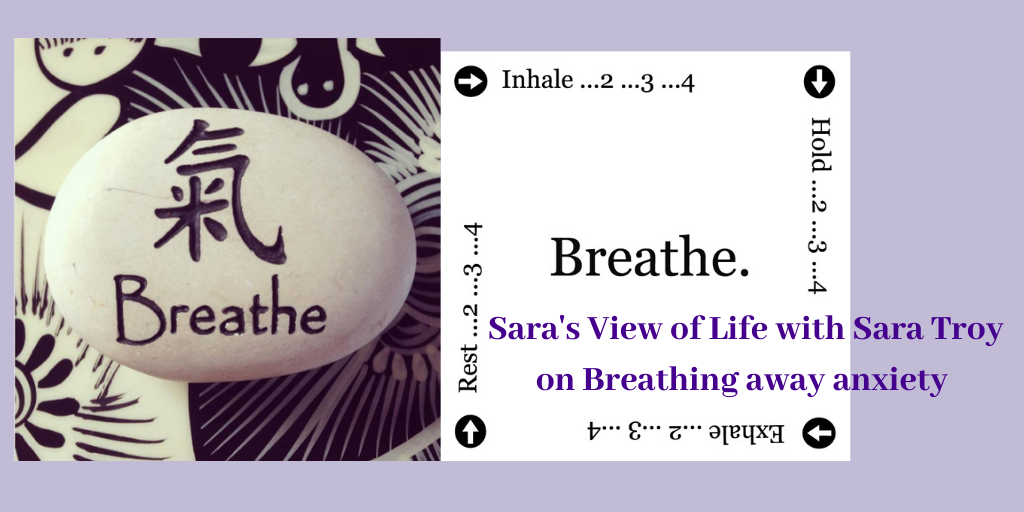
Being a Mum can have some very anxious moments and ones where we need to be calm and collected. That can be easier said than done when facing a crisis, but with the right technics like taking a breath, we can be centered and handle the situation in the now.
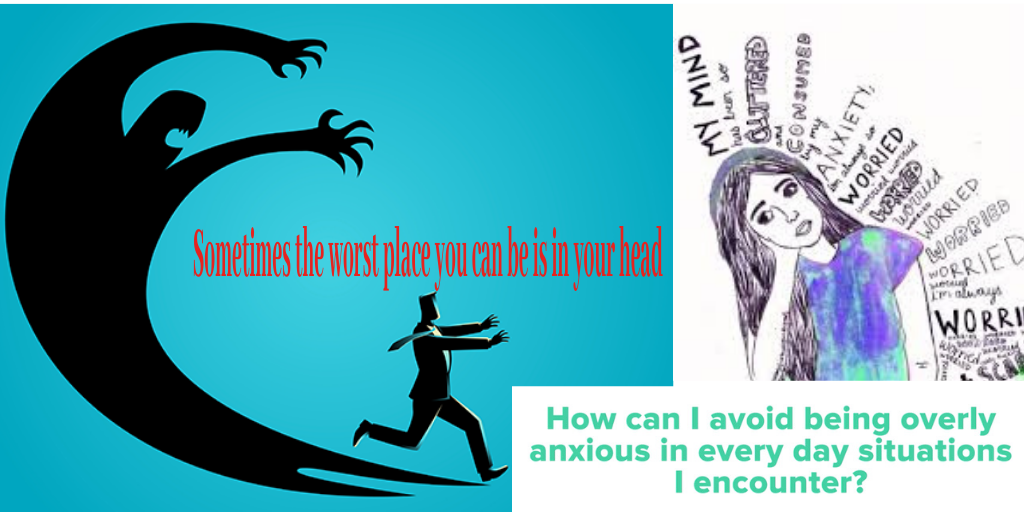
I know what it is like to feel their pain, worry over their own anxiety and want to take it all away from them, but we can’t all we can do is be their strength and help them through it.
Taking a breath, a 5-minute break or a momentary breath really helps one center one’s self in order to deal with the situation. Breathing gives us clarity and focus and with that, we can face anything head-on.
I share my breathing approach over the years when facing things with my own children. Join me here.
At the end of an otherwise successful interview for a senior position at a new company a candidate was asked, “what motivates you?” Without barely a moment’s hesitation and with a deadpan delivery, he replied “sex, money, and fear.” The room erupted into laughter; it may have cost the candidate the opportunity, but was the answer, in fact, flippant or profound? What is it that motivates us, and why do people decide to do the things they do?
People Do Things to Fulfill Their Needs
From the beginning of history, our ancestor’s primary concern came from the necessity to survive and to find basic needs. Likely, all their key decisions were driven by the necessity to hunt for food (preferably without dying in the process), to find shelter and to have a community to interact with.
Nowadays, survival – or meeting our basic needs – is becoming less of an issue and instead of planning our days around hunting strategies we are concerned about our commuting journey, all the paperwork on our desks, meetings we have to attend, and all the decisions that we will have to make that day that will, one way or another, affect our well-being and our level of contentment.
But, our brains, genetically adapted to help us negotiate a successful course through dangerous, changing, and often hazardous natural environments, are now confronted with an overload of information and stimulation, often independent of physical reality and with positive outcomes often measured in years hence.
Making good decisions with our primitive brains requires us to balance the antithetical forces of emotion and rationality. Being able to make good decisions requires us to predict the future, accurately perceive the present situation and have insights into the mind of people around us. Optimal-decision-making is an art, and in order to be good at it, we have to understand why people (including ourselves) do the things they do. The short answer to this question is people do the things they do because they have an urge to fulfill their needs. For the long answer to this question, continue reading the rest of this article.
Need for Societal Validation
We are born with an instinct to seek the company of others for safety, feelings of self-esteem, comfort and love. We are nurtured as social creatures, grow up seeking and enjoying the company and validation of others, and can hardly make a living without group interaction. A large portion of the decisions we make are to fulfill this need for societal validation. Societal validation will sometimes requires us to behave in a certain way; being good to your parents, to your siblings, your teachers, your boss, your spouse, your neighbors and your country (even if it means dying for it).
Societal Validation
There is a huge degree of inner peace and security connected to feeling good about who we are and all of us are prone to fulfilling this need. That said, once our sense of obligation and duty has been fulfilled, we should still leave some room left to make decisions based on our own needs and not just focus on what other people want us to do. We have free will and having a right to choose to do, or not to do something, is central to our individuality and sense of self. This is where our selfish intention comes at the forefront of our decision-making process.
Emotion vs. Logic
Robert Greene, author of ‘Human Nature,’ notes that people like to think of themselves rational-thinking, strategic creatures, whereas in reality, humans are deeply irrational and more governed by emotion than logic, or anything else. A problem with this is that most of us just don’t realize to what extent emotions infect our strategies, plans, or ideas.
Logic can be riddled with paradoxes, but it is useful because it allows us to predict, define patterns and rules about the world. It helps farmers to harvest, lawyers to argue and doctors to diagnose. Perfect logic can never take you from a true premise to a false conclusion, but rarely do we – or can we – have all the facts at hand. Should we get married? What’s for dinner? Should I quit my job? These are all difficult questions to solve with logic alone. Also, humans who makes decisions with logic alone are simply, robots.
Emotions are complex and produce different physiological, behavioral and cognitive changes leading us to experience waves of joy, excitement, insecurity, doubt or anxiety. It is natural that decisions we take are influenced by our emotions; it is said that emotions drive 80% of the choices we make but sometimes some additional logic can improve our decisions.
Thinking logically is not a power that we are born with, but one that we acquire through training and practice; practice being logical. Begin to think for yourself instead of reacting to what people do or say. Train your mind to be more rational in the same way an athlete gets better and stronger through practice. Focusing on being logical, and aware of your emotions, will result in your mind becoming more flexible and resilient. With this newly acquired skill you will likely become calmer; more deliberate and less reactive and will be able to make decisions with more clarity.
Self-control is strength. Calmness is mastery. You have to get to a point where your mood doesn’t shift Based on the insignificant actions of someone else. Don’t allow others to control the direction of your life. Don’t allow your emotions to overpower your intelligence’. – Author Unknown –
Bad Behaviors and Operant Conditioning
Operant conditioning is a basic form of learning, that pairs certain behaviors with rewards or punishments in certain ways. The effect is quite fundamental; addictive behaviors like smoking and gambling can be immediately rewarding because they activate areas of the brain that regulate feelings of pleasure, which results in quick learning.
There are hundreds of examples of operant conditioning happening in your daily life. Some may be positive, but some may be negative, like eating too much sugar, smoking cigarettes, or spending too much time on Facebook. We often carry out these behaviors because we just ‘feel like it.’ It is possible to break free from these addictions using higher cognitive ‘motivators’, but perhaps the answers lies first in being aware of them and to realize that they are emotional problems.
Bad Behaviors
Self-control is an emotional problem. Laziness is an emotional problem. Procrastination is an emotional problem. Underachievement is an emotional problem. Impulsiveness is an emotional problem.
Emotional problems can only have emotional solutions. Self-Acceptance is the key. Accepting our emotions and working with them. Instead of justifying and enslaving yourself to the impulses. Acknowledge them, challenge them and analyze then, change their character and their shape. The trick is to embrace those impulses whilst not letting them go out of control.
Life Without Emotions
According to Mark Manson, Author of “The Subtle Art of Not giving a F*ck” and “Everything is F*cked,“ there is been a tacit assumption that our emotions cause all our problems and that logic must swoop in to clean up the mess; this is what he calls the ‘Classic Assumption.’ In explaining why people do the things they do, the Classic Assumption sees passion and emotion as flaws, errors within the self. Succumbing to our emotional impulses is seen as a moral failing, as a lack of self-control, as a sign of a deficient character. Manson’s premise is that the Classic Assumption is wrong and illustrates his point with a history of the frontal lobotomy.
The lobotomy was a form of brain surgery, most commonly used to treat schizophrenia, but also used on patients to reduce emotional tension, e.g. for suicidal depressives, and to reduce the symptoms of other mental disorders. The procedure became very popular and in 1949, the originator of the procedure, Portuguese neurologist António Egas Moniz, shared a Nobel Prize for its discovery.
Are you Depressed? You May Need a Lobotomy!
After a relatively short surgical lifespan (the Soviet Union was the first country to outlaw the procedure in 1950 stating that it was ‘contrary to the principles of humanity) it was noticed that dulling the emotions produced more than a few negative side effects; namely turning the patient into a vegetable, a living creature with no sign of depression, but a creature unable to focus, unable to make decisions, and unable to operate properly. One doctor described his patient following lobotomy as a “smiling, lazy and satisfactory patient with the personality of an oyster.”
In fact, we are moved to action only by our emotions. That is because action is emotion. Emotion is the biological hydraulic system that pushes our bodies into movement. Anger pushes our body to move; when we are angry, we have this urge to punch and kick something, to scream and shout. Anxiety pulls our body into retreat; when we feel anxious, we feel like getting into bed and bury ourselves under the duvet. Joy lights up our facial muscle. Sadness and worry create dark patches under our eyes. Emotion inspires action; the two are inseparable.
Decisions, Decisions!
So, why do people do the things they do? Because they have an urge to fulfill their basic needs, they are looking for societal validation and because they’re driven by emotion over logic. We’re not just driven by “sex, money, and fear,” but we are irrational and emotional creatures. I hope you are finding the right balance between all those conflicting forces and better understand why people do the things they do.
Sara Troy on Sara’s View Of Life on air from January 28th
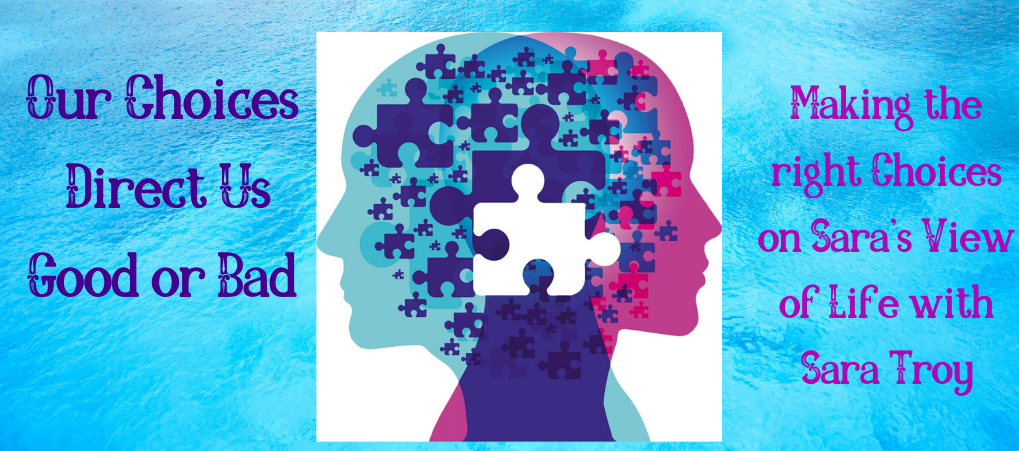
We are our choices good or bad, we are our reactions, good or bad, how do we not react to negativeness around us how do we stay cool calm and collected? it is a choice.
We are made up of our choices in life, even the ones we did not choose for our selves, for it is a choice in how we react to them. I know it can be hard when someone is on the attack to not respond, but choosing not to respond gives you control and takes it away from them.
So how do we stay calm during an alteration? we breathe deeply in and release out, we breathe until we feel centered, we breathe until the person has stopped, then we calming say, where you addressing me? sorry I tuned out. We do not feed the alteration by a fist verbal, because that will take it over the top, but if they feel they have not got the upper hand and you have made the choice not to respond back, they generally back off.
This week I speak to our choices and in how we need to be mindful, heartful and make choices in our life that serves us so we can serve others., and how to face conflict and not buy into it.
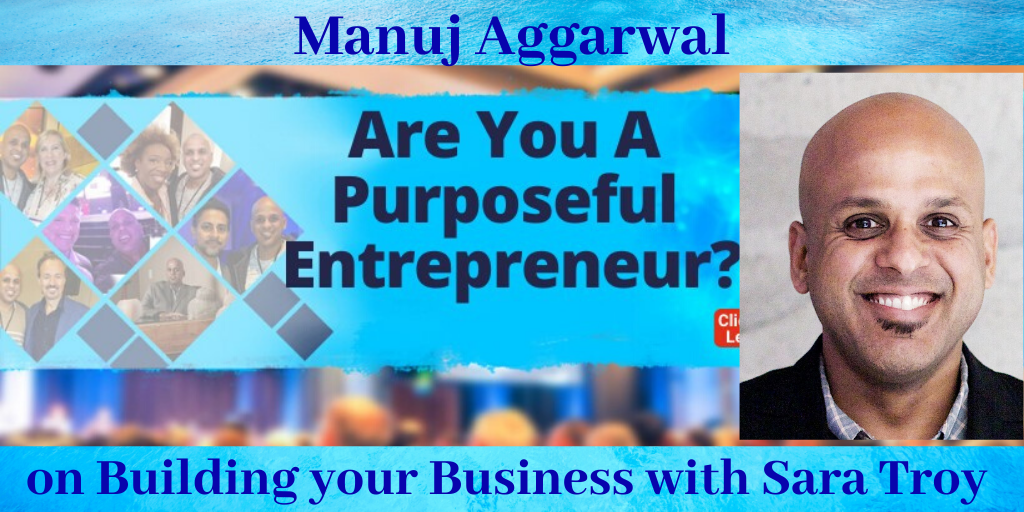
Building your business with Sara Troy and her guest Manuj Aggarwal, on air from January /20
Building and growing a tech company is a sport, and I am an elite trainer. I take my clients beyond their comfort zone and lead them to an explosive new edge where they get their company – and themselves – in the best mental shape to run, grow, and expand their business. As a C-level executive advisor/business coach, I am the gym for the mind. I train tech founders and entrepreneurs who hunger for growth and success – incredible, boundless amounts of growth and success.
Manuj is an entrepreneur, investor, and CTO of TetraNoodle, a software consulting company that helps startup founders with tech projects. Manuj started his career at the age of 15, working in a factory for twelve hours a day, six days a week, earning a cool $2 per day. While Manuj had no contacts or resources, he was determined to improve his life and realized education and the right training was the only way for him to achieve his goals. Manuj managed to acquire a modest education and went on to become a technical leader and CTO in multiple startups. Manuj is very passionate about education and training because, without it, these achievements would not have been possible. While building his career, Manuj fought decades of anxiety, depression, and pessimism by indulging in meditation and mindfulness. He is deeply spiritual (not religious) and focuses on accessing and training his subconscious mind to create the life of his dreams actively.
All of our shows/interviews are done by donation; if you enjoyed this show, please support us here with either a one-time donation or subscribe and support; thank you. Please support Our Forgotten Seniors anthology and help bring this book to awareness.






You must be logged in to post a comment.