If you read my blog on a regular basis, you may have seen two recent articles Do you know who you are and Why People Do the Things They Do? Both sound like easy questions, but if you spend a little time reflecting on them, the answers may not be so obvious and are what occupied Ancient Greek philosophers for most of their time. In this new article The Art of Being Still, my premise is that you won’t know who you are if your mind is in a constant state of agitation and occupied by mindless distractions.Too often our minds are caught in a cycle of stimulus and responses; The Art of Being Still may be a helpful read to help find some answers as the foundation of clarity is an uncluttered mind. Often, the easiest way we can figure out who we are is in moments of solitude; but too many people have a fear of solitude. Some thinkers have suggested that the fear of solitude is at the root of the fear of oneself.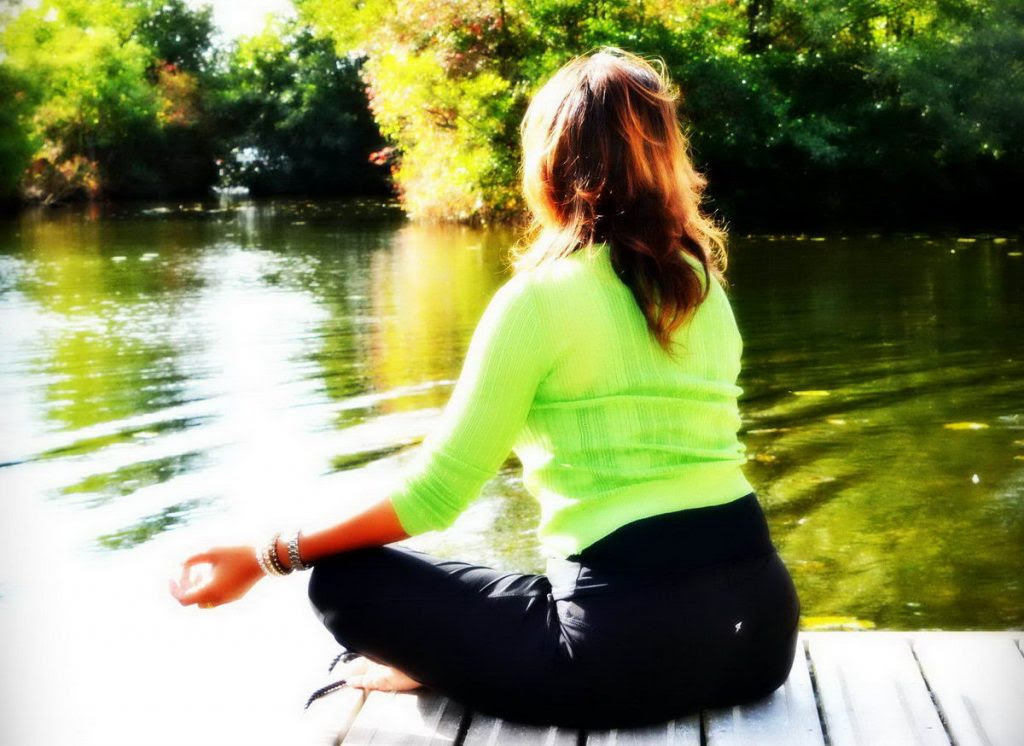 Practicing The Art of Being StillSolitude vs. LonelinessTo be alone is sometimes a frightening idea and many people would do anything to avoid it. Human beings are social creatures by nature and unfit to endure extreme cases of isolation. If we are alone for too long our mental faculties can degrade leading to a state of insanity and deep despair. The use of solitary confinement and exile are effective tools of punishment. But in the modern-day, our fears are not restricted to an extreme case of isolation, rather many of us fear being alone for any period of time and being alone is something to be avoided at all costs. Not only are we afraid of being alone individually, but we are also afraid of those around us who we seem to be very happy in their own company. We see them as dangerous, unproductive, unsocial, or maybe even unwanted.Henri David Thoreau spent 2 years living alone in a cabin in the woods. He found this experience powerful and insightful. For Thoreau, solitude did not mean isolation; he was not a social hermit, he had many friends whom he invited from time to time to his cabin retreat, but he rejoiced and thrived in the luxury of the quiet time that living alone in the woods granted him. Solitude was more about introspection and self-observation. Practicing The Art of Being StillSolitude vs. LonelinessTo be alone is sometimes a frightening idea and many people would do anything to avoid it. Human beings are social creatures by nature and unfit to endure extreme cases of isolation. If we are alone for too long our mental faculties can degrade leading to a state of insanity and deep despair. The use of solitary confinement and exile are effective tools of punishment. But in the modern-day, our fears are not restricted to an extreme case of isolation, rather many of us fear being alone for any period of time and being alone is something to be avoided at all costs. Not only are we afraid of being alone individually, but we are also afraid of those around us who we seem to be very happy in their own company. We see them as dangerous, unproductive, unsocial, or maybe even unwanted.Henri David Thoreau spent 2 years living alone in a cabin in the woods. He found this experience powerful and insightful. For Thoreau, solitude did not mean isolation; he was not a social hermit, he had many friends whom he invited from time to time to his cabin retreat, but he rejoiced and thrived in the luxury of the quiet time that living alone in the woods granted him. Solitude was more about introspection and self-observation.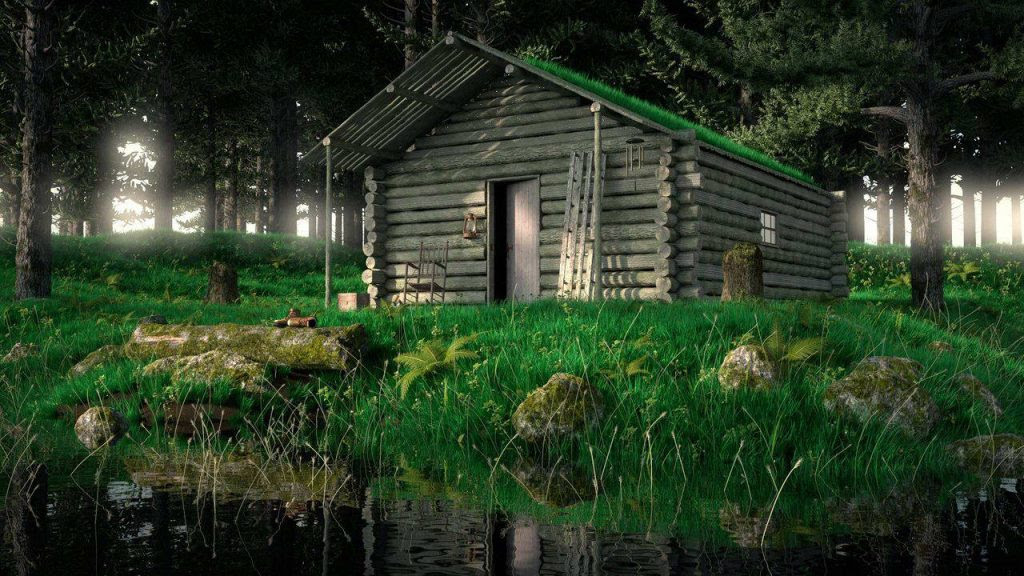 In true solitude you will not find lonelinessThoreau’s period of solitude gave him the space he needed to think, he described his experience as follows: “The challenge of living alone was really just learning how to become a great companion to oneself. In true solitude, you will not find loneliness, but self-communion, a coming together of the light and the dark aspect of yourself. People are afraid to speak to themselves. They are unable to trust the voice within and instead are persuaded to seek validation and sanction from others. Deep personal introspection is the true gift of the prosperous man and one that the majority have entirely avoided.” Solitude & Intuition Moments of solitude also allow us to be more tuned-in to our intuition. Intuition is the ability to understand something immediately, without the need for conscious reasoning. Intuition usually involves judgment, a ‘yes or no,’ but it can also give us insight into what the solution is. Intuitions and insight can come to us through many forms, a deep inner feeling, an image, a word, an inspirational thought, or from a book. Whatever forms they take; it always gives us a deep sense of inner knowing that brings clarity and joy. If we are operating in a state of constant agitation, hustling and bustling constantly, we will not be tuned-in the right frequency to pick up those insights and receive such gifts. Moments of solitude put us in the right state of mind, ready to accept the gift of insight with gratitude, humility, and appreciation.The Russian author Fyodor Dostoevsky claims that:“Solitude for the mind is as essential as food is for the body. In solitude we can forge our character away from the often-constricted external demands of others and maintain our independence in the relationships we cultivate thus ensuring we do not, like many today, lose our identity in them.”Stillness Stillness means to be steady while the world spins around you. Socrates tells us that philosophy begins with wonder, and wonder is rooted in stillness. Other philosophers from various schools of thought have come to a similar conclusion, namely that the ultimate destination in our life journey is to master the stillness that is required to become master of our own life. RyanHoliday’s book Stillness is the Key, describes the art of being still and how important stillness is for self-mastery, discipline and focus in our modern noisy world. Stillness is an attainable path to enlightenment, excellence, greatness, and happiness, it can inspire new ideas, sharpens perspective and illuminate the mind. Stillness slows down the ball down so we can hit it, it generates a vision, helps us resist the passion of the mob, and makes space for gratitude and wonder. Stillness allows us to persevere, to succeed, a key to unlock the insights of genius. Stillness is not some soft, new-age nonsense or the domain of monks or sages but in fact an essential component to peak performance in every domain of life. In true solitude you will not find lonelinessThoreau’s period of solitude gave him the space he needed to think, he described his experience as follows: “The challenge of living alone was really just learning how to become a great companion to oneself. In true solitude, you will not find loneliness, but self-communion, a coming together of the light and the dark aspect of yourself. People are afraid to speak to themselves. They are unable to trust the voice within and instead are persuaded to seek validation and sanction from others. Deep personal introspection is the true gift of the prosperous man and one that the majority have entirely avoided.” Solitude & Intuition Moments of solitude also allow us to be more tuned-in to our intuition. Intuition is the ability to understand something immediately, without the need for conscious reasoning. Intuition usually involves judgment, a ‘yes or no,’ but it can also give us insight into what the solution is. Intuitions and insight can come to us through many forms, a deep inner feeling, an image, a word, an inspirational thought, or from a book. Whatever forms they take; it always gives us a deep sense of inner knowing that brings clarity and joy. If we are operating in a state of constant agitation, hustling and bustling constantly, we will not be tuned-in the right frequency to pick up those insights and receive such gifts. Moments of solitude put us in the right state of mind, ready to accept the gift of insight with gratitude, humility, and appreciation.The Russian author Fyodor Dostoevsky claims that:“Solitude for the mind is as essential as food is for the body. In solitude we can forge our character away from the often-constricted external demands of others and maintain our independence in the relationships we cultivate thus ensuring we do not, like many today, lose our identity in them.”Stillness Stillness means to be steady while the world spins around you. Socrates tells us that philosophy begins with wonder, and wonder is rooted in stillness. Other philosophers from various schools of thought have come to a similar conclusion, namely that the ultimate destination in our life journey is to master the stillness that is required to become master of our own life. RyanHoliday’s book Stillness is the Key, describes the art of being still and how important stillness is for self-mastery, discipline and focus in our modern noisy world. Stillness is an attainable path to enlightenment, excellence, greatness, and happiness, it can inspire new ideas, sharpens perspective and illuminate the mind. Stillness slows down the ball down so we can hit it, it generates a vision, helps us resist the passion of the mob, and makes space for gratitude and wonder. Stillness allows us to persevere, to succeed, a key to unlock the insights of genius. Stillness is not some soft, new-age nonsense or the domain of monks or sages but in fact an essential component to peak performance in every domain of life.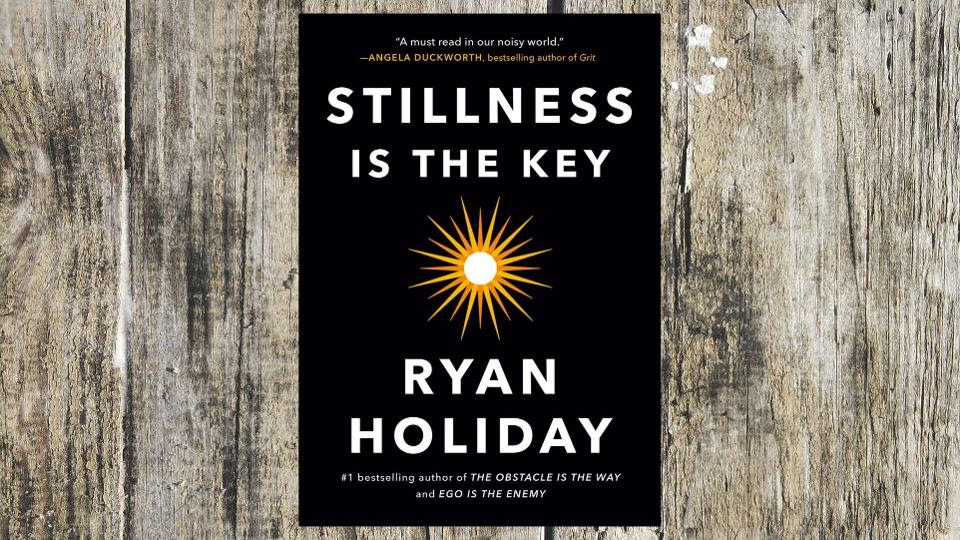 Ryan Holiday’s book, Stillness Is The KeyAmong the various philosophical and religious schools, such as Buddhism, Stoicism, Epicureanism, Christianity, Hinduism, etc., it is impossible not to find a philosophy that does not venerate inner peace or stillness: “When all the wisdom of the ancient world agrees on something, only a fool will decline to listen.” Ryan Holiday’s book, Stillness Is The KeyAmong the various philosophical and religious schools, such as Buddhism, Stoicism, Epicureanism, Christianity, Hinduism, etc., it is impossible not to find a philosophy that does not venerate inner peace or stillness: “When all the wisdom of the ancient world agrees on something, only a fool will decline to listen.”
– Ryan Holiday Paradoxes of StillnessA paradox of stillness is that it requires you to think very deeply, but also clear your mind. In fact, this is not a paradox as once our mind is cleared and emptied insights and breakthroughs can occur.“Muddy waters clear themselves through stillness; if we let them settle the truth will be revealed to us.” Muddy Waters become clear through stillnessAnother paradox is that stillness does not require that you stop moving or even to be somewhere quiet, stillness can be cultivated while chaos swirls around you. Those moments, in a busy shopping mall or airport, when somehow all the external noise is filtered out and you feel a sense of calm and can focus on what is in your control, that, is stillness. The ability to intentionally find stillness, in a busy environment or just by shutting your eyes and focusing your thoughts and attention on one thing, is important because we have to move and live our lives; intentional stillness takes effort. Active stillness is effective because we can’t simply think our way to peace or pray our body into better conditions. Stillness is an important tool on your journey to find clarity. The ability to see clearly, not only when you are meditating, but in the midst of conflict when you are frustrated, angry or scared, will help you find a more logical, less emotional response, and give you choices to do things differently, or do nothing at all.“If solitude is the school of genius, then the crowded, busy world is the purgatory of the idiot” Muddy Waters become clear through stillnessAnother paradox is that stillness does not require that you stop moving or even to be somewhere quiet, stillness can be cultivated while chaos swirls around you. Those moments, in a busy shopping mall or airport, when somehow all the external noise is filtered out and you feel a sense of calm and can focus on what is in your control, that, is stillness. The ability to intentionally find stillness, in a busy environment or just by shutting your eyes and focusing your thoughts and attention on one thing, is important because we have to move and live our lives; intentional stillness takes effort. Active stillness is effective because we can’t simply think our way to peace or pray our body into better conditions. Stillness is an important tool on your journey to find clarity. The ability to see clearly, not only when you are meditating, but in the midst of conflict when you are frustrated, angry or scared, will help you find a more logical, less emotional response, and give you choices to do things differently, or do nothing at all.“If solitude is the school of genius, then the crowded, busy world is the purgatory of the idiot”
– Edward Gibbon, Historian A Lesson in StillnessPresident John F. Kennedy once described himself as an idealist without illusions. More than 50 years after his tragic death, the American public still ranks him at the top modern American leaders. Kennedy is remembered not only for his youth and good looks but also as a crusader for social justice, a gifted orator and a peacemaker.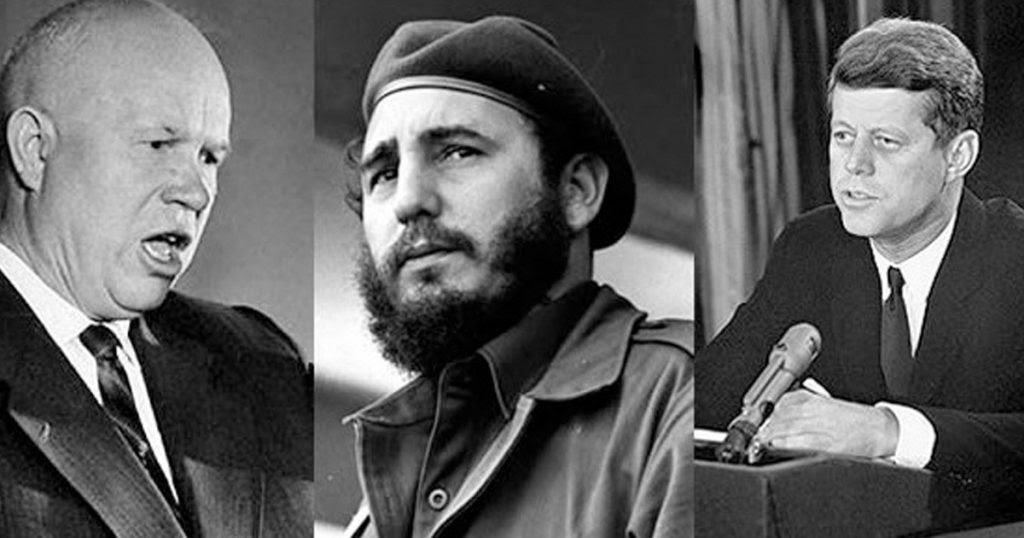 The Main Players in the Cuban Missile CrisisFresh after a disastrous attempt to invade Cuba and overthrow Fidel Castro at the Bay of Pigs, the Cuban missile crisis started on 15 October 1962, when the cold war between the US and the USSR was dangerously close to becoming a hot nuclear war. The CIA identified medium to long-range Soviet ballistic nuclear missiles being built on the Island of Cuba, just 90 miles off the coast of Florida. The two main actors in this political drama were President John F. Kennedy; a young president, born into immense privilege, with almost no executive leadership under his belt and, on the other side, Nikita Khrushchev, a much older man, born into a modest family and a veteran of the communist party. The fate of millions worldwide depended on these two men. Kennedy’s advisors wanted to destroy the missiles site followed by a full-scale invasion of Cuba, tremendous pressure was put on Kennedy to act quickly and decisively as every second wasted risked the security and reputation of the US. Kennedy unwilling to be pressured into making a decision that was not thought through (like the Bay of Pigs fiasco), used stillness to pause, reflect, understand the bigger picture before deciding on his next move. Kennedy had recently read Barbara Tuchman’s book The Guns of August, a book about the beginning of World War I, which imprinted on his mind the image of overconfident world leaders rushing their way into a conflict, that once started they couldn’t stop. Kennedy recalled a passage from another book he read by strategist B. H. Liddell on nuclear strategy: “keep strong if possible. In any case, keep cool. Have unlimited patience. Never corner an opponent and always assist him to save face. Put yourself in his shoes, so as to see through his eyes. Avoid self-righteousness like the devil, nothing is so self-blinding.”Against the wishes of the majority of his advisors, Kennedy decided upon a less aggressive strategy, a naval blockade. This approach was to prevent further missiles from reaching Cuba, but also to give him time to think, time to communicate, and time to understand the intentions and responses from Khrushchev. On 22 October 1962, John F. Kennedy addressed the nation via live television broadcast. His message, intended for the domestic audience but also for the international public at large, demonstrated true statesmanship: “The 1930s taught us a clear lesson, aggressive conduct, if allowed to go unchecked and unchallenged, ultimately leads to war… We will not prematurely or unnecessarily risk the costs of worldwide nuclear war in which even the fruits of victory would be ashes in our mouth; but neither will we shrink from that risk at any time it must be faced.”The peaceful resolution required concessions and a respect for humanity from both sides, but a remarkable fact about the Crisis is how calm Kennedy remained. During the tensest moments, Kennedy would seek solace in the White House Rose Garden, to clear his mind and to think. After the crisis, Kennedy thanked the gardener for her important contribution. Kennedy knew the art of being still, he did not let anyone rush him into a decision or let the pressure of the situation cloud his judgment or deter him from doing the right thing. During those times, he was the stillest guy in the room.SummaryOur paths to stillness will be unique, but the impact should be the same: calm, strength, insight, peace, happiness and clarity. Hopefully, my friend, this article demonstrates the power of solitude and of being still. It is good sometimes to let the world spin around you whilst being the stillest person in the room. The Main Players in the Cuban Missile CrisisFresh after a disastrous attempt to invade Cuba and overthrow Fidel Castro at the Bay of Pigs, the Cuban missile crisis started on 15 October 1962, when the cold war between the US and the USSR was dangerously close to becoming a hot nuclear war. The CIA identified medium to long-range Soviet ballistic nuclear missiles being built on the Island of Cuba, just 90 miles off the coast of Florida. The two main actors in this political drama were President John F. Kennedy; a young president, born into immense privilege, with almost no executive leadership under his belt and, on the other side, Nikita Khrushchev, a much older man, born into a modest family and a veteran of the communist party. The fate of millions worldwide depended on these two men. Kennedy’s advisors wanted to destroy the missiles site followed by a full-scale invasion of Cuba, tremendous pressure was put on Kennedy to act quickly and decisively as every second wasted risked the security and reputation of the US. Kennedy unwilling to be pressured into making a decision that was not thought through (like the Bay of Pigs fiasco), used stillness to pause, reflect, understand the bigger picture before deciding on his next move. Kennedy had recently read Barbara Tuchman’s book The Guns of August, a book about the beginning of World War I, which imprinted on his mind the image of overconfident world leaders rushing their way into a conflict, that once started they couldn’t stop. Kennedy recalled a passage from another book he read by strategist B. H. Liddell on nuclear strategy: “keep strong if possible. In any case, keep cool. Have unlimited patience. Never corner an opponent and always assist him to save face. Put yourself in his shoes, so as to see through his eyes. Avoid self-righteousness like the devil, nothing is so self-blinding.”Against the wishes of the majority of his advisors, Kennedy decided upon a less aggressive strategy, a naval blockade. This approach was to prevent further missiles from reaching Cuba, but also to give him time to think, time to communicate, and time to understand the intentions and responses from Khrushchev. On 22 October 1962, John F. Kennedy addressed the nation via live television broadcast. His message, intended for the domestic audience but also for the international public at large, demonstrated true statesmanship: “The 1930s taught us a clear lesson, aggressive conduct, if allowed to go unchecked and unchallenged, ultimately leads to war… We will not prematurely or unnecessarily risk the costs of worldwide nuclear war in which even the fruits of victory would be ashes in our mouth; but neither will we shrink from that risk at any time it must be faced.”The peaceful resolution required concessions and a respect for humanity from both sides, but a remarkable fact about the Crisis is how calm Kennedy remained. During the tensest moments, Kennedy would seek solace in the White House Rose Garden, to clear his mind and to think. After the crisis, Kennedy thanked the gardener for her important contribution. Kennedy knew the art of being still, he did not let anyone rush him into a decision or let the pressure of the situation cloud his judgment or deter him from doing the right thing. During those times, he was the stillest guy in the room.SummaryOur paths to stillness will be unique, but the impact should be the same: calm, strength, insight, peace, happiness and clarity. Hopefully, my friend, this article demonstrates the power of solitude and of being still. It is good sometimes to let the world spin around you whilst being the stillest person in the room. |








You must be logged in to post a comment.