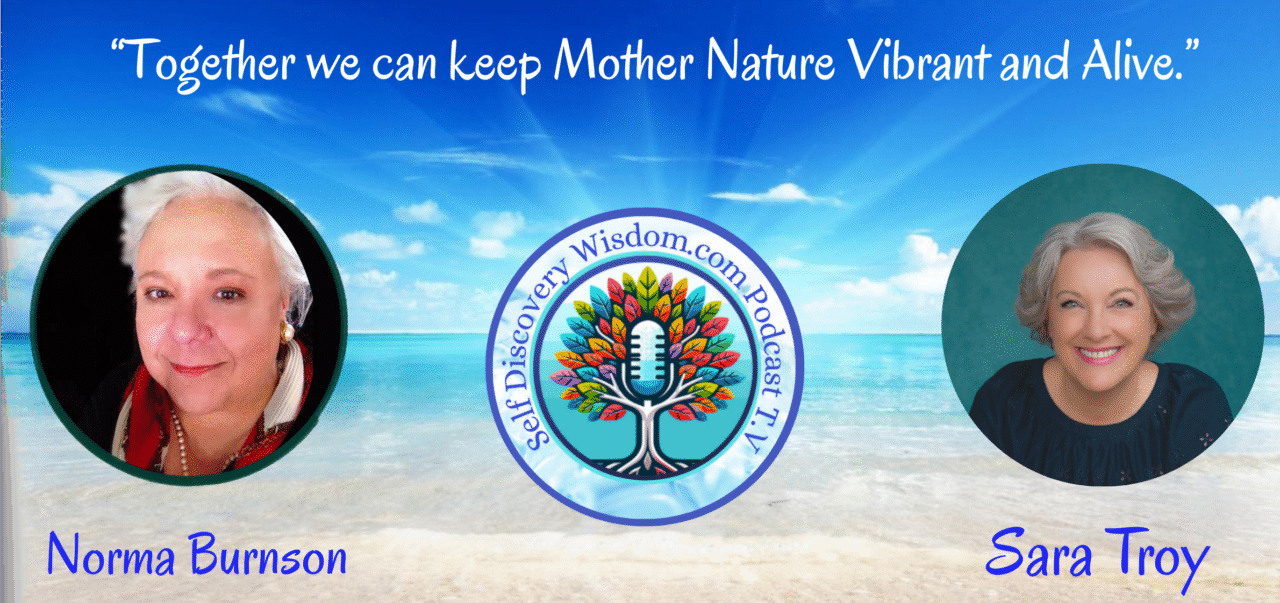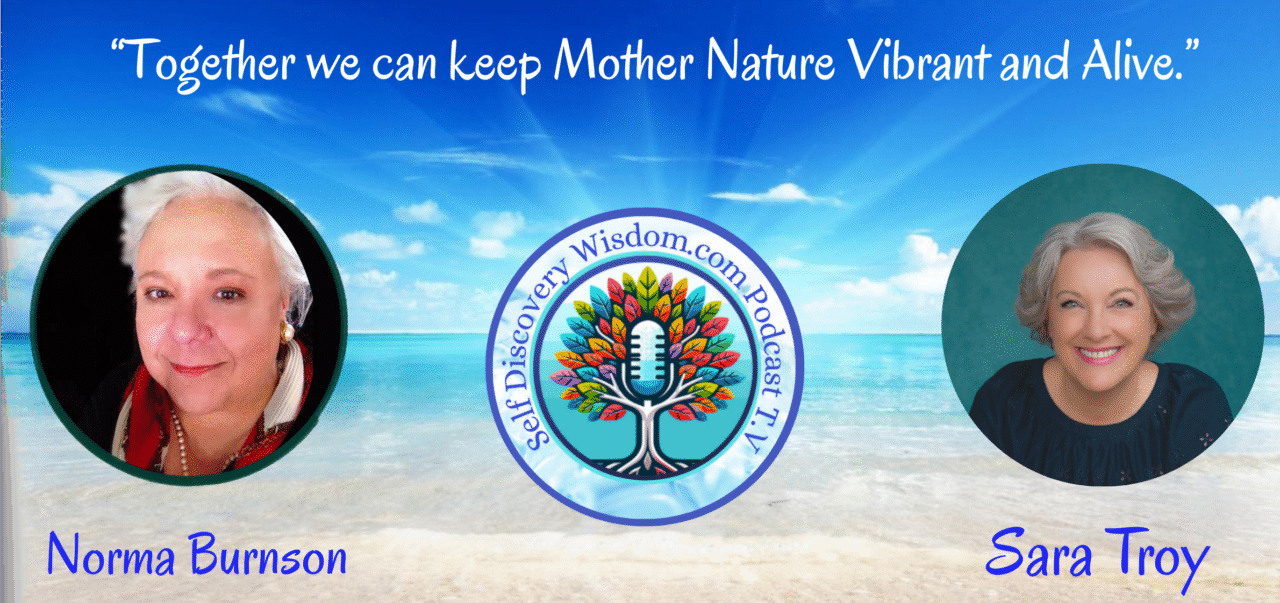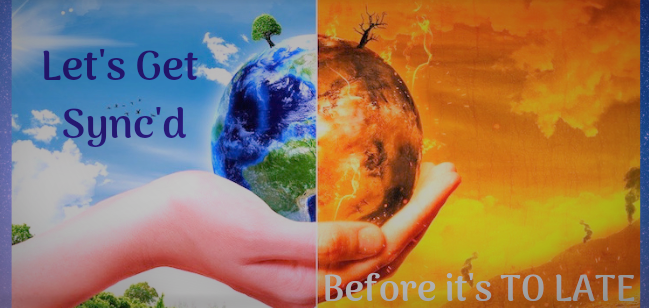
“Together we can keep Mother Nature Vibrant and Alive.”
In 2013, I took a chance and wrote a book. Little did I know how many doors it would open or how many fascinating people I would meet along the way. Throughout my life’s journey, I have gathered little tidbits of wisdom here and there, and now in my seventies, my treasure chest is full of gems collected from experience and the people I’ve encountered.
Along the way, there have been many wonderful surprises—meeting kindred spirits who have shared their own insights and stories. Together, their gems and mine have created a rich collection of experiences: some funny, some sad, but all offering a unique point of view from each collaborator.
Come along with me through these stories and enjoy a virtual journey into the minds of today’s movers and shakers.
Upon returning to the United States, I used my GI Bill to attend the University of Illinois in Chicago, where I graduated with honors and was inducted into the Phi Kappa Phi Honor Society. After graduation, I worked as an International Trade Specialist and later as a University Instructor. From there, I went on to start my own business in International Trade, eventually retiring when my health began to deteriorate.
During a period of being bedridden, I turned to writing books and articles, which led to an invitation from Sir Richard Branson to participate in conversations about the future of our planet. It was at that point that I began focusing on my advocacy: “Together we can keep Mother Nature Vibrant and Alive.” At present, I am putting together the SFFTG iNews 2026 issue and launching a new children’s book series.
If you were to visit me today, you would likely find Kevin—my husband of 50 years—cooking up a new recipe and maintaining his absolutely maddening focus on World War II, while I would be reading, painting, sewing, or tending to my indoor garden.
Sara’s View of Life with Sara Troy, on air since February 24th
Earth is roughly 71% water, yet about 97% of that is saltwater and undrinkable. Of the remaining 3% that is fresh, much of it is locked away in glaciers or deep underground. In reality, less than 1% of the world’s water is easily accessible freshwater for drinking, growing food, and sustaining life. This tiny fraction reminds us that when we talk about water conservation, we are truly talking about the future of life itself.
Looking closer, the planet’s surface is about 29% land and 71% water, but not all water serves us equally. A significant portion of freshwater lies beneath the ground in aquifers, nature’s hidden storage tanks. Today, up to a quarter of global freshwater use comes from these underground reserves, and in many places they are being depleted faster than they can replenish. Above ground, we depend on rivers, lakes, and reservoirs, yet these sources are increasingly vulnerable to drought, pollution, and climate change.
Awareness begins when people understand that water is not infinite. Every drop we use connects to a larger system — from what we drink, to how our food is grown, to the health of ecosystems. Small everyday actions like fixing leaks, reducing waste, and supporting sustainable practices help shift our mindset from consumption to stewardship.
Technology is also stepping in to help address water scarcity. Desalination plants are turning seawater into freshwater in many parts of the world, especially in arid regions. Innovations such as atmospheric water generators can even pull moisture from the air to create drinkable water. While these solutions are not replacements for conservation, they are powerful tools that can support a more sustainable future.
Water use is deeply connected to energy, agriculture, and lifestyle choices. Large cooling systems, power plants, and industrial processes often consume significant amounts of water. Agriculture uses the majority of global freshwater, particularly in industrial livestock production, which requires large volumes of water and contributes to greenhouse gases. Shifting toward sustainable farming practices, reducing food waste, and incorporating more plant-based choices can significantly lower our overall water footprint.
Ultimately, awareness must translate into action. We can empower change by adopting water-wise habits at home, supporting responsible businesses, advocating for sustainable policies, and educating our communities. Efficient appliances, low-flow fixtures, shorter showers, and mindful consumption may seem small, but collectively they create powerful momentum.
We are already seeing the consequences of inaction through stronger droughts, longer fire seasons, and climate-driven displacement. Millions are being affected today, and projections suggest that hundreds of millions (predicted 700 million by 2030.) could face water scarcity in the coming decades. The turning point is not in the distant future — it is now.
As citizens, our greatest power lies in awareness, persistence, and collective action. By voting with our voices, our choices, and our daily habits, we can help shift cultural priorities toward protecting our most essential resource. Water preservation begins with simple steps, but those steps ripple outward into lasting change.
In the end, conserving water is not just about saving a resource — it is about safeguarding life itself. Every drop matters, and through awareness, responsibility, and innovation, we can ensure that the lifeblood of our planet continues to flow for generations to come.
After all, awareness is like water—it needs to flow naturally. We need to feel empowered to make that next mindful step.
All of our shows/interviews are done by donation; if you enjoyed this show, please support us here with either a one-time donation and subscribe. Thank you. Please support Our Forgotten Seniorsanthology and help to bring this book to awareness.
Eco Solutions with Sara Troy and her guest Alison Goldwyn & John Bunzl. On air from November 4th
Timing is everything — divine timing even more so. After nearly four decades in the making, Synchronistory® emerges as an unprecedented, music-powered Party for the Planet, celebrating all sentient life through a live global and interstellar broadcast.
In an age of turmoil, division, and “environMental” strain, Synchronistory® invites us to reconnect through shared joy, unity, and rhythm. It’s a reminder that healing the world begins with celebrating it — together. Through initiatives like SIMPOL (Simultaneous Policy), it bridges divides and rekindles hope for a thriving global body.
In the midst of chaos, the pulse of creativity and consciousness beats louder — stirring wonder, awakening action, and reminding us that even in the darkest times, the music of humanity still plays.
Simpol – The Simultaneous Policy.
How do you get nations to work together to solve global problems?
What does Destructive Global Competition have to do with the slow pace of progress in addressing Climate Change?
Enter Simpol – the Simultaneous Policy and campaign to solve humanity’s greatest challenges. Simpol’s founder John Bunzl explains what Simpol is, how it works, and how you can get involved.
If the Amazon is the lungs of the world, Arts and Culture are its heartbeat. Alison is a multimedia artist and edutainment producer using creativity to guide humanity through these transformative times. She’s the visionary behind Synchronistory® — a “Party for the Planet” celebrating all life through a live, multi-continental, and even interstellar broadcast.
During the 2020 lockdown, Alison co-produced and presented The Goi Peace Foundation’s “Source of Wonder” with two-time Nobel nominee Ervin Laszlo and his Club of Budapest, featuring 80 international thought leaders and artists uplifting global unity. She also co-produced Laszlo’s “Dawn of an Era of Well-Being” podcast and contributed to his book The Great Upshift.
Affiliated with Al Gore’s Climate Reality Project, The Club of Budapest, and SIMPOL, Alison is also co-founder of Cosmic Girls Foundation and producer for The Life Changes Show. As founder of J’aimestones® Fine Art Jewellery, she crafts conscious jewels reflecting our love story with nature. Approaching her 40th year of “Sync-ing,” Alison is recording the Synchronistory® soundtrack and writing a book-film chronicling her four decades of planetary celebration.
John Bunzl is a businessman with a simple and powerful new vision for global governance.
In 2000 he founded the International Simultaneous Policy Organization (ISPO) and launched the Simultaneous Policy (Simpol) campaign. Ever since the Simpol campaign started, John Bunzl has worked tirelessly to reach out to citizens, activists, non-governmental organizations, politicians and business people to raise both their awareness and understanding of what global simultaneous policies could mean for humanity, prosperity and peace.
All of our shows/interviews are done by donation; if you enjoyed this show, please support us here with either a one-time donation or subscribe and support. Thank you. Please support Our Forgotten Seniors anthology and help to bring this book to awareness.
Simpol is a global citizens’ initiative that develops the necessary policies to solve global problems and its supporters use their votes to drive governments to act together to implement them.
The main barrier to solving global problems is that no government can move first or act alone because doing so would make its national economy uncompetitive, risking unemployment, capital flight, and economic decline. As former UK Prime Minister Tony Blair said, “The reality of the politics of climate change is that no country will be willing to sacrifice its economy in order to address this challenge.” [1] This remains true for all global problems. In a globalized economy, it will always be so. Governments are therefore caught in a “Prisoner’s Dilemma”. It’s not that they don’t want to solve global problems, but that they can’t. That, indeed, is why the wider global justice movement has achieved little: because it demands change from those – i.e., governments – who are incapable of delivering it.
That’s why Simpol’s condition of simultaneous implementation is vital: it breaks this vicious cycle, eliminates the risk of uncompetitiveness, and resolves the dilemma. If sufficient nations act together simultaneously, no nation loses out – everyone wins.
Simpol operates in two stages:
A. Politicians and governments are invited to support Simpol only in principle by signing a Pledge to implement its policies simultaneously, subject to all or sufficient nations participating, and subject to the policies eventually being agreed.
B. Once sufficient nations have signed, an international negotiation to define and agree detailed policies can proceed, followed by implementation.
Simpol also incorporates these key features:
1. Multi-issue policy packages
Simpol would consist of a series of multi-issue policy packages so that what a nation loses on one issue, it can gain on another. The losers on a climate agreement, for example, could be compensated by revenues from a currency transactions tax, so potentially making immediate action in every nation’s self-interest. And if the agreement is in everyone’s interests, so will be the inclusion of verification and enforcement measures. Simpol does NOT necessarily mean all nations implementing precisely the same measures. Rather, policies could be tailored to suit the needs and abilities of each nation. National sovereignty remains protected, because only policies requiring simultaneous implementation are included.
2. Citizens and NGOs develop the policies AND citizens use their votes to drive governments to implement them
By joining the campaign, citizens declare that they will “give strong voting preference at national elections to politicians or parties that have signed the Pledge”. As the voting bloc of Simpol supporters grows, politicians who sign increase their chances of gaining those votes. Those who don’t, risk losing those votes, and potentially their seats, to politicians who signed instead. In that way, Simpol doesn’t need a majority of voters to succeed – only the critical balance between the two main competing parties. This is the unique tool that Simpol uses and it’s vital because, as NGOs should by now realise, politicians can easily ignore petitions and protests, but they cannot ignore votes.
This political power also gives Simpol’s supporters strong influence over its policy content. To remain electorally attractive to our supporters, politicians and parties will have little choice but to adopt the global policies our supporters prefer. Global justice NGOs can also play their part by providing expert policy input to Simpol and by encouraging their supporters to join the campaign.
Should Simpol gain the support of democratic governments, non-democratic nations would be invited to participate. They need solutions to global problems too. If global support becomes sufficient and a global negotiation is successful, the first Simultaneous Policy can be implemented. Subsequent Simultaneous Policies can then follow. For details on the campaign, its policy development and implementation, please see https://simpol.org/fileadmin/user_upload/Policies/Simpol_-_Information_Pack.pdf
Progress so far
Simpol is active in a number of countries especially during elections. The campaign is most developed in the UK where over 100 Members of Parliament have signed the Pledge. They come from all the main UK political parties. A considerable number of MPs have also signed in Germany, Ireland, the EU, and some other countries. A list of all current pledged MPs is at https://simpol.org/who-we-are/pledged-politicians
Many politicians sign because of the strong electoral pressure Simpol exerts. In highly contested electoral districts, this often creates a ‘domino effect’: once one candidate signs, competitors are forced to follow so that, whoever wins the seat, Simpol is sure to gain another pledged MP. Others sign simply because they see Simpol as common sense. As one politician commented, “Global problems require global solutions and Simpol could well help us get to those solutions. The way in which the process neatly side-steps the issue of countries fearing to act unilaterally is quite excellent. I have signed the pledge and thank you for inviting me to do so.” [2]
Building movement coherence
Simpol is designed as a tool to network the wider movement for solving global problems. To achieve this, we suggest that each initiative in the wider movement make a list of all its policy demands. Then it should subject each demand to the following test:
Would the unilateral implementation of the demand by a single government, or by a restricted group of governments (eg. the EU), be likely to cause it a significant competitive disadvantage?
If the answer is NO, then unilateral implementation is viable and the NGO can pursue that demand in the usual way. If the answer is YES, then that demand requires simultaneous implementation and should be pursued in cooperation with Simpol. By differentiating demands in this way, we would immediately create movement coherence because NGOs would then be using the right campaigning tool for the right job.
Fully understanding Simpol’s potential requires a deeper change in our thinking – a move from nation-centric to world-centric thinking. Co-written with psychotherapist Nick Duffell, the psychological steps required to make that change are set out in our book The Simpol Solution https://simpol.org/who-we-are/simpol-the-book . As Noam Chomsky commented, “It’s ambitious and provocative. Can it work? Certainly worth a serious try.”
Eco Solutions with Sara Troy and her guest Norma Burnson, on air from August 6th
“Together we can keep Mother Earth vibrant and alive.”
Norma says that she joined the U.S. Navy 10 days after my 18th birthday. Boot camp took place in Orlando, Florida. Eight weeks later, my first tour of duty was at the Naval base in Rota, Spain. It was the beginning of my freedom, and total happiness. I met my husband, Kevin. We have been together 50 years, and have never been separated since. We traveled throughout Spain, Portugal, France, Switzerland, Germany, Gibraltar, Morocco, Japan, Taiwan, enjoyed a lovely cruise around the Caribbean, and visited Mexico as well. Upon returning to the States, I used my G.I. Bill, and attended the University of Illinois at Chicago. I was inducted into Phi Kappa Phi, the oldest ( date) and most prestigious honor society in the United States. Then I spent a few years taking classes at The Art Institute of Chicago. From there I worked as an International Trade Specialist, involved with the Chicago Association of Commerce and Industry, spearheading seminars. In addition was head of the membership committee for the International Association of Greater Chicago and WIT, Women in International Trade. Amongst other rewards, I was honored to receive The International Women’s Leadership Association, in recognition for my contribution to Family – Career – Community, recognized as a Woman of Outstanding Leadership.
In the early 90’s, I established my own company. My work consisted of setting up the International Trade Department for manufacturing companies. Either in house or off site. I had the great opportunity to teach a class on International Trade at Oakton Community College for 8 years. This was when my health began to deteriorate, and I received the diagnosis of congestive heart failure, on top of chronic asthma. Confined in bed, (30 years) I used my time painting, needlepoint and reading. One day, out of the blue, I received an invitation from Sir Richard Branson to participate in a zoom meeting. Sir Branson had invited entrepreneurs from all around the world to work on Plan B, because Plan A was leading us towards non sustainable practices. Stuck in bed, I realized I could help the cause by writing, and that way become an active participant working towards Plan B. That is when Sustainable Food for the Globe came to be. To date I have participated in the MIT Solve Lab Challenge Team Leader (2016, 2017), authored 8 books, and have 3 other projects in the making, including The Sustainable Food for the Globe Foundation. In addition I got involved with the Global Citizens Circle. Since Sustainable Food for the Globe’s inception, I have met movers and shakers from around the world. All sharing their advocacy of healing Mother Earth, and working for the better good of all. Sustainable Food for the Globe champions food production, food security, rescuing wasted food, and food deserts. Due to my fragile health we left Chicago and moved to the country. During the last 6 years, my health has improved, slowly but steadily. Currently, my health issues are Asthma, arthritis, diabetes, cancer, congestive heart failure, kidney deterioration, anxiety attacks, PTSD, insomnia, nightmares, night frights, and cold sweats.
That being said, all my body of work is conducted via an iPa, and an iPhone. Bedridden, I enjoy working with over 5,000 colleagues and friends from all around the world. There is one thing that infuriates me, it is when a person falls into the helplessly hopeless, “Someone should do something!” As civilly as possible, my response is “You are somebody, do something!” There are so many resources available, just by doing a Google search, one can research thousands of topics, find and get in touch with people and organizations that are already working on fixing these problems. It is a fact that for every problem we are facing on Mother Earth, there is a solution. Unfortunately the very powerful corporations around the world make sure to hide these solutions, especially if that solution hurts their bottom line. What do I believe?
Contact Information: Norma Burnson, Author & Publisher Email: norma.burnson@gmail.com Books: Sustainable Food for the Globe Everyday People Producing Food in Abundance.
Awards Phi Kappa Phi, Honor Society Delegate: The International Women’s Leadership Association, 2013 Delegate Award received from The International Women’s Leadership Association in 2013, in recognition of services rendered to our country as a U.S. Navy Veteran and for demonstrating leadership in both national and international business arenas; for dedication to her community as a college professor and mentor; for being a sustainable food activist and humanitarian. Book Critic “The Power of Change” by Reda Alioua 1 out of 5 LinkedIn members invited to review the ebook released by LinkBook Publisher. Interviews Interview with Norma Roldan Burnson, Author of “Sustainable Food for the Globe, One Square Foot at a Time”, June 2012 http://bit.ly/1T9z0bb Interview with the sustainable food advocate Norma Burnson By Mel Bartholomew ~ June 2012 Mel Bartholemew was the founder of Square Foot Garden. At the time, there were over 2 million gardeners using his gardening system. Interviewing Author Norma Burnson, December 2013 Interview with the sustainable food advocate Norma Burnson by Galina Belyaeva ~ December 2013 Interview with Norma Burnson, March 2015 Interview with the sustainable food advocate Norma Burnson by Ann Miller and Chris Coope on their International Radio Show: Growing Trends ~ March 2015 Interview with Norma Burnson, April 2016 Interview with the Sustainable Food Advocate Norma Burnson by Stephanie Chandler, Nonfiction Authors Association ~ April 2016 M.I.T. SOLVE Lab Challenge: Team Leader 2016 Team Leader 2017 Active: ALLI, Alliance of Independent Authors NFAA, Nonfiction Authors Association Phi Kappa Phi University of Illinois Alumni United Nations: The World We Want To Be, Online Consultant Economic and Social Council (ECOSOC) ~ “Implementing the 2030 Agenda.” Academic Impact, Sharing a Culture for Intellectual Social Responsibility The Global impact.” U.N. Climate Brawl, lead by Professor Gerald Kutney (Canada) U.S. Navy Veteran, Vietnam Era: Honorable Discharge.
All of our shows/interviews are done by donation, if you enjoyed this show please support us here with either a one-time donation or subscribe and support, thank you. and please support Our Forgotten Children’s anthology and help to bring this book in to awareness.
You must be logged in to post a comment.