Mental Health Awareness with Sara Troy and her guest Elizabeth Powers, on air from July 13th
“All I do is help people with change, resilience and self-care, and alignment. And everything is done from the trauma-informed perspective,” she says. “Even courses directly about working with trauma are about change.”
Power develops cross-cultural adaptations of models of care for the mental health community as well as helping other countries like Japan develop their own models. The Trauma-Informed Academy recently released her new model, The Trauma Responsive System which focuses on mastering 9 elements akin to applied emotional intelligence.
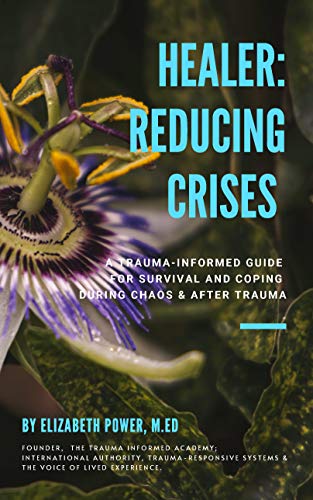
Elizabeth Power, M.Ed., is an international authority on trauma-informed care, change, and resilience. She’s also an Adjunct Instructor in Psychiatry at Georgetown University Medical Center and a veteran adult educator. Her new book, Healer: Reducing Crises is the first in a five-book series that reduces the time, trauma, and costs of healing from overwhelming events. Her clients include the National Center for PTSD, National Child Traumatic Stress Network, and many more. A frequent conference speaker and trainer, Elizabeth’s target is to teach ways to refocus on skills over sickness.
Mental Health Awareness with Sara Troy and her guest Krista Samimi, on air from June 29th
Why is taking care of your GUT good for your MENTAL HEALTH? Well, did you know that 60-90% of your “feel good” neurotransmitters are produced in your gut? That’s right. So how you feel is not just “in your head,” but more likely what’s going on in your GUT..Being mindful of the foods you eat, and what you put in your body is an important part to having good gut care.
Here’s a summary of key neurotransmitters and their function… Dopamine – affects your emotions, especially feelings of happiness and joy. Endorphins – interact with the opiate receptors in the brain to reduce your perception of pain. Oxytocin – is known as the love neurotransmitter that promotes connectedness. Norepinephrine – helps mediate focus and attention Serotonin – regulates anxiety and can affect mood, appetite, and sleep. If your gut is unhealthy because of acute or chronic stress, diet, or frequent antibiotic usage, you may notice an impact in your mental health – how you think, how you feel.Your gut knows what’s up about mental health! #gutbrainaxis#mentalhealth#guthealth
Healing at the root with the gut-brain axis regimen. Moving from stigmas to solutions. Elevating awareness into action. My story of successfully living with bipolar disorder for 20 years. Finding my passion in the mental health and wellness space. Living with a parent with mental illness. My dad had bipolar and in 2018 he took his own life. I also entered into motherhood late in life (42)…I have a 3-year-old son.
Krista Samimi is a Mental Wellness Expert who helps individuals end burnout, level up in life, and create abundance. Doing things differently with purpose, meaning, and intention is at the forefront of all she does. After 17 years in the corporate world, she left pharmaceutical and healthcare sales to do things differently. Not only professionally, but personally. What began as trying a holistic approach to her mental health grew into Krista finding a mission and a movement bigger than herself, which ultimately led to her mental wellness business. She shares her experiences living with bipolar to de-stigmatize mental health disorders. As a mental health advocate and speaker, she inspires others with her message of hope and healing, and how success is entirely possible even with a mental health condition. Today she has a successful business where she helps high performers elevate their mental wellness via the Gut-Brain Axis. She also leads a large team of Wellness Partners. Together, they are helping others discover their “different” and step into their strengths, and passion and grow into their highest selves
Mental Health Awareness with Sara Troy and her guest Nina Purewal, on air from June 1st
Mindfulness has been a buzzword for the past few years and the number of people practicing in the US has tripled in the past decade. Yet, many people don’t know the real principles behind it. It involves self-love, forgiveness, compassion, authenticity, and perspective. Nina has 20 years of experience in mindfulness and a wealth of authentic strategies to share, including some from her year living in an ashram.
Nina can eloquently discuss how these tools can be used to address pandemic stressors, those with working or schooling from home, dealing with uncertainty, stress over racial tensions, grief, and all the other daily calamities.
Having dealt with her own personal trauma, losing her entire nuclear family, including her brother and father as a teen in a horrific tragedy, she has a unique perspective on how to leverage mindfulness in these difficult times. When Nina was 16, her parents were having marital troubles. Luckily, her mother came home from work early to take her shopping. While they were out, her father killed her brother and committed suicide by setting fire to the family home. This horrific experience put Nina on a 20-year path toward Mindfulness and Forgiveness and living an authentic life.
While Let That Sh*t Go is a light mantra, it is not an easy path. The premise of letting go is knowing that our true nature is joy, bliss & peace, but we have too much sh*t in the way to experience who we really are.
Now, more than ever we need guidance on how to navigate a world where so much is out of our control. We’re faced with confusion, loss, uncertainty and so many unexpected emotions as we face political divides, riots, pandemic-based health concerns and the many challenges found in everyday life. Nina’s book goes beyond the typical, trendy narrative of “tossing out the negative thoughts, instead of teaching us how to face and navigate through them in order to live a free and peaceful life.
After climbing the corporate ladder for nearly a decade, Nina left her flourishing career to take a year sabbatical. She moved to California to unplug and continue her pursuit for happiness while living in an ashram. It was at a peak point of stress sparked by the corporate grind that she took this drastic step to change her life. The outward move allowed Nina to look deeper inward. She wanted to see if there was a way to take ancient wisdom and apply it to modern day stressors and this led her to an international bestselling book and the founding of Pure Minds.
She runs mindfulness and meditation workshops for the public and corporate sector and has worked with over 50 companies, some of her biggest clients to date include Dyson, PepsiCo, lululemon, Deloitte & Under Armour.
Mental Health Awareness with Sara Troy and her guest Cindy Shaw, on air from May 11th
Cindy Shaw is the founder of the Better Brain Academy. As a brain health coach and mental performance trainer, she helps people improve their lives by blending leading-edge neuroscience, brain health, and self-improvement strategies that help individuals naturally overcome mental health disorders, supercharge their energy and focus, and optimize their well-being.
My story: For years I suffered from debilitating brain fog, insomnia, anxiety, and depression. As well, my youngest daughter suffered from anxiety and ADHD, leading me to fear for her mental well-being. As someone who taught mindset strategies for years, nothing I knew worked for myself or my daughter, which led to my exploration of the brain’s health and how it impacts how we think, feel, act and interact with others. This led me to create The Better Brain Academy which combines brain health principles with mindset coaching.
Mental Health Awareness with Sara Troy and her guest Dr. E. Everett Bartlett, on air from December 8th
DOMESTIC VIOLENCE ANALYST:Dr. E. Everett Bartlett, the President of the Coalition to End Domestic Violence.
Domestic violence is a serious problem that knows no boundaries of sex, gender, economic status, geography, or education. The Coalition to End Domestic Violence (CEDV) is a broad-based network of concerned groups and individuals committed to finding substantive solutions to stop domestic violence in the United States.
Results from the recent November 3 elections reveal broad voter dissatisfaction with affirmative action laws and policies that afford preferences to certain gender, racial, and ethnic groups. The results suggest that domestic violence laws, which for years have given preference to female victims, are losing favor.
In California, a strong majority of voters rejected an attempt to resuscitate the use of sex, race, and national origin by universities and other agencies. Chinese-Americans led the opposition to Proposition 16, which was defeated by a 56% to 44% margin.
Liberal progressivism has long supported affirmative action programs that grant preferences on the basis of sex and race. But voters across the country rejected progressive ideals last Tuesday, as House Republicans registered a net gain of five seats.
Liberal stalwarts described the election results in apocalyptic terms. Democrat Jim Clyburn warned bluntly, if “we are going to run on Medicare for All, defund the police, socialized medicine, we’re not going to win.” One Democratic lawmaker commented, “It’s a dumpster fire.” Politico’s Jake Sherman described the election as an “abject disaster” for Democrats.
The federal Violence Against Women Act is a leading example of a sex-based affirmative action program. But the law’s focus on women is not confirmed by research. According California State University professor Martin Fiebert, 221 empirical studies “demonstrate that women are as physically aggressive, or more aggressive, than men in their relationships with their spouses.”
The Violence Against Women Act has given rise to an array of female-specific offices, programs, grantees, and commissions. For example, the Department of Justice sponsors a Task Force on Research and Violence Against American Indian and Alaska Native Women. The DOJ does not have a corresponding Task Force on Violence Against American Indian and Alaska Native Men, even though Native American men experience similar rates of domestic violence.
This omission led one observer to characterize VAWA’s neglect of male victims as “an insult to fairness.”
In contrast to the federal Violence Against Women Act, state-level laws usually are written using sex-neutral language. But bias is often evident in training programs. For example, research has found that 58% of domestic violence cases are bi-directional, with both partners engaging in abusive behaviors. But one training module by the Association of Title IX Administrators insists, without citing evidence, “To be clear, mutual abuse is neither common nor is it truly mutual.”
According to the Centers for Disease Control, each year there are 4.2 million male victims of physical domestic violence, and 3.5 million female victims. For male victims of domestic violence, justice remains an elusive ideal.
The Violence Against Women Act needs a Fresh Start to address the causes of domestic violence, become responsive to the wishes of victims, support families, and end over-criminalization.
You must be logged in to post a comment.