Shared Threads Between ADHD and Fibromyalgia
1. Nervous System Sensitivity
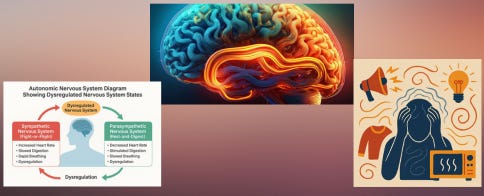
Both ADHD and Fibromyalgia involve a heightened sensitivity in the nervous system.
- ADHD: the brain processes stimuli differently—often too much, too fast
- Fibromyalgia: the body amplifies pain signals (called central sensitization)
In both, the system isn’t broken—it’s over-responsive.
2. Neurotransmitter Imbalances

Both conditions are linked to irregular levels of key brain chemicals:
- Dopamine ? motivation, focus, reward
- Serotonin ? mood, pain regulation
- Norepinephrine ? alertness, stress response
This overlap explains why people may experience both focus challenges and chronic pain or fatigue.
3. Brain Fog & Cognitive Strain
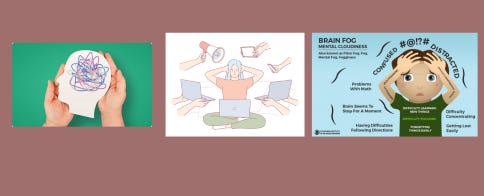
Many describe:
- Forgetfulness
- Difficulty concentrating
- Mental fatigue
In ADHD it’s often called distractibility; in fibromyalgia, it’s commonly known as “fibro fog.”
But the lived experience can feel very similar—like trying to think through mist.
4. Sleep Disturbances
Sleep is often disrupted in both:
- ADHD: difficulty settling the mind
- Fibromyalgia: non-restorative sleep (you sleep, but don’t feel rested)
This creates a loop ? poor sleep ? worse symptoms ? more poor sleep
5. Emotional Regulation & Stress Sensitivity
Both conditions can heighten emotional responses:
- ADHD ? emotional impulsivity, overwhelm
- Fibromyalgia ? stress can trigger pain flares
The body and mind are deeply connected here—stress is not just emotional, it becomes physical.
6. Co-occurrence (They Often Show Up Together)
There’s growing awareness that people with ADHD are more likely to also experience fibromyalgia (and vice versa).
Why? Likely due to shared underlying patterns:
- Nervous system dysregulation
- Trauma or chronic stress history
- Genetic predispositions
A Gentle Way to See It
Rather than viewing either condition as a “fault,” many now see them as different ways of processing the world—with heightened awareness, sensitivity, and responsiveness.
That sensitivity can be exhausting…
but it can also carry deep intuition, empathy, and perception when supported well.
Support Approaches That Often Help Both
- Nervous system regulation (breathing, gentle movement, meditation)
- Consistent sleep rhythms
- Anti-inflammatory nutrition
- Mind-body practices (like EFT, yoga, somatic work)
- Structured but flexible routines
The Role of Trauma & Life Experience
Many people with ADHD and Fibromyalgia share a history of prolonged stress or emotional strain.
Not always dramatic trauma—but:
- long-term pressure
- feeling unseen or misunderstood
- constantly adapting to fit in
Over time, the body learns to stay “on alert.”
That alertness can later show up as:
- racing thoughts (ADHD)
- amplified pain signals (fibromyalgia)
The body remembers… even when the mind has moved on.
The “Push–Crash” Cycle
This is a big one—and often misunderstood.
Many people experience:
- bursts of energy, creativity, or hyper focus
- followed by deep fatigue or pain flares
This isn’t inconsistency—it’s a nervous system rhythm.
The challenge is learning:
- when to ride the wave
- and when to gently step back before the crash
That awareness becomes a form of self-leadership.
Sensory Overload Isn’t Just Mental
With ADHD, sensory overload is often talked about in terms of noise or distraction.
With fibromyalgia, it can show up as:
- light sensitivity
- sound sensitivity
- touch sensitivity (even clothing can feel uncomfortable)
It’s the same root:
the system is taking in more than it can comfortably process.
The Diagnosis Gap (Especially for Women)
Many women are:
- diagnosed late with ADHD
- or never diagnosed at all
Instead, they may first receive labels like:
- anxiety
- depression
- chronic fatigue
- fibromyalgia
Only later does the fuller picture emerge.
This can lead to years of:
- self-doubt
- pushing harder to “cope”
- feeling something is off but not knowing what
The Body Isn’t Fighting You
This is perhaps the most important shift.
Instead of seeing symptoms as something to fight…
you can begin to see them as messages:
- Pain ? “something needs tending”
- Fatigue ? “you’ve gone beyond your reserves”
- Distraction ? “your mind needs a different rhythm”
When listened to, the body often softens.
Regulation Over Control
Traditional approaches often focus on “managing” or “fixing.”
But what tends to help both conditions most is:
- calming the nervous system
- creating safety in the body
- allowing rhythms instead of forcing structure
Simple things can be powerful:
- slow breathing
- gentle movement (not pushing)
- reducing overstimulation
- giving yourself permission to pause
A Perspective That May Resonate With You
There is often a deep, intuitive, perceptive nature in people with these experiences.
They:
- feel more
- notice more
- sense more
Without support, it overwhelms.
With support, it becomes:
- insight
- empathy
- creative intelligence
- wisdom in action
A Closing Reflection
What if this isn’t something to “overcome”…
but something to understand, support, and work with?
Not less of you…
but a gentler, more aligned way of being you.

- ADHD RESOURCES CHECK OUT SHAPE UP PLAN REALS
- What Is Fibromyalgia?
- Living with & Supporting someone with Fibromyalgia.
Sara Troy
You must be logged in to post a comment.