Simpol a global citizens’ initiative

Simpol is a global citizens’ initiative that develops the necessary policies to solve global problems and its supporters use their votes to drive governments to act together to implement them.

The main barrier to solving global problems is that no government can move first or act alone because doing so would make its national economy uncompetitive, risking unemployment, capital flight, and economic decline. As former UK Prime Minister Tony Blair said, “The reality of the politics of climate change is that no country will be willing to sacrifice its economy in order to address this challenge.” [1] This remains true for all global problems. In a globalized economy, it will always be so. Governments are therefore caught in a “Prisoner’s Dilemma”. It’s not that they don’t want to solve global problems, but that they can’t. That, indeed, is why the wider global justice movement has achieved little: because it demands change from those – i.e., governments – who are incapable of delivering it.

That’s why Simpol’s condition of simultaneous implementation is vital: it breaks this vicious cycle, eliminates the risk of uncompetitiveness, and resolves the dilemma. If sufficient nations act together simultaneously, no nation loses out – everyone wins.

Simpol operates in two stages:

A. Politicians and governments are invited to support Simpol only in principle by signing a Pledge to implement its policies simultaneously, subject to all or sufficient nations participating, and subject to the policies eventually being agreed.

B. Once sufficient nations have signed, an international negotiation to define and agree detailed policies can proceed, followed by implementation.

Simpol also incorporates these key features:

1.    Multi-issue policy packages

Simpol would consist of a series of multi-issue policy packages so that what a nation loses on one issue, it can gain on another. The losers on a climate agreement, for example, could be compensated by revenues from a currency transactions tax, so potentially making immediate action in every nation’s self-interest. And if the agreement is in everyone’s interests, so will be the inclusion of verification and enforcement measures. Simpol does NOT necessarily mean all nations implementing precisely the same measures. Rather, policies could be tailored to suit the needs and abilities of each nation. National sovereignty remains protected, because only policies requiring simultaneous implementation are included.

2.    Citizens and NGOs develop the policies AND citizens use their votes to drive governments to implement them

By joining the campaign, citizens declare that they will “give strong voting preference at national elections to politicians or parties that have signed the Pledge”. As the voting bloc of Simpol supporters grows, politicians who sign increase their chances of gaining those votes. Those who don’t, risk losing those votes, and potentially their seats, to politicians who signed instead. In that way, Simpol doesn’t need a majority of voters to succeed – only the critical balance between the two main competing parties. This is the unique tool that Simpol uses and it’s vital because, as NGOs should by now realise, politicians can easily ignore petitions and protests, but they cannot ignore votes.

This political power also gives Simpol’s supporters strong influence over its policy content. To remain electorally attractive to our supporters, politicians and parties will have little choice but to adopt the global policies our supporters prefer. Global justice NGOs can also play their part by providing expert policy input to Simpol and by encouraging their supporters to join the campaign.

Should Simpol gain the support of democratic governments, non-democratic nations would be invited to participate. They need solutions to global problems too. If global support becomes sufficient and a global negotiation is successful, the first Simultaneous Policy can be implemented. Subsequent Simultaneous Policies can then follow. For details on the campaign, its policy development and implementation, please see https://simpol.org/fileadmin/user_upload/Policies/Simpol_-_Information_Pack.pdf 

Progress so far

Simpol is active in a number of countries especially during elections. The campaign is most developed in the UK where over 100 Members of Parliament have signed the Pledge. They come from all the main UK political parties. A considerable number of MPs have also signed in Germany, Ireland, the EU, and some other countries. A list of all current pledged MPs is at https://simpol.org/who-we-are/pledged-politicians 

Many politicians sign because of the strong electoral pressure Simpol exerts. In highly contested electoral districts, this often creates a ‘domino effect’: once one candidate signs, competitors are forced to follow so that, whoever wins the seat, Simpol is sure to gain another pledged MP. Others sign simply because they see Simpol as common sense. As one politician commented, “Global problems require global solutions and Simpol could well help us get to those solutions. The way in which the process neatly side-steps the issue of countries fearing to act unilaterally is quite excellent. I have signed the pledge and thank you for inviting me to do so.” [2]

Building movement coherence

Simpol is designed as a tool to network the wider movement for solving global problems. To achieve this, we suggest that each initiative in the wider movement make a list of all its policy demands. Then it should subject each demand to the following test:

Would the unilateral implementation of the demand by a single government, or by a restricted group of governments (eg. the EU), be likely to cause it a significant competitive disadvantage?

If the answer is NO, then unilateral implementation is viable and the NGO can pursue that demand in the usual way. If the answer is YES, then that demand requires simultaneous implementation and should be pursued in cooperation with Simpol. By differentiating demands in this way, we would immediately create movement coherence because NGOs would then be using the right campaigning tool for the right job.

Fully understanding Simpol’s potential requires a deeper change in our thinking – a move from nation-centric to world-centric thinking. Co-written with psychotherapist Nick Duffell, the psychological steps required to make that change are set out in our book The Simpol Solution https://simpol.org/who-we-are/simpol-the-book .  As Noam Chomsky commented, “It’s ambitious and provocative. Can it work? Certainly worth a serious try.”


We at Simpol hope you’ll join in!

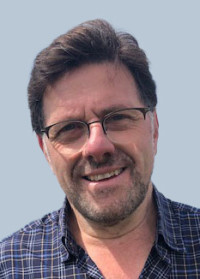
John Bunzl – Trustee     
       

International Simultaneous Policy Organisation

simpol.org

PLEASE GO HERE.


Let’s Get Sync’d podcasts

Brought to you by Sara Troy from Self Discovery Wisdom.com
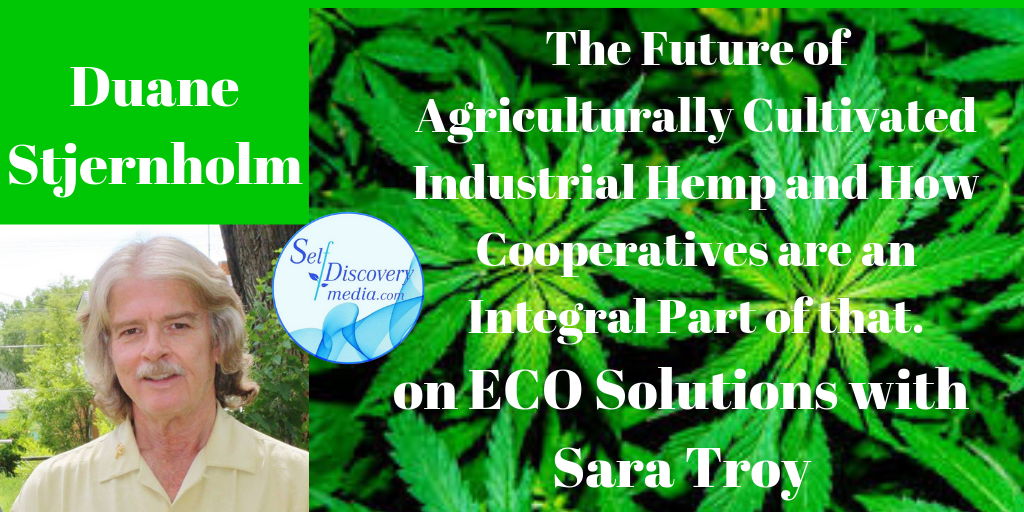
ECO 19-39 Colorado Hemp Processing Cooperative with Duane.


ECO Solutions with Sara Troy and her guest Duane Sternholm, on-air from September 24th

Duane Stjernholm Co-Founder and Operator: Colorado Hemp Processing Cooperative shares with us the value and uses of hemp and how it is growing today.


JOIN SARA AND DUANE HERE FOR MORE ON THE HEMP WORLD

VIDEO


 ITunesSpotify Soundcloud
  AmazonYouTube Music   iHEART
Podvine Podcasher  Podcast Addict
Mixcloud  Radio Public.   FM Player
 Odysee Youtube  Opodium
DOENJOYTHE WISDOM

Duane D. Stjernholm was born in La Junta, Colorado, a small town in the southeastern corner of the state where he learned Farming and Ranching from his Grandfathers. Raised in nearby Cheraw, an even smaller town, he graduated Co-Valedictorian from Cheraw High School and continued his education at Colorado State University in Ft. Collins, earning a B.S. Degree in Psychology. Seeking to explore the world in search of adventure, he joined the Peace Corps and spent two years in the Philippines working in Rice Irrigation Water Management in the Province of Pampanga, and subsequently teaching Introductory Social Sciences at the University of the Philippines at Los Baños, Laguna.
Recovering from “Reverse Culture Shock” upon his return to Colorado, he attended the Iliff School of Theology in Denver earning a Master of Arts in Religion Degree, specializing in Religious Philosophy and Metaphysics. Soon after graduation from Iliff, he was fortunate to attend a live speech by the renowned World Citizen and Inventor, R. Buckmaster Fuller, who inspired him on his current 35 year Mission of changing the prevalent mindset of humanity from competition to cooperation and collaboration in order to Co-Create the Greatest and Highest Good for all Earth Citizens. To that end, he founded the unprecedented Member organization, the United Earth Ecclesia.
To support and further his Mission he has worked in a number of hospitality and service-oriented positions culminating in his last positions as Production Administrator at the nationwide non-profit, Learning Ally (formerly Recording for the Blind and Dyslexic). He has published two books and launched United Earth Ecclesia website, ExLo.org, dedicated to the Co-Creation of the Greatest and Highest Good for all Earth Citizens. (RETURNING SOON)
Returning to La Junta after a 40-year absence to be closer to relatives and out of the big city, Duane saw a need for Agricultural Hemp processing facilities in the Arkansas Valley and beyond for the rapidly expanding hemp industry in Colorado. He responded to the “find a need and fill it” adage, and as a result, he and his Co-Founder have established the Colorado Hemp Processing Cooperative (COHPC.ORG) to fill that need and Further the Mission of Cooperation, not competition.

www.COHPC.ORG

linkedin.com/in/duane-stjernholm-

HEAR DUANE’S LAST SHOW WITH SARA HERE

MORE SHOWS ON OUR ECO SOLUTIONS GO HERE

FIND MORE SHOWS OF ILLUMINATION HERE

MORE ON SARA HERE

All of our shows/interviews are done by donation, if you enjoyed this show please support us here.

ECO 19-01 The Environment with Indigenous Peoples & Hindou Oumarou Ibrahim

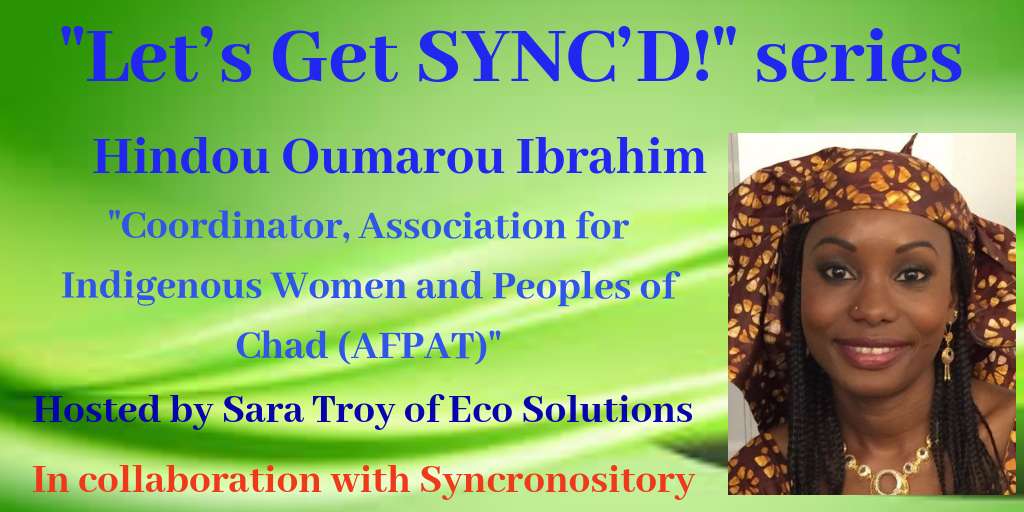
ECO SOLUTIONS with Sara Troy and her guest Hindou Oumarou Ibrahim, on air from January 1st.

Let’s Get Sync’d series

Expert in adaptation of indigenous peoples to and mitigation of climate change, traditional knowledge on the adaptation of pastoralists in Africa. Expert on women and climate change in Africa. Co-Chair, International Indigenous Peoples Forum on Climate Change, representing CSO at the UNCCD; Member of the Policy Board United Nations – Indigenous Peoples Partnership (UNIPP). Member of the Executive Committee, Indigenous Peoples of Africa Coordinating Committee (IPACC). Representative, Congo Basin

Indigenous Peoples and the Environment


TUNE IN HERE WITH SARA AND HINDOU TO HEAR HOW EARTH IS SHOWING US  THEY WAY.

VIDEO

 ITunesSpotify Soundcloud
  Amazon Google play,   iHEART
 Acast   onpodium  Anchor
  Audry  Radio Public.   FM Player
  Launchpad Mixcloud   Vurbl
   Odysee  Youtube Sticher

Self Discovery Media.  Choose Positive LivingHub of Discovery Orchard of Wisdom Feedspot

It is estimated that Indigenous territories contain 80 percent of the earth’s biodiversity. Indigenous lands also hold unquantified megatons of sequestered carbon as 11% of the planet’s forests are under their guardianship. These regions face an unprecedented and rapid loss of biodiversity and climate change effects resulting from the fossil fuel-based industrialized global economy and natural resource extraction. Many traditional Indigenous lands have become biodiversity “hotspots.” For Indigenous Peoples, conservation of biodiversity is an integral part of their lives and is viewed as spiritual and functional foundations for their identities and cultures. It is no coincidence that when the World Wildlife Fund listed the top 200 areas with the highest and most threatened biodiversity, they found that 95 percent are on Indigenous territories.

Indigenous Peoples and the environments they maintain are increasingly under assault from extractive industries such as mining, oil exploration, logging, and agro-industrial projects.

Indigenous Peoples resist this invasion with tremendous courage and skill, but their protests are too often ignored by governments and corporations.

Environmental activist and geographer Hindou Oumarou Ibrahim is one of 14 National Geographic Emerging Explorers for 2017. This group is being honored for the way its members explore new frontiers and find innovative ways to remedy some of the greatest challenges facing our planet. The 2017 class of Emerging Explorers will be honored at the National Geographic Explorers Festival in Washington, D.C. in June.

In rural parts of Chad, a nuisance plant has begun to spring up—one that strangles crops and can’t be eaten by the cows. People call it “the bad herb,” says Hindou Oumarou Ibrahim. It’s one of many changes her people, the nomadic Mbororo, are noticing: declines in milk from the cows, new illnesses, shifting seasons.

Ibrahim is working to collect indigenous knowledge about natural resources in Chad as part of a 3-D mapping project, while also representing her community in climate discussions at the United Nations. She describes a childhood that straddled two worlds: school in the capital city of N’Djamena and tending cows among family in the Mbororo. Now she bridges the gap between the indigenous people who intimately know their land and the governments making decisions many miles away.

www.culturalsurvival.org 

www.weforum.org/people/hindou-oumarou-ibrahim

facebook.com/hindou.ibrahim

MORE SHOWS ON ECO SOLUTIONS HERE 

FIND MORE SHOWS OF ILLUMINATION HERE

MORE LET’S GET SYNC’D SHOW HERE

lets-get-syncd-team-series