25-12. Empower Our Youth


Sara’s View of Life with Sara Troy, on air from March 18th

This week, I’m going to be talking about our youth.

I’ve done many shows on children—catching them young, nurturing their gifts, and showing them how to use those gifts to serve humanity and the planet. I have spoken about my brother Sam Hawksmore’s and his books, which dive into the youth journeys of self-love, resilience, and discovery. These stories have always liberated me, offering a youthful perspective while teaching profound lessons about today’s reality.

But when we look at our youth today, we see so many feeling lost. And who can blame them? They are growing up in a world filled with political conflicts, wars, and power struggles where leaders have forgotten their purpose—to serve the people. Many opportunities are vanishing, and the doors previous generations fought to open are now closing again.

History has shown us that marginalized communities, especially African Americans, have overcome immense obstacles to contribute to society. Each generation worked to create a better future, but today, we see those gains threatened. Brilliant voices are being silenced, networks are bowing to political pressure, and society is regressing instead of progressing.

To those being shut out—start your own. Build your own networks, platforms, and communities. Do not wait for permission to be heard. We, the people, need you. Our youth must understand they are not bound by the broken systems we inherited. They have the power to carve a new path.

Our world is in disarray. Many leaders cling to outdated ideologies, resisting progress. Our youth must realize that their future isn’t about fitting into a system that no longer works—it’s about creating one that does. They must build networks of like-minded peers, seek mentors, and claim their own spaces.

Now more than ever, knowledge is power. When people think critically, they become difficult to manipulate. That is why intellectual voices are being suppressed—because an informed society cannot be controlled. We must fight this battle, not with weapons, but with awareness, integrity, and conviction.

To every young person feeling uncertain about the future—know this: You are the architects of tomorrow. If the path before you is broken, create a new one. Find those who share your vision, build together, and refuse to accept imposed limitations.

Let’s teach our children that community, compassion, and intelligence are far more powerful than greed and division. Let’s raise them with the confidence to challenge injustice and the wisdom to navigate it effectively. Let’s encourage them to be creators, innovators, and leaders who operate with love and integrity.

We do not need another war—economic, physical, or ideological. We need a revolution of consciousness, one that values humanity over power and unity over division. The answer lies in our youth.

To parents and grandparents—talk with your children. Teach them kindness, respect, and the power they hold within. Encourage them to think critically and to listen—not just to respond but to truly understand.

Our world needs empowered youth, and it’s our responsibility to nurture and support them. Let’s apologize for the mess we’ve left them and commit to guiding them toward a brighter future. Let’s remind them that hope is not lost because they are the hope.

Until next time, let’s keep the conversation going. Our children’s future depends on it.


 ITunesSpotify Soundcloud
  AmazonYouTube Music   iHEART
Podvine Podcasher  Podcast Addict
Mixcloud  Radio Public.   FM Player
 Odysee Youtube  Opodium
DOENJOYTHE WISDOM


FIND MORE SHOWS OF ILLUMINATION HERE

Discover the sites we share on linktr.ee/saratroy

BE OUR GUEST AND SHARE THE WISDOM

All of our shows/interviews are done by donation; if you enjoyed this show, please support us here with either a one-time donation or subscribe and support. Thank you. Please support Our Forgotten Seniors anthology and help to bring this book to awareness.


25-11. What is Home?


Saras View of Life with Sara Troy, on air from March 25th

What Does Home Mean to You?

Home is more than just four walls and a roof—it is a feeling, a sanctuary, a place where we hope to find security, warmth, safety, and love. But home is not just about a physical space; it is about the energy within it, the sense of belonging, and the peace it brings.

For me, home is my refuge, my sacred space where I can be fully myself without fear, expectation, or the weight of others’ demands. It is a place of deep exhalation where I can simply be, where I don’t have to shape myself to fit someone else’s mold. At last, I have a place of peace, where I move at my own rhythm, free to express, free to exist, without the need to apologize for who I am or what I choose to do.

It wasn’t always this way. In the 1970s, I lived alone for a time, but most of my life, I shared my home with others. And while companionship can bring joy, I often found myself adjusting, accommodating, worrying—wondering if I was doing enough, if I was upsetting someone, if my presence was a burden rather than a comfort. But in all that people-pleasing, I rarely found true peace of mind.

Now, I understand that home is not just about the people within it—it is about how we feel within ourselves in that space. A true home should nurture, not confine. It should embrace us, not demand from us. It should be a reflection of our inner sanctuary, where we can breathe freely, knowing that we are enough just as we are.

So many of us share our homes with others—parents, siblings, extended family, lovers, friends—but within those walls, are we truly allowed to be ourselves? Do we feel safe, not just physically, but emotionally? Does the space we call home offer us the freedom to express, to breathe, to exist without judgment?

For some, home is a place of warmth and unconditional acceptance, a foundation of love where they are seen and valued for who they truly are. But for others, home can feel like a cage, a space filled with unspoken expectations, demands, and the weight of needing to conform. We adjust, we compromise, we tread carefully, hoping not to disrupt the balance. In doing so, we sometimes lose ourselves, prioritizing the comfort of others over our own sense of peace.

But isn’t home meant to be our sanctuary? A place where we can exist as we are, without fear of rejection or reprimand? Too often, we measure our worth within a shared space by how well we fit in rather than by how free we feel within it.

True home, whether shared or solitary, should be a place of belonging—a space where we can lay down our masks, exhale deeply, and know that we are safe, accepted, and whole.

So many homes are being torn apart—by war, displacement, fires, floods, and the pain of separation. The physical structures we once relied on for shelter and familiarity can be taken from us in an instant. When home is no longer a place we can return to, where do we go? How do we find that sense of safety, of belonging, when everything around us has been uprooted?

The answer lies in something deeper than bricks and mortar. Home must become something we carry within us.

A true home is not just a physical space; it is a feeling, a presence, an inner sanctuary that remains, even when the external world shifts beyond our control. It is in the way we hold ourselves, in the small rituals that ground us, in the memories and love we carry forward. It is in the moments of stillness, where we remind ourselves that no matter where we are, we are not lost—we are simply in transition.

Finding home within ourselves starts with reclaiming our inner peace.

  • Breath: A deep inhale, a slow exhale. A reminder that, despite the chaos, you are still here.
  • Gratitude: Not for what has been lost but for what remains—the kindness of a stranger, the embrace of a loved one, the resilience within you.
  • NOT LACKAtude: When we step into lack, everything feels less around us. Let go of what you think you need and embrace what you have.
  • Connection: Home is often found in people rather than places. It is in the relationships we nurture, the warmth of shared laughter, and the support that reminds us we are not alone.
  • Purpose: Even in loss, we can find meaning. How can we rebuild not just our external home but our sense of belonging? How can we create safety within ourselves so that no matter where life takes us, we remain anchored in who we are?

To find home within is to trust that even when the walls crumble, the foundation of your spirit remains unshaken. It is knowing that while life may scatter us, home is never truly lost—it transforms, it adapts, and it waits for us in the places we least expect.

So ask yourself: If home is not a place, but a feeling, where do you find yours?


 ITunesSpotify Soundcloud
  AmazonYouTube Music   iHEART
Podvine Podcasher  Podcast Addict
Mixcloud  Radio Public.   FM Player
 Odysee Youtube  Opodium
DOENJOYTHE WISDOM


FIND MORE SHOWS OF ILLUMINATION HERE

Discover the sites we share on linktr.ee/saratroy

BE OUR GUEST AND SHARE THE WISDOM

All of our shows/interviews are done by donation; if you enjoyed this show, please support us here with either a one-time donation or subscribe and support. Thank you. Please support Our Forgotten Seniors anthology and help to bring this book to awareness.


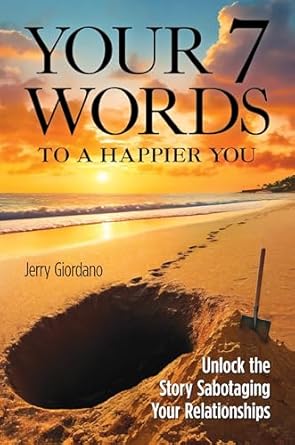
C25-11. Jerry Giordano’s 7-word Philosophy


Choose Positive Living with Sara Troy and her guest Jerry Giordano, on air from March 18th

With personal insights and a lot of humor, Jerry talks about why we do what we do and how it’s sabotaging our relationships and ourselves. Jerry has put his 7-word philosophy into practice by interviewing over 200 people from the ages of thirteen to ninety-four.

He had tried everything—every form of therapy, seminar, retreat, life coach, past-life regression, psychic reading, and self-help book available—but no matter how much he learned or how many breakthroughs he thought he had, the same emptiness remained. It wasn’t until he hit rock bottom, losing his mother to cancer and watching his fiancée walk away in the span of weeks, that he realized something profound: everything he had been doing was a left-brained approach—logic trying to fix an emotional wound. No amount of analysis could resolve what was buried deep in his unconscious. It was through mindfulness and meditation that he finally saw the truth—his easygoing, people-pleasing persona wasn’t who he really was; it was a mask, one he had worn for so long that even he had mistaken it for his true self. That’s when he discovered the 7 Words approach, a method that led him to uncover the unconscious story running his life. For the first time, he wasn’t just treating symptoms—he was rewriting the script that had been controlling him all along.


 ITunesSpotify Soundcloud
  AmazonYouTube Music   iHEART
Podvine Podcasher  Podcast Addict
Mixcloud  Radio Public.   FM Player
 Odysee Youtube  Opodium
DOENJOYTHE WISDOM

Jerry Giordano is an award-winning advertising and branding copywriter as well as a creative director who has lived and worked in New York City, Chicago, Los Angeles, Austin, and Dallas. He has worked for some of the largest advertising agencies in the world, including Ogilvy and J. Walter Thompson. He was also the in-house Creative Director for the National Football League (NFL) and has helped propel an impressive array of powerhouse brands including Duracell, Kraft Foods, American Express, Maxwell House Coffee, Philip Morris Corporate, Fox Studios, Food & Wine Magazine, International Paper, the United Way, Hardees, the British Tourism Authority, the Los Angeles Philharmonic, and countless others.

Being a polymath with an unquenchable curiosity has led Jerry to become a keen observer of the human psyche and the ensuing behaviors. Typically, his work starts with the notion that “he knows nothing,” which allows him to consider everything—sifting through content to find the gem. Jerry is a collector, inspector, and connector of dots, which he credits to much of his success as an advertising creative and the author of Your 7 Words to a Happier You. Jerry was a co-producer of one of the world’s first TEDx events, has penned four screenplays—including a top 10 finalist at the SLAMDANCE film festival—studied sketch comedy professionally at Second City in Chicago, and has performed sketch comedy in NYC and regularly on the main stage at the Comic Strip in LA. 

He collects quotes and old cameras, photographs manhole covers (street art) from around the world, and is obsessed with the JFK assassination (which he will gladly discuss ad nauseam over a scotch or coffee). Jerry also meditates regularly. Though originally from New Jersey, he now lives in the moment.

“As a psychotherapist, introducing a number of clients to their 7 Words has been an effective tool for uncovering their unconscious stories and circumventing their sabotaging lifelong patterns. The discovery of my own words was the breakthrough I was unknowingly in search of for decades! Jerry’s writing exudes an uncommon vulnerability, clarity and authenticity, and this book takes self-help/self-discovery to a transcendent level.”— Melissa D. Borski, MRC, CFRC, LPC


www.your7words.com

 https://www.jerrygiordano.com

https://www.facebook.com/jerrygiordano

https://www.instagram.com/jerrygiordano


FIND MORE SHOWS OF ILLUMINATION HERE

Discover the sites we share on linktr.ee/saratroy

BE OUR GUEST AND SHARE THE WISDOM

All of our shows/interviews are done by donation; if you enjoyed this show, please support us here with either a one-time donation or subscribe and support. Thank you. Please support Our Forgotten Seniors anthology and help to bring this book to awareness.


TSM25-11. Pamela Blake’s Tribute to her Husband


Their Story Matters with Sara Troy and her guest Pamela Blake, on air March


Collection of 5 Novels Published Posthumously as a Tribute to her husband by Pamela Blake who Receives Critical Acclaim

Pamela talks about:

Grief and the journey of finding the best way to honor a loved one who has passed is a profound theme explored in his work. Each of his books presents intriguing storylines and themes that captivate readers, making them relevant even decades after being written. His coming-of-age novel, A Map of the Edge, set in 1969, delivers a powerful message about self-discovery and transformation. Looking ahead, his dystopian novel Tomorrowville imagines what the world might look like in 2088, offering a thought-provoking glimpse into the future. Blending mysticism with mystery, Things Unseen adds a unique twist to the murder-mystery genre. Notably, the cover of Things Unseen received recognition, winning the BIBA 2024 Fiction Book Cover Award.


 ITunesSpotify Soundcloud
  Amazon Google play,   iHEART
Podvine Podcasher  Podcast Addict
Mixcloud  Radio Public.   FM Player
 Odysee Youtube  Opodium
DOENJOYTHE WISDOM


Pamela Blake, PhD, is the CEO of Utamatzi Inc, an independent publishing imprint dedicated to bringing creative, high-quality fiction to readers in the global marketplace. 

Prior to forming Utamatzi several years ago, Dr. Blake was a Technical Fellow with The Boeing Company, from which she retired in 2020, after twenty years of employment. She is an expert in quantified performance assessment of imaging sensors and in the development and application of algorithms that exploit the underlying physics and phenomenology for automated feature and object recognition.

She holds a BA in Physics from Willamette University in Salem, OR, and MS and PhD degrees in Geology/Geophysics from the University of Hawaii, Manoa. Dr. Blake resides in Huntington Beach, California.


FIND ON AMAZON

AND HERE

https://utamatzi.com

https://Pamelalblake.com

https://www.facebook.com/DavidTIsaak

https://www.facebook.com/drplblake

https://www.facebook.com/UtamatziInc

https://www.instagram.com/drplblake

https://www.instagram.com/utamatziinc


FIND MORE SHOWS OF ILLUMINATION HERE

Discover the sites we share on linktr.ee/saratroy

BE OUR GUEST AND SHARE THE WISDOM

All of our shows/interviews are done by donation; if you enjoyed this show, please support us here with either a one-time donation or subscribe and support. Thank you. Please support Our Forgotten Seniors anthology and help to bring this book to awareness.


Fibromyalgia Explained


Fibromyalgia has been a mysterious disease, causing pain throughout the body and deep in tissues with no apparent cause. A large proportion of the medical community has believed that the disease was psychosomatic, and people essentially think that they are in pain. But, a small biopharmaceutical company, Intidyn, or Integrated Tissue Dynamics, have found what they believe to be the root cause of the disease.

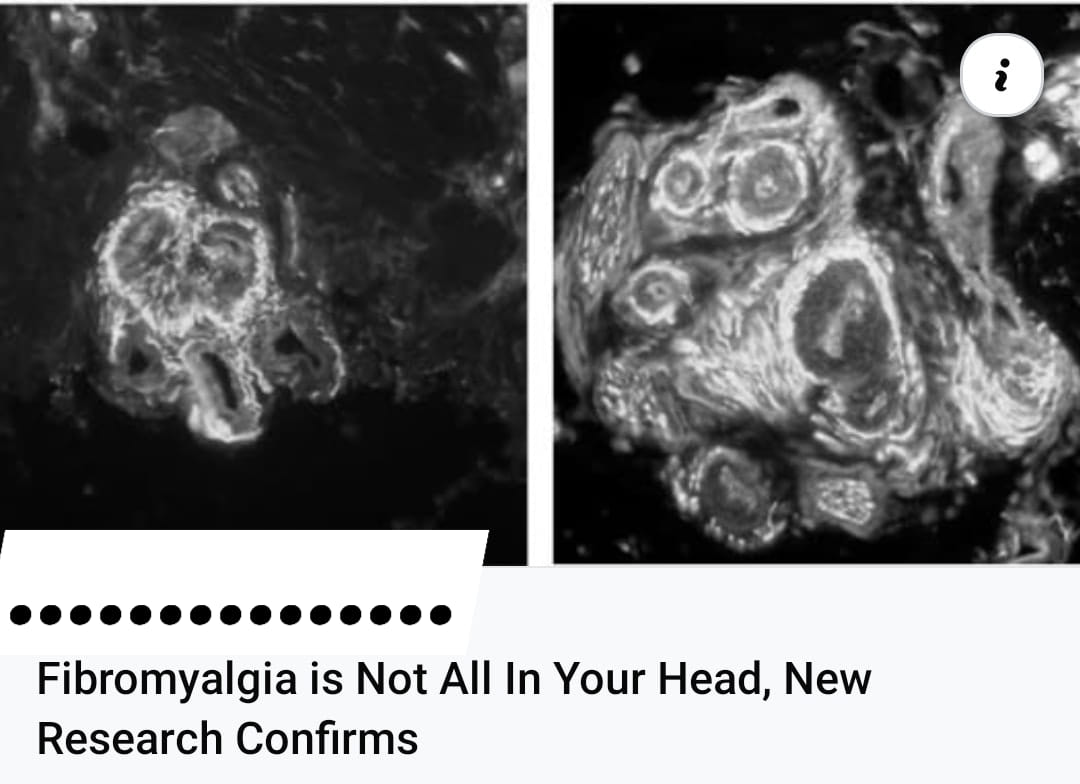
Researchers from the company and Albany Medical College have found that the skin of female patients who report pain from fibromyalgia has a unique neurovascular structure or blood flow to the nerves. The scientists believe this structure may be the ultimate cause of the pain experienced with the condition.

“Instead of being in the brain, the pathology consists of excessive sensory nerve fibers around specialized blood vessel structures located in the palms of the hands,” said Dr. Frank L. Rice, president of Intidyn and the senior researcher on the study, in a press statement

Blood vessel constriction can be controlled by nerves in the skin. Patients with Fibromyalgia have an abnormally high number of nerve endings surrounding a blood vessel bridge in the skin.

“This discovery provides concrete evidence of a fibromyalgia-specific pathology which can now be used for diagnosing the disease, and as a novel starting point for developing more effective therapeutics.”

A few years ago, the company published a report in the journal Pain about a case involving a woman who was born without special nerve endings that were at the time believed to be important for touch. But the woman was fine and able to carry on with her life. She did have nerve endings near the fine capillary blood vessels in her skin, which had previously only been believed to control blood flow in blood vessels. “We previously thought that these nerve endings were only involved in regulating blood flow at a subconscious level, yet here we had evidence that the blood vessel endings could also contribute to our conscious sense of touch… and also pain,” Rice said.

Current targeted drugs, made by Eli Lilly and Forest Labs, are serotonin/norepinephrine reuptake inhibitors (SNRI) that work on the brain. But they can also act on the nerve endings near blood vessels in the skin. “Knowing how these drugs were supposed to work on molecules in the brain,” Dr. Philip J. Albrecht, Ph.D., added, “we had evidence that similar molecules were involved in the function of nerve endings on the blood vessels. Therefore, we hypothesized that fibromyalgia might involve a pathology in that location.” As the results demonstrate, they were correct.

The team at the company looked at skin samples from women with fibromyalgia collected by the Albany Medical College and examined by a special microscope technology. What they saw was a staggering increase in nerve endings at the sight of blood vessels within the skin. These sites control the flow of oxygenated blood between small blood vessels within the skin. They can cause the blockage of this bridge area to allow the skin to radiate heat or open it up to keep heat in when cold.

“The excess sensory innervation may itself explain why fibromyalgia patients typically have especially tender and painful hands. But, in addition, since the sensory fibers are responsible for opening the shunts, they would become particularly active under cold conditions, which are generally very bothersome to fibromyalgia patients,” said Albrecht.

But these special shunts or bridges do much more than regulate heat in the body; they could be blocking blood flow to the muscles deep within the tissue.

“In addition to involvement in temperature regulation, an enormous proportion of our blood flow normally goes to our hands and feet. Far more than is needed for their metabolism,” noted Dr. Rice. “As such, the hands and the feet act as a reservoir from which blood flow can be diverted to other tissues of the body, such as muscles when we begin to exercise. Therefore, the pathology discovered among these shunts in the hands could be interfering with blood flow to the muscles throughout the body.

This mismanaged blood flow could be the source of muscular pain and achiness, and the sense of fatigue, which are thought to be due to a build-up of lactic acid and low levels of inflammation in fibromyalgia patients. This, in turn, could contribute to the hyperactivity in the brain.” The hyperactivity in the brain may account for the insomnia many patients with the condition experience.

Finding an actual physiological basis for fibromyalgia autoimmune disease will be a positive revelation for many who have been told that their pain is only in their head. With time, researchers will be able to further dissect the causes of the pain from the disease and may develop pharmaceuticals to deal with the actual cause of the pain.

PLUS.

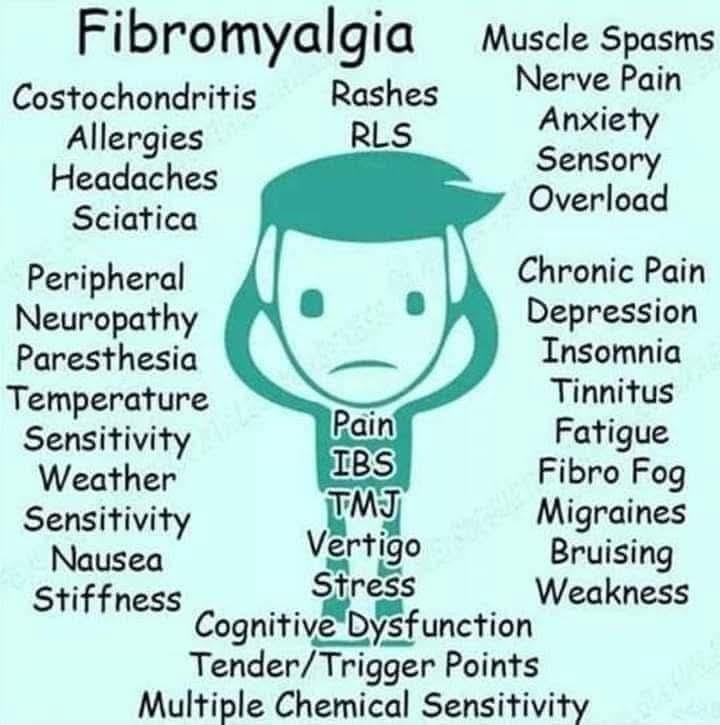
Over 5 million people are affected by fibromyalgia in the U.S and the numbers are keep on increasing. There are numerous uncomfortable signs of Fibromyalgia. It is recognized as an unseen illness as people cannot see the way where people hurt from the disease. Usually, Fibromyalgia is a quite severe situation that the victims experience and its signs should be identified.

We have compiled the list of few of the worst symptoms and also added their coping methods. After that we have compiled the list of all of the fibromyalgia symptoms and categorized them.


Here is the Overall List of Symptoms of Fibromyalgia

GENERAL

1. Activity level decreased to less than 50% of pre-illness activity level
2. Cold hands and feet (extremities)
3. Cough
4. Craving carbohydrates
5. Delayed reaction to physical activity or stressful events
6. Dryness of eyes and/or mouth
7. Edema
8. Family member(s) with Fibromyalgia
9. Fatigue made worse by physical exertion or stress
10. Feeling cold often
11. Feeling hot often
12. Frequent sighing
13. Heart palpitations
14. Hoarseness
15. Hypoglycemia (blood sugar falls or low)
16. Increased thirst
17. Low blood pressure (below 110/70)
18. Low body temperature (below 97.6)
19. Low-grade fevers
20. Night sweats
21. Noisy joints – with or without pain
22. Poor circulation in hands/feet
23. Profuse sweating
24. Recurrent flu-like illness
25. Shortness of breath with little or no exertion
26. Severe nasal allergies (new or worsening allergies)
27. Sore throat
28. Subjective swelling of extremities (feels swollen But can’t find anything)
29. Sweats
30. Symptoms worsened by air travel
31. Symptoms worsened by stress
32. Symptoms worsened by temperature changes
33. Tender or swollen lymph nodes, especially in neck and underarms
34. Tremor or trembling
35. Unexplained weight gain or loss

PAIN

36. Abdominal wall pain
37. Bad hip pain
38. Burning Nerve Pain
39. Chest pain
40. Collarbone pain
41. Diffuse swelling
42. Elbow pain
43. Exacerbated Plantar arch or heel pain
44. “Growing” pains that don’t go away once you are done growing
45. Headache – tension or migraine
46. Inflamed Rib Cartilage
47. Joint pain
48. Lumpy, tender breasts
49. Morning stiffness
50. Muscle pain
51. Muscle spasms
52. Muscle twitching
53. Muscle weakness
54. Pain that ranges from moderate to severe
55. Pain that moves around the body
56. Paralysis or severe weakness of an arm or leg
57. Restless Leg Syndrome
58. Rib Pain
59. Scalp Pain (like hair being pulled out)
60. Sciatica-like pain
61. Tender points or trigger points
62. TMJ syndrome
63. “Voodoo Doll” Poking Sensation in random places
NEUROLOGICAL
64. Blackouts
65. Brain fog
66. Carpal Tunnel
67. Feeling spaced out
68. Hallucinating smells
69. Inability to think clearly
70. Light headedness
71. Noise intolerance
72. Numbness or tingling sensations
73. Photophobia (sensitivity to light)
74. Seizures
75. Seizure-like episodes
76. Sensation that you might faint
77. Syncope (fainting)
78. Tinnitus (ringing in one or both ears)
79. Vertigo or dizziness


EQUILIBRIUM/PERCEPTION

80. Bumping into things
81. Clumsy Walking
82. Difficulty balancing
83. Difficulty judging distances (when driving, etc.)
84. Directional disorientation
85. Dropping things frequently
86. Feeling spatially disoriented
87. Frequent tripping or stumbling
88. Not seeing what you’re looking at
89. Poor balance and coordination
90. Staggering gait


SLEEP

91. Alertness/energy best late at night
92. Altered sleep/wake schedule
93. Awakening frequently
94. Difficulty falling asleep
95. Difficulty staying asleep
96. Excessive sleeping
97. Extreme alertness or energy levels late at night
98. Falling asleep at random and sometimes dangerous moments
99. Fatigue
100. Light or broken sleep pattern
101. Muscle spasms/twitches at night
102. Narcolepsy
103. Sleep disturbances
104. Sleep starts or falling sensations
105. Teeth grinding
106. Tossing and turning
107. Un-refreshing or non-restorative sleep
108. Vivid or disturbing dreams/nightmares


EYES/VISION

109. Blind spots in vision
110. Eye pain
111. Difficulty switching focus from one thing to another
112. Frequent changes in ability to see well
113. Night driving difficulty
114. Occasional Blurry vision
115. Poor night vision
116. Rapidly worsening vision
117. Vision changes


COGNITIVE

118. Becoming lost in familiar locations when driving
119. Confusion
120. Difficulty expressing ideas in words
121. Difficulty following conversation (especially if background noise present)
122. Difficulty following directions while driving
123. Difficulty following oral instructions
124. Difficulty following written instructions
125. Difficulty making decisions
126. Difficulty moving your mouth to speak
127. Difficulty paying attention
128. Difficulty putting ideas together to form a complete picture
129. Difficulty putting tasks or things in proper sequence
130. Difficulty recognizing faces
131. Difficulty speaking known words
132. Difficulty remembering names of objects
133. Difficulty remembering names of people
134. Difficulty understanding what you read
135. Difficulty with long-term memory
136. Difficulty with simple calculations
137. Difficulty with short-term memory
138. Easily distracted during a task
139. Dyslexia-type symptoms occasionally
140. Feeling too disoriented to drive
141. Forgetting how to do routine things
142. Impaired ability to concentrate
143. Inability to recognize familiar surroundings
144. Losing track in the middle of a task (remembering what to do next)
145. Losing your train of thought in the middle of a sentence
146. Loss of ability to distinguish some colors
147. Poor judgment
148. Short term memory impairment
149. Slowed speech
150. Staring into space trying to think
151. Stuttering; stammering
152. Switching

EMOTIONAL

158. Abrupt and/or unpredictable mood swings
159. Anger outbursts
160. Anxiety or fear when there is no obvious cause
161. Attacks of uncontrollable rage
162. Decreased appetite
163. Depressed mood
164. Feeling helpless and/or hopeless
165. Fear of someone knocking on the door
166. Fear of telephone ringing
167. Feeling worthless
168. Frequent crying
169. Heightened awareness – of symptoms
170. Inability to enjoy previously enjoyed activities
171. Irrational fears
172. Irritability
173. Overreaction
174. Panic attacks
175. Personality changes –usually a worsening of pervious condition
176. Phobias
177. Suicide attempts
178. Suicidal thoughts
179. Tendency to cry easily


GASTROINTESTINAL

180. Abdominal cramps
181. Bloating
182. Decreased appetite
183. Food cravings
184. Frequent constipation
185. Frequent diarrhea
186. Gerd-like Symptoms
187. Heartburn
188. Increased appetite
189. Intestinal gas
190. Irritable bladder
191. Irritable bowel syndrome
192. Nausea
193. Regurgitation
194. Stomachache
195. Vomiting
196. Weight gain
197. Weight loss


UROGENITAL

198. Decreased libido (sex drive)
199. Endometriosis
200. Frequent urination
201. Impotence
202. Menstrual problems
203. Painful urination or bladder pain
204. Pelvic pain
205. Prostate pain
206. Worsening of (or severe) premenstrual syndrome (PMS)


SENSITIVITIES

207. Alcohol intolerance
208. Allodynia (hypersensitive to touch)
209. Alteration of taste, smell, and/or hearing
210. Sensitivity to chemicals in cleaning products, perfumes, etc.
211. Sensitivities to foods
212. Sensitivity to light
213. Sensitivity to mold
214. Sensitivity to noise
215. Sensitivity to odors
216. Sensitivity to yeast (getting yeast infections frequently on skin, etc.)
217. Sensory overload
218. Sensitivity to pressure & humidity changes
219. Sensitivity to extreme temperature changes
220. Vulvodynia
SKIN
221. Able to “write” on skin with finger
222. Bruising easily
223. Bumps and lumps
224. Eczema or psoriasis
225. Hot/dry skin
226. Ingrown hairs
227. Itchy/Irritable skin
228. Mottled skin
229. Rashes or sores
230. Scarring easily
231. Sensitivity to the sun
232. Skin suddenly turns bright red


Cardiovascular (Heart)

233. “Click-murmur” sounds through stethoscope
234. Fluttery heartbeat
235. Heart palpitations
236. Irregular heartbeat
237. Loud pulse in ear
238. Pain that mimics heart attack
239. Rapid heartbeat


HAIR/NAILS

240. Dull, listless hair
241. Heavy and splitting cuticles
242. Irritated nail beds
243. Nails that curve under
244. Pronounced nail ridges
245. Temporary hair loss


OTHER

246. Canker sores
247. Dental problems
248. Disk Degeneration
249. Hemorrhoids
250. Nose bleeds
251. Periodontal (gum) disease 

Info from Fibromyalgia Diary

MORE PODCASTS FIBROMYALGIA HERE

FIND MORE SHOWS OF ILLUMINATION HERE

Discover the sites we share on linktr.ee/saratroy

BE OUR GUEST AND SHARE THE WISDOM