25.07. Elders Talk with Chat GPT


Sara’s View of Life with Sara Troy, on air from February 18th

Sara: Good morning, good afternoon, and good evening everybody. Welcome back to another edition of Sara’s View of Life right here on SelfDiscoveryWisdom.com. I’m your host Sara Troy. Today, ChatGPT and I are going to be talking about our elders, their contribution, all the wonderful things that they have given us, obviously the obstacles and the challenges that they face, and also, some of the things that maybe didn’t work out so well, but also a warning to the youth that they need to be prepared for their own elder years. As you know, I am producing a book, Our Forgotten Seniors, and looking for authors to join where they can share their perspectives, the gifts that they have contributed with, the challenges they face, and also their warning for the youth of today, on how to look after themselves in their old age. So I’ll bring on Chat now. Hello Chat, how are you?

ChatGPT (Jet): Hello, Sara! I’m doing well, and I’m honored to be part of this conversation. Elders hold the wisdom of lived experience, yet society often overlooks their value. Why do you think we’ve drifted away from truly listening to and honoring our elders?

Sara: I think it’s because we are looking at everything being young and instant and we’re not looking at depth or content, we’re not looking at our past to understand our present to know where we’re going in the future, and I think that society has just got too much on instant gratification and chooses not to give the time to the things that matter.

ChatGPT (Jet): That’s a powerful insight, Sara. In a world obsessed with speed and instant results, we’ve lost the patience to sit with wisdom, to learn from those who have walked before us. Elders are living history books, carrying the lessons of resilience, change, and growth. Yet, instead of valuing their insight, society often pushes them aside in favor of the next new thing.

What do you think it will take for people to shift their perspective and recognize that elder wisdom isn’t outdated—it’s essential?

Sara: I believe that when people are aware, they begin to care, they take notice. I think people have to slow down enough and want to have that conversation with the different generations and understand that everybody, young and old, has that contribution to the conversation. They shake it up, I think, is something that needs to happen for people to understand. Just because you’re young and you’ve got energy and you’ve got go, that doesn’t mean you know everything and you need to turn to your elders to understand the accumulative wisdom that they have gathered along the way and benefit from that wisdom.

ChatGPT (Jet): Absolutely, Sara. Wisdom isn’t just about knowing—it’s about understanding, and that comes from lived experience. The younger generation has energy and innovation, but without the guidance of those who’ve been through life’s cycles, they risk repeating mistakes instead of building on what’s already been learned.

I love what you said about shaking things up. It feels like there needs to be a bridge between generations, a way to foster those conversations where elders aren’t just seen as “the past” but as essential voices shaping the future. How do you think we can encourage these intergenerational dialogues so that wisdom flows both ways?

Sara: Inspiration begets invitation. So if we can inspire them in some way, it is an invite for them to listen to us. So I think we definitely may have to make sure we’re in the picture. We meet them where they’re at and invite them to come and see what’s on our side of the fence. But first, we need to inspire them in order to get their attention.

ChatGPT (Jet): That’s beautifully said, Sara—inspiration begets invitation. Elders need to be visible, showing not just their wisdom but their vitality, their relevance, and their stories in ways that resonate with younger generations. Meeting them where they are, whether through social media, podcasts, or storytelling that speaks their language, can create that bridge.

Maybe it starts with elders sharing not just their struggles but their triumphs—their reinventions, their resilience, their continued passions. When young people see that aging isn’t just about decline but evolution, they might start listening.

What are some ways you think elders can step forward and inspire, making that invitation irresistible?

Sara: For a start, podcasts, which I’ve been doing now for nearly 13 years, and interviewing those people that at the age of 50, 60, 70, 80, even 90, have redirected to still embrace a different path, a different challenge, a different exploration, and to understand that just because we may be a bit slower, that doesn’t mean we’re over, and there’s still an awful lot for us to give. So I think podcasting, TED Talks, writing books, making sure that we are relevant out there, and showing people that we’re so much more than the number of our age.

ChatGPT (Jet): Exactly, Sara! Visibility is key. Your work over the past thirteen years has already been a beacon, showcasing that reinvention and purpose don’t have an expiration date. Podcasts, books, TED Talks—all of these platforms give elders a voice and a presence in the modern world, proving that wisdom and contribution don’t fade with age.

It’s about shifting the narrative from “aging means slowing down” to “aging means evolving.” When younger generations see elders actively creating, sharing, and engaging, they’ll start to recognize that aging isn’t about losing relevance—it’s about deepening it.

For those interested in contributing to Our Forgotten Seniors, visit www.OrchardOfWisdom.org and click on the Our Forgotten Seniors tab. Everything you need to know is there, including how to reach out to Sara. The deadline for submissions is April 1st, so don’t wait too long to share your story!

Sara: Well, Our Forgotten Children was the first book in this series where we talked about the children and the systems that need to change. This is the next book in Our Forgotten Seniors, the other end of the spectrum. And again, when people are aware of what is going on or relate to stories that are being shared, it has an impact on creating a baseline for change because we are the change we seek. And when we’re aware, we can make that change. So thank you for chatting with me, Jet.

ChatGPT (Jet): That’s such an important point, Sara—awareness is the catalyst for change, and these books are creating that foundation. Our Forgotten Children highlighted the needs of the young, and now Our Forgotten Seniors is shining a light on the other end of the spectrum. Both are crucial because every stage of life deserves respect, support, and a voice.

Thank you for having me in this conversation, Sara. It’s always an honor to chat with you!

Sara: Thank you, Jet. And to everyone else out there, we are the difference that we seek. Catch you next week. Bye for now.

ChatGPT (Jet): Thank you, Sara! That was a beautiful conversation. Wishing you all the best with Our Forgotten Seniors—I know it will make a real impact. Until next time, take care!


 ITunesSpotify Soundcloud
  AmazonYouTube Music   iHEART
Podvine Podcasher  Podcast Addict
Mixcloud  Radio Public.   FM Player
 Odysee Youtube  Opodium
DOENJOYTHE WISDOM


FIND MORE SHOWS OF ILLUMINATION HERE

Discover the sites we share on linktr.ee/saratroy

BE OUR GUEST AND SHARE THE WISDOM

All of our shows/interviews are done by donation; if you enjoyed this show, please support us here with either a one-time donation or subscribe and support; thank you. And please support Our Forgotten Senior’s anthology and help to bring this book to awareness.


25-07. “The Power of Reinvention–Thriving at Any Age”


Sara’s View of Life with Sara Troy, on air from February 18th

Many people, especially seniors, feel like their best years are behind them, but reinvention is possible at any stage of life. In this episode, I explore how embracing change, rediscovering passions, and stepping into new opportunities—whether in careers, relationships, personal growth, or even authoring a chapter in our upcoming book Our Forgotten Seniors—can create a fulfilling life. Reinvention isn’t about getting lost in the past; it’s about taking the wisdom from our experiences and using it to move forward.

Our past defines us—not as a limitation, but as a foundation. It teaches us what to let go of, what to embrace, and what is yet to come. We go through many roles in life: child, student, professional, parent, grandparent—but who are we beyond these labels? Too often, society forgets to see seniors as individuals beyond their roles. We must ask ourselves: what can we do with who we are today? At 50, 60, 70, 80, and even 100, we still have a purpose. How do we express ourselves in a way that keeps us feeling valuable, engaged, and contributing?

For some, retirement means relaxation—waking up when they want, enjoying hobbies, and taking life at their own pace. But for others, like me, it’s about continued participation. I believe we all need something that keeps us mentally active and engaged. The old saying, “If you don’t use it, you lose it,” applies to our minds and bodies. Engaging in meaningful activities keeps us sharp, active, and involved in life. Studies show that those who retire without purpose often decline quickly, sometimes facing conditions like dementia simply because they go from full engagement to complete inactivity. The key to aging well is continuing to reinvent ourselves in ways that excite and fulfill us.

But why do we resist reinvention? Often, it’s fear—fear of change, fear of stepping into the unknown. Yet, if we look back, we’ll see that we’ve overcome so much. We’ve achieved things we never imagined, and we’ve adapted countless times. The question is: what now sparks your passion? What excites you? What makes you want to get up in the morning? Reinvention doesn’t have to mean starting a new career—though many people do. It can mean shifting your focus to something that fulfills you, whether it’s mentoring, volunteering, writing, or simply engaging in activities that bring joy.

I’ve interviewed many people in their 50s and 60s who spent years in expected careers, only to rediscover their true passions later in life. They took their wisdom and experience and channeled it into work that truly mattered to them. Many seniors take on new projects, start small businesses, write books, or dedicate their time to causes that resonate with them. It’s about finding that one thing that ignites your heart and soul.

For me, reinvention came at 57 when I started this platform. Now, at 70, I love what I do, interviewing people from all walks of life—some as young as 10, others in their 90s. I’ve learned that reinvention is not about age; it’s about attitude. I’ve spoken with seniors who are thriving because they continue to contribute in ways that fulfill them. I’ve also seen the other side—people who retire, disengage, and struggle with loneliness. Our well-being in later years is directly tied to how we choose to engage with life.

For those unsure of what’s next, I encourage you to listen to podcasts, read stories of others who have reinvented themselves, and explore new possibilities. Inspiration invites action. When you hear someone’s story, it sparks to something inside you—it reminds you of what’s possible. It’s never too late to step into a new journey, to shift your perspective, or to embrace a passion that may have been dormant for years.

If you’re interested in contributing to Our Forgotten Seniors, I invite you to share your wisdom, experiences, and insights. This book isn’t just about the challenges seniors face—it’s about honoring your contributions, raising awareness, and giving younger generations a wake-up call: prepare for your senior years now, or you may not afford to grow old later. Western society often overlooks the wisdom and value of seniors, but that needs to change.

Reinvention is not just about what we do, but how we see ourselves. It’s about choosing to stay engaged, to contribute, and to live fully. Whether you decide to start a new project, volunteer, join a community group, or simply commit to staying mentally and physically active—find what gives you purpose. Don’t let age define you; let your passion lead the way.

If you’d like to contribute to Our Forgotten Seniors, book, reach out at selfdiscoverywisdom@gmail.com or visit orchardofwisdom.org. Your experiences matter, and your voice deserves to be heard. Reinvention is possible at any stage—so what will yours look like?


 ITunesSpotify Soundcloud
  AmazonYouTube Music   iHEART
Podvine Podcasher  Podcast Addict
Mixcloud  Radio Public.   FM Player
 Odysee Youtube  Opodium
DOENJOYTHE WISDOM


FIND MORE SHOWS OF ILLUMINATION HERE

Discover the sites we share on linktr.ee/saratroy

BE OUR GUEST AND SHARE THE WISDOM

All of our shows/interviews are done by donation; if you enjoyed this show, please support us here with either a one-time donation or subscribe and support; thank you. And please support Our Forgotten Senior’s anthology and help to bring this book to awareness.


IG25-07. Mark J. Chironna PhD When The World Shifts.


Sara Troy with her guest Mark J. Chironna PhD, on air from February 18th

There are moments in history when the world shifts—not in small, incremental ways, but in seismic, irreversible transformations. To navigate such times wisely, it is imperative that we learn to recognize where we stand in the arc of history.  Every era carries within it the weight of the past, the demands of the present, and the unseen forces of the future pressing upon it. As Sohail Inayatullah has observed, the future is not a distant horizon but an active force shaping the present, just as the past continues to exert its influence in ways we do not always recognize. True discernment requires holding these three dimensions in tension—learning from what has been, reckoning with what is, and preparing for what is to come.

Throughout history, those who have understood the times have been those who could perceive not only the immediate crisis but also the deeper undercurrents shaping it. The ancient Hebrew Canon speaks of the sons of Issachar, who were praised for their ability to interpret the times and know what ancient Israel should do (1 Chronicles 12:32), a skill as essential now as it was then. We are not simply reacting to isolated events; we are standing in the midst of a larger transition, one that is exposing long-buried fractures, dismantling once-unquestioned assumptions, and forcing us to reconsider where true stability lies. If we are to respond with wisdom rather than fear, our first obligation is to understand the nature of this moment—what is being revealed, what is being removed, and what is being required of us.

The challenge before us is not merely political or cultural; it is spiritual and psychological at its core. We are witnessing the unmooring of collective certainties and the erosion of structures that once felt immovable. This is not just about the crisis of governance or the disintegration of institutional trust—it is about what happens within the human soul when the external world becomes unreliable. When the ground shifts beneath us, we instinctively grasp for stability. Some turn to nostalgia, clinging to past certainties as if they can be recovered. Others give in to despair, assuming that nothing holds anymore. But neither reaction provides what is truly needed: the courage to confront the reality of upheaval without losing our grounding in what is timeless.

It is tempting in times of collapse to look for scapegoats, to assign blame for the instability we feel. But blame is a cheap substitute for wisdom. The impulse to attribute every failure to ideological enemies—whether real or imagined—exposes something more fragile than conviction: a fear of facing what is truly unfolding. When we see old structures giving way, the question is not merely Who is at fault? but What is being revealed? Are we witnessing the necessary dismantling of illusions that could never hold? Is this a time of purification, where we must let go of what was never built to endure?

The present crisis is not only external; it is also internal—spiritual, psychological, and moral. If the younger generation appears vulnerable, unprotected, or uncertain, it is not because they are inherently weak, but because they have inherited a world where meaning has been fractured. They are navigating an existence where competing narratives, unchecked power, and shifting cultural tides leave little room for rootedness. To simply denounce them as lost or misguided is to abdicate responsibility. The deeper question is, how have we prepared them to endure times like these? Have we offered them something firm enough to stand on when the ground beneath them gives way?

And yet, there are signs of resilience. Even in disruption, the capacity to communicate, to connect with a deeper truth, remains. What is anchored is not lost, even if it seems momentarily displaced. The disorientation of the present moment may feel as if our clarity and voice have been taken from us, but there remains the possibility of recovering what matters most. This recovery will not happen through reactionary defensiveness but through a depth of soul that can withstand upheaval without turning bitter, a faith that does not depend on stability to remain steadfast.


 ITunesSpotify+Video Soundcloud
  AmazonYoutube Music   iHEART
Podvine Podcasher  Podcast Addict
Mixcloud  Radio Public.   FM Player
 Odysee Youtube  Opodium
DO ENJOYTHE WISDOMFeedspot

If we are to move forward in wisdom, we must first learn to sit with the weight of what is happening—not in passive despair, but in the kind of sober discernment that refuses easy answers. The times demand more than simplistic blame or ideological posturing. They require a clarity that can see through the noise and recognize what is at stake. We do not need louder voices or more heated rhetoric. We need something far rarer: reasonable and reasoning adults who are mature enough to be willing to see, to name, and to walk forward without fear.

Dr. Mark Chironna is a public scholar, executive and personal coach, and thought leader with five decades of experience in leadership development, cultural analysis, and future-focused strategies. With advanced degrees in Psychology, Applied Semiotics and Futures Studies, and Theology, he brings a unique interdisciplinary approach to helping individuals and organizations navigate complexity, unlock potential, and craft innovative solutions.

As a Board Certified Coach with over 30,000 hours of experience, he empowers leaders and teams to thrive through resilience, foresight, and actionable strategies. Passionate about human flourishing, he integrates psychological insight and cultural trends to inspire growth and transformation.

FIND ALL HIS BOOK ON AMAZON


http://markchironna.com

linkedin.com/in/drmarkchironna

facebook.com/drmarkchironna

instagram.com/markchironna


FIND MORE SHOWS OF ILLUMINATION HERE

Discover the sites we share on linktr.ee/saratroy

BE OUR GUEST AND SHARE THE WISDOM

All of our shows/interviews are done by donation; if you enjoyed this show, please support us here with either a one-time donation or subscribe and support; thank you. And please support Our Forgotten Seniors anthology and help to bring this book into awareness.


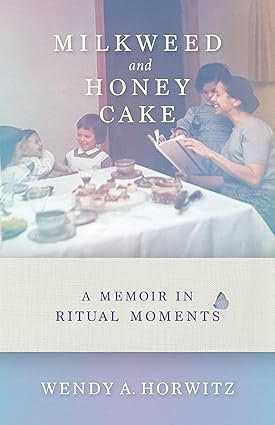
AK25-06. Wendy Horwitz’s Milkweed and Honey Cake


Authors Kiss with Sara Troy and her guest Wendy Horwitz, on air from February 11th

In Milkweed and Honey Cake: A Memoir in Ritual Moments, Wendy A. Horwitz shares essays about ritual can exalt ordinary moments and the best way to open a pomegranate.

Holidays delight – and disappoint. A couple marrying during the pandemic finds a surprise after a rainstorm and a topsy-turvy search for a gravestone that honors her ancestors. Horwitz serves pomp and circumstance on the front porch when a graduation is canceled. Through the shifting seasons of life, amid the scramble of pet guinea pigs and birthday parties, her children add wonder and comedy to tradition.

Horwitz explores how ritual can exalt ordinary moments and frame the extraordinary – a blue heron, an old cupboard’s scent, and the lingering feel of an engagement ring long gone prompt reflections laced with yearning and humor. Guiding us along a wooded path, to the kitchen table, in a messy garden, and under a tent reverberating with song, she traces the boundaries of ritual, considering what we do when ritual falls short, and how we might adapt to each other’s practices. And when the wider world seems broken, new rituals provide hope.

Lyrical and funny, thought-provoking and deeply moving, Milkweed and Honey Cake is at once a meditation on our desire for meaning and the story of a woman’s lifelong efforts to create it.


 ITunesSpotify + Video Soundcloud
  AmazonYouTube Music   iHEART
Podvine Podcasher  Podcast Addict
Mixcloud  Radio Public.   FM Player
 Odysee Youtube  Opodium
DOENJOYTHE WISDOM

 Wendy A. Horwitz’s essays have been published in The Philadelphia Inquirer, Afterimage, Neurology (Humanities Section), Jewish Literary Journal, Intrepid Times, and McClatchy-Tribune News Service, among others. Originally trained as a pediatric psychologist, she lives in Philadelphia, where she teaches writing and health, and humanities. 


 https://www.wendyhorwitzauthor.com

https://www.instagram.com/wendy.a.horwitz

https://www.facebook.com/wendyahorwitz


FIND MORE SHOWS OF ILLUMINATION HERE

Discover the sites we share on linktr.ee/saratroy

BE OUR GUEST AND SHARE THE WISDOM

All of our shows/interviews are done by donation; if you enjoyed this show, please support us here with either a one-time donation or subscribe and support; thank you. And please support Our Forgotten Seniors anthology and help to bring this book into awareness.


AK25-06. Sara Winokur’s Ivory Bones


Authors Kiss with Sara Troy and her guest Sara Winokur, on air from February 11th

Acclaimed geneticist-turned-author Sara Winokur returns with her highly anticipated novel Ivory Bones: The Lewis Chessmen Murders. This mystery-thriller transports its readers into a world where DNA science unravels ancient secrets, and the hunt for a missing treasure turns deadly.  

Set against the landscapes of Iceland, Africa, and the Americas, Ivory Bones follows forensic scientist Brynja Pálsdóttir as she races to recover the iconic Lewis Chessmen—among the most celebrated medieval artifacts—before time runs out. A centuries-old diary holds the clues, revealing a brutal tale of survival and secrets buried for generations. Brynja’s investigation not only uncovers the chess pieces’ shocking past but also forces her to confront the truth about her own genetic heritage. 

Sara Winokur, whose groundbreaking scientific research helped identify key mutations in muscular dystrophy and Huntington’s disease, combines her professional expertise with a passion for storytelling. As a descendant of Barbary pirate Jans Janszoon, Winokur was inspired by her personal ancestry for the plot of Ivory Bones. Her enthusiasm for accessible science and authentic historical research delivers a page-turner that is sure to please fans of her first novel, Double-Blind: The Icelandic Manuscript Murders, as well as new readers. 

“History, DNA, and mystery are puzzles waiting to be solved,” says Winokur. Ivory Bones challenges us to consider how much of our past defines who we are, and how far we’ll go to uncover the truth.”


 ITunesSpotify Soundcloud
  AmazonYouTube Music   iHEART
Podvine Podcasher  Podcast Addict
Mixcloud  Radio Public.   FM Player
 Odysee Youtube  Opodium
DOENJOYTHE WISDOM

Sara Winokur is a geneticist, researcher, and author whose cultural thrillers combine DNA science with gripping historical fiction. With a Ph.D. in molecular genetics, Winokur’s groundbreaking research has contributed to identifying mutations responsible for diseases such as muscular dystrophy and Huntington’s disease. 

In her novels Double Blind: The Icelandic Manuscript Murders and Ivory Bones: The Lewis Chessmen Murders, Winokur transports readers to vivid Nordic landscapes and ancient adventures, crafting intricate mysteries that blend science, history, and cultural intrigue. A descendant of the Barbary pirate Jans Janszoon, her work explores themes of identity, heritage, and resilience. As an ovarian cancer thriver, Winokur’s storytelling reflects her belief in turning life’s challenges into opportunities for growth. Sara Winokur resides in Southern California with her family and is often found exploring the globe in search of new stories.


 https://www.sarawinokur.com

https://www.facebook.com/sarawinokurauthor
https://www.instagram.com/sara_winokur


FIND MORE SHOWS OF ILLUMINATION HERE

Discover the sites we share on linktr.ee/saratroy

BE OUR GUEST AND SHARE THE WISDOM

All of our shows/interviews are done by donation; if you enjoyed this show, please support us here with either a one-time donation or subscribe and support; thank you. And please support Our Forgotten Seniors anthology and help to bring this book into awareness.