Sara’s View of Life with Sara Troy, on air from October 19th
I have just had my first cold of the season, I am hoping not to have any more, but I did not build my system up in time for this one. ECHINACEA and VIT C are great in building up your immune system and protecting you from cold and flu season, I just had not started my regime yet.
If you get a cold or the flu, please stay at home. First of all, it is better for you to rest, drink warm fluids, and get over the worst of it. Secondly, you do not need to pass it on, especially to vulnerable people who are subject to covid. Thirdly, it can prevent other colds or viruses getting you if you take care of this one now and rebuild your immune system.
Get well, your body does not want you to push through it, rest heal, and do not pass it on. In these times, we do not want to get sick or cause a panic amongst people who fear covid or just getting sick as it weakens your immune system, we can prevent it, and if we do fall ill, heal the old fashioned way and with so many holistic means, as seem below.
The body knows what it needs, so listen, and society knows what it needs so please respect and do not pass any of it on or just suck it up, no one wants your cold. Fear weakens the system and plays havoc with the mind, so if you do get the chills, know you can do something about it and that it requires you to nurture and love they self well again.
Mental Health Awareness with Sara Troy and her guest Brad Schaffer, on air from October 12th
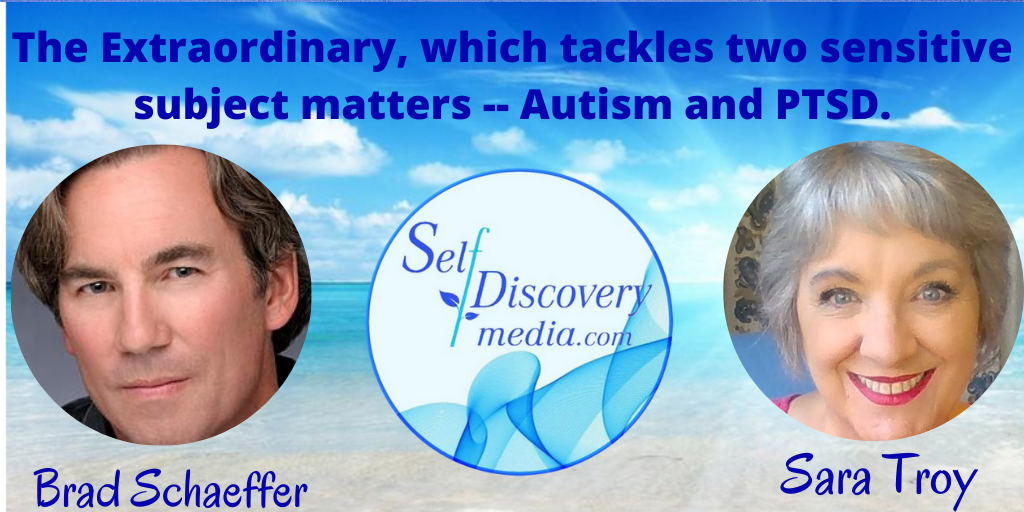
Brad Schaeffer, author of The Extraordinary, which tackles two sensitive subject matters — Autism and PTSD. In an interview, Brad can talk about the impacts on not just those who have these conditions, but also the families who support them. In The Extraordinary, a teenage boy on the Autism spectrum narrates his struggles coping with a chaotic and scary world when his Marine Corp father returns from Iraq debilitated by injury and PTSD. In this interview, Brad talks about how the suicide of his father, who suffered from PTSD after returning from war has influenced his writing and this story.
Brad Schaeffer’s The Extraordinaryaddresses Autism and PTSD
The impacts on those who have these conditions, as well as the families that support them
In this interview, Brad will talk about:
How the suicide of his father, who suffered from PTSD after returning from war has influenced his writing and this story.
Why he chose to write the story through the eyes of an autistic child.
Glenn Frankel, a Pulitzer Prize-Winning Journalist for TheWashington Postcalls the book “a compelling tale of vulnerability, endurance, and forgiveness.” How are these themes conveyed in the story?
A family already living on the edge of disaster plunges into despair when the father, a Marine Corps Captain, returns home from Iraq debilitated by wounds. More devastating damage follows, much of it self-inflicted. Brad Schaeffer’s novel recounts the sense of loss, terror and pain through the eyes of fourteen-year-old Wesley, the family’s youngest member, who suffers from Autism. Schaeffer doesn’t avert his gaze from the hurt that members of this wounded family cause each other, yet never loses his compassion for his characters. The result is an intimate and compelling tale of vulnerability, endurance, and forgiveness. – Glenn Frankel, Pulitzer Prize-Winning Journalist for the Washington Post, Washington Post Magazine, Editor, Journalism Professor, and author of four books
Wesley Scott is a teenage boy with autism. He lives within his own intimate realm of sensory overload, dysfunction, sometimes violence, and fear of the outside world. He describes himself as the only actor on a stage without a script. We learn through Wes’ own words that he is a deep, thoughtful young man…but no one knows it.
Wes is unable to connect with anyone other than his father, a captain in the Marine Corps. He in turn adores his extraordinary son, his “Ex-man,” as he fondly calls him. When Captain Scott ships off to fight in the Middle East, Wes is confused and senses foreboding in what it all means, although he cannot express it to his family, friends, or teachers.
With his father overseas, Wes finds himself further isolated in a world of “Ords” (his dad’s term for the ordinaries, unlike his “Ex” son) and a stranger in his own family. His mother is distant and cold, his high school brother resents the inordinate attention his autistic brother constantly steals from him, and his twenty-something sister has chosen to move away from it all to Manhattan. The burden on the family gets exponentially worse when Captain Scott returns home wounded. The family tries to cope as best they can, but when his father succumbs to PTSD, Wes must somehow make sense of all that has happened—which is difficult for a teenager under normal conditions, let alone one on the autism spectrum who’s suddenly lost the only family member who ever really bothered to know him.
The Scotts seem on the verge of unraveling and Wes finds himself in a bewildering land of family turmoil. How will Wes come to understand this tragedy? And how will the family ever come to fill the void left by a father who understood what the rest have yet to discover…that Wes is an extraordinary young man indeed. And that all of us, no matter how much the world seems to scorn our existence—or has simply forgotten our pain—have something extraordinary to offer and make that world a better place.
Brad Schaffer was born in Baltimore, MD but grew up in a suburb of Chicago. After attending the University of Illinois at Urbana-Champaign, he lived in Chicago where he embarked on his dual career as both a commodities trader and author/novelist. He currently resides in New Jersey. His prolific and eclectic writing can be found in the pages of the Wall Street Journal, New York Daily News, National Review, Daily Wire, and other well-read publications. His interests, as reflected in his articles, encompass a wide swath from business, to science, education, the arts, history, politics, social issues, and general day-to-day living. He is also an accomplished guitarist and pianist and can be found playing in local New Jersey clubs with one of several rock bands in which he has played over the years. He is the author of Of Another Time And Place (2018), which takes place in World War II Europe. It is a study of the conflicts that good men confront when compelled by national loyalty and indoctrination to fight for morally reprehensible causes. His latest novel, The Extraordinary (2021), deftly tackles two sensitive subject matters — autism and PTSD — and the impacts they have on not just those who have these conditions, but also the families who support them.
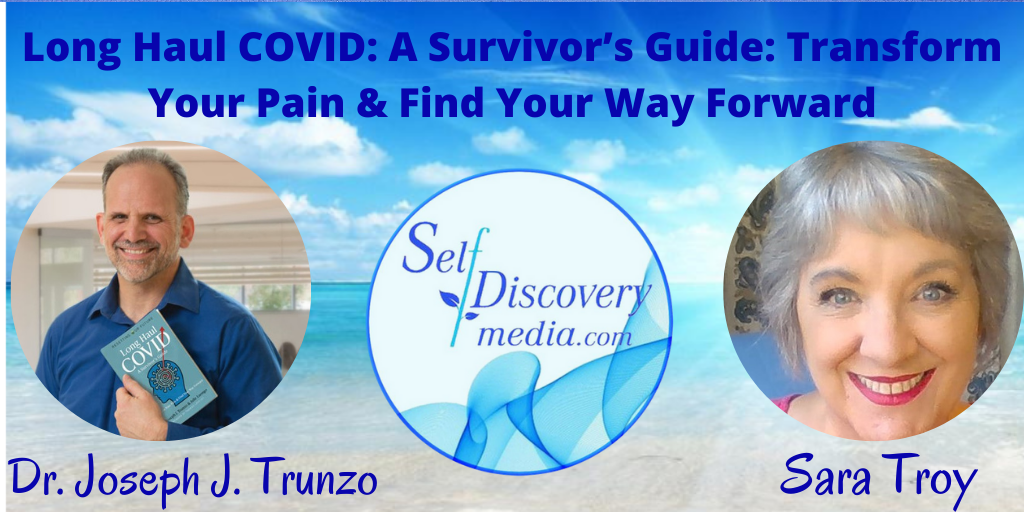
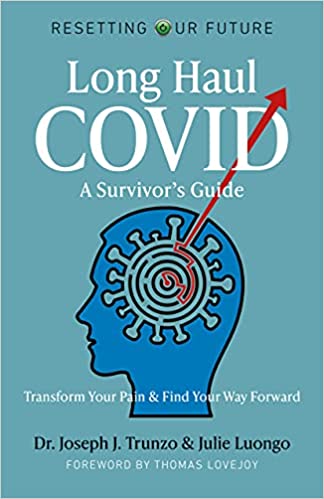
As the long term ramifications of being infected with COVID are continuing to be discovered and the US National Institutes of Health (NIH) begins research on thousands of “Long Haul” patients, the new book Long Haul COVID: A Survivor’s Guide: Transform Your Pain & Find Your Way Forward by Dr. Joseph Trunzo and Julie Luongo offers individuals some early insights into Long COVID and ways for people who are experiencing post-COVID effects to be able to move forward and look ahead.
“This is a much-needed study that provides resources for understanding the complex symptoms of Long Haul COVID. I am particularly happy to see the study undertake the often-overlooked behavioral health aspects of poorly understood medical conditions. We need medical, psychiatric, and psychological interventions to bring relief to those suffering from Long Haul COVID and this study is the first step toward that outcome” says Dr. Trunzo Whether you’re struggling with long haul illness, grief, fear, or any of the countless ways the COVID-19 pandemic has upended lives across the globe, the bottom line is that you’re suffering. What if there was a way—supported by clinical evidence—to transform your experience and move forward?
Grounded in behavioral science, Acceptance and Commitment Therapy (ACT) offers powerful tools to help you stop struggling and start doing what matters the most to you.
With ACT you can improve the quality of your life right now, during illness and turmoil. Step-by-step, you will learn how to shift your perspective, get clear on your values, and act even when the path is unclear. This book will give you a compass that will guide you, day by day, through your pain and into the meaningful moments of your life.
The medical, psychological, and societal impacts of COVID-19 and long-haul illness have been devastating. But you are not alone. Even if you consider your circumstances dire, this book can help you live a rich, vital existence.
Of the NIH study, co-author Julie Luongo says “I would urge anyone suffering from long haul COVID to go to the NIH website and sign up for their study. I can’t overstate the importance of doing something meaningful like this, particularly when you’re feeling frustrated by your own condition. It’s a unique opportunity to be a part of the solution, to participate in advancing the science around COVID, and to really help people who find themselves in your situation down the road.”
Dr. Joseph J. Trunzo is Professor of Psychology and Department Chair at Bryant University in Rhode Island, USA. He also serves as the Deputy Director of Bryant University’s Center for Health & Behavioral Sciences. His research and clinical work focus on treating anxiety and mood disorders, especially in those suffering from Lyme disease and other chronic illnesses.
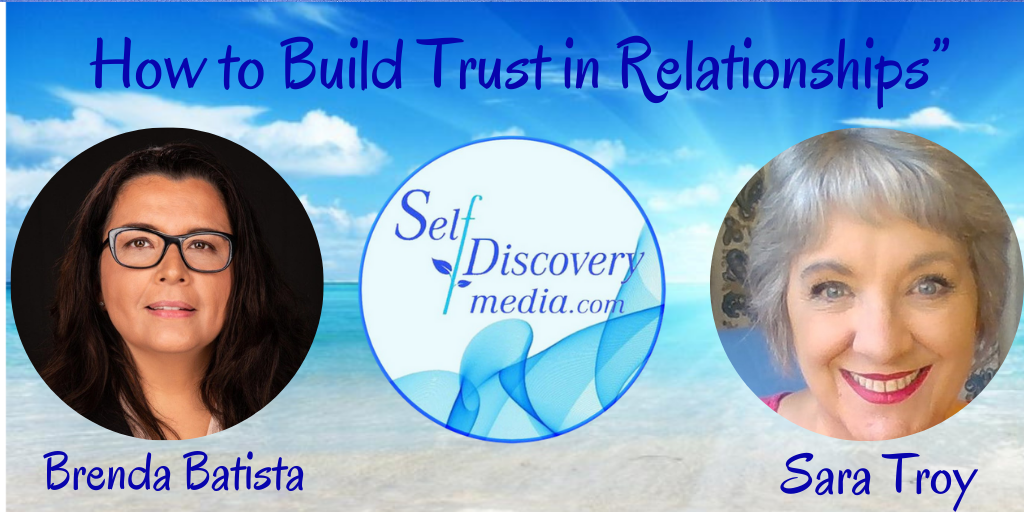
Choose Positive Living with Sara Troy and her guest Brenda Baista-Mollohan, on air from October 12th
Learn the 4 filters everyone uses when deciding if they trust us
What is your barrier to establishing trust
How do we undermine our ability to establish trust
Know Yourself to Lead Yourself, What is Your Leadership Voice and how does it impact the results you get in life, work, and relationships. Why this is important? So that we understand how to take control of our results by understanding our tendencies. How do we act in situations is determined by which leadership voice is our primary way of showing up.
Brenda Batista is the Founder of Inspiring Company Culture where she helps leaders transform their work environments to be places where everyone is heard, valued, and appreciated. Brenda is an expert in establishing high-performing teams, healthy company culture, leadership, business system analysis, and strategic planning.
For the past 25 years, Brenda has focused on performance improvement and how the power of teams helps sustain business results. She helps teams engage and align with desired business outcomes by providing customized workshops, as well as group and leadership coaching either as a standalone or as part of a consulting project.
Brenda holds a Bachelor of Science in Industrial Systems Engineering, a Masters in Health Administration, and a Juris Doctorate.
When you are struggling with an addiction, it can be quite difficult to decide to seek treatment. Even when you do decide to do so, there are always numerous myths and horror stories out there to discourage you from opting for a detox program.
However, these misconceptions only further encourage the denial that many addicts feel like a side effect of the addiction. That is why we have compiled this list of five myths about detoxing that you need to ignore and enroll in a detox center in Austin right away.
Myth 1: You can detox alone.
One of the biggest myths surrounding detox is that you can do it alone. There is no doubt that much of the detox program and how successful it is depend on your own will and determination. However, this does not mean that you can go through detox all by yourself, relying on your will alone.
Most detox programs have highly qualified professionals with years of experience working with you to make the program successful. They have much more knowledge which allows them to encourage and boost morale on your good days and help you through the bad days as well.
Myth 2: Detox is expensive.
A lot of people avoid going for detox or even simply inquiring about it just because of the fear of how expensive it will be. They assume that detox programs are just for wealthy individuals and celebrities, as seen on television.
However, the truth is that drug addiction is a condition that afflicts many parts of society. As a result, the programs are designed to cater to various people, including those who might come from a weak financial background. Many detox centers offer financial aid to those who need it, and sometimes, even insurance policies can help cover some of the costs.
Myth 3: Detox means separating yourself from normal life.
Another common misconception associated with detox programs is that you will have to completely separate yourself from your normal life. You will have to give up your favorite hobbies and past times. You will have to cut off your friends and family. You might even have to leave your job.
However, this is not the case at all. In reality, detox can be different for everyone, depending on the kind of addiction they face, how long they have had it, and other factors. Certain treatment centers offer outpatient services, which means you will not even have to leave your home.
For others, they might have to come in several times a week. Even if they are staying at the center permanently, they are allowed to meet their friends and family and continue with their favorite pastimes.
Myth 4: You are ‘cured’ after detox.
Once you have completed detoxing, or even if you are still in the process, one dangerous assumption to have is that you will be ‘cured’ after detox. You will never have to worry about addiction ever again. This is not true at all.
In reality, addiction is more like a chronic condition, and people often face relapses even after they have successfully completed a detox program. Additionally, there are often other factors at play that actually perpetuate the addiction.
For instance, someone may have a history of trauma. They may be suffering from other mental illnesses, going through a toxic relationship, or be surrounded by people who are addicts themselves. All these factors can cause a relapse which then forces you to continue with your detoxing again.
Myth 5: Detox is like quitting cold turkey.
A lot of people are also scared of detox programs, assuming that they will be like quitting cold turkey. This is, again, not true at all. Detox programs have medical practitioners who are specifically trained to help you detox in the most comfortable, painless, and effective way possible.
Depending on the exact nature of your case, they might prescribe you certain medications to wean you off the drugs and help you deal with all the withdrawal symptoms. They also support you emotionally through regular counseling sessions.
Wrapping Up
Detoxing can still invoke a lot of fear and denial in people who are struggling with an addiction. However, now that you know to ignore these myths, you can help yourself or anyone you know with an addiction to get started with their treatment right away.



You must be logged in to post a comment.