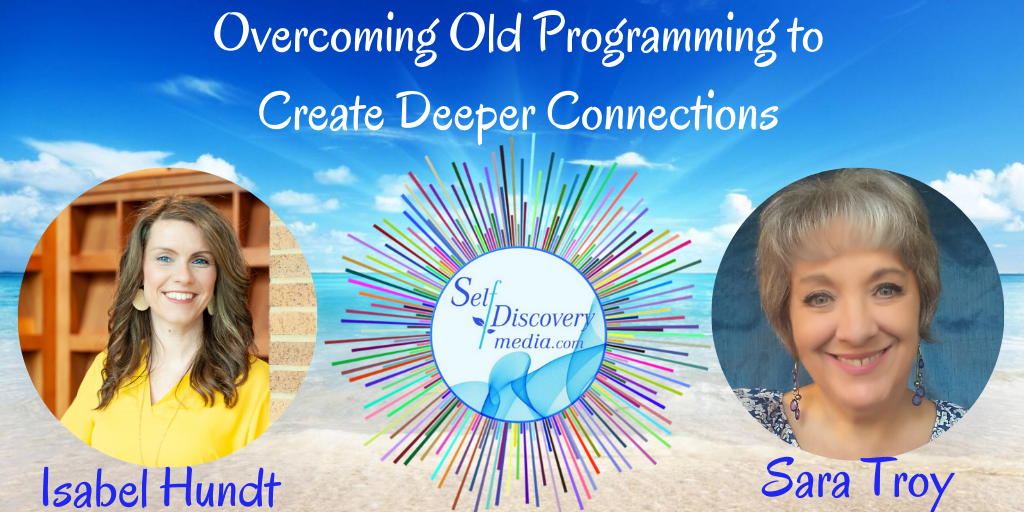
Igniting your heart and soul with Sara Troy and her guest Isabel Hundt, on-air from June 2nd
Overcoming Old Programming to Create Deeper Connections
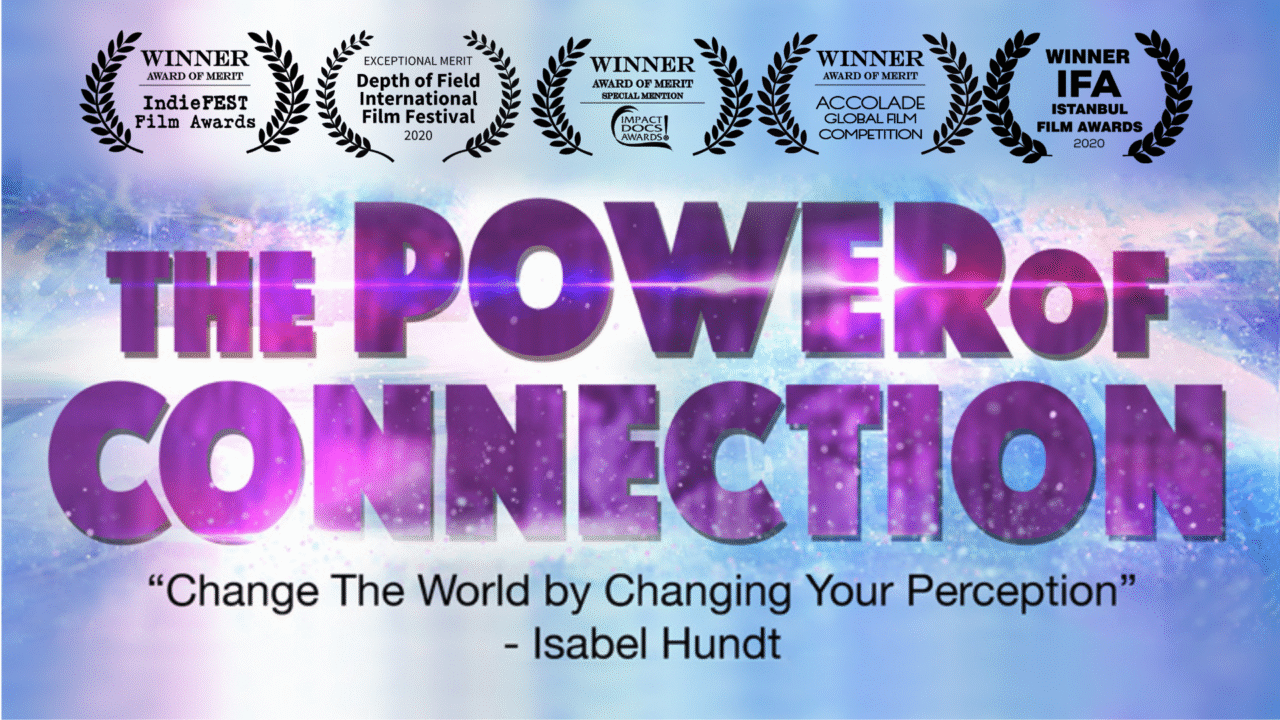
The Power of Connection is a documentary that explores the layers that comprise human connection, as well as connection to the divine and even the natural world around us.
Through stories and metaphors, sociologist Isabel Hundt examines how our thoughts determine our ability or inability to experience the meaningful connection for which every human being is wired.
Beginning with her own story of a relationship that ended unnecessarily, she explored the emotions and conflicting messages that come with labels, unconscious bias, and a fictional identity she felt compelled to protect.
Isabel is known as “The Leader’s Heart Decoder” due to her unique gift of synesthesia, where she sees and experiences everything in color. She is the Founder of the #ISeeUMovement, which is focused on shattering cultural barriers and engaging in cultural transformation globally through emotions and self-awareness.
She is also known as a successful inspirational speaker and sociologist whose leadership abilities inspire others. Additionally, Isabel is a published author of the book “The Power of Faith-Driven Success”, a 2x Amazon Bestselling Co-Author, and filmmaker of the forthcoming documentary called The Power of Connection.
Her expertise revolves around successfully navigating your emotional world and harvesting the power of intuition from a spiritual and philosophical perspective.
All of our shows/interviews are done by donation; if you enjoyed this show, please support us here with either a one-time donation or subscribe and support. Thank you. Please support Our Forgotten Seniors anthology and help to bring this book to awareness.
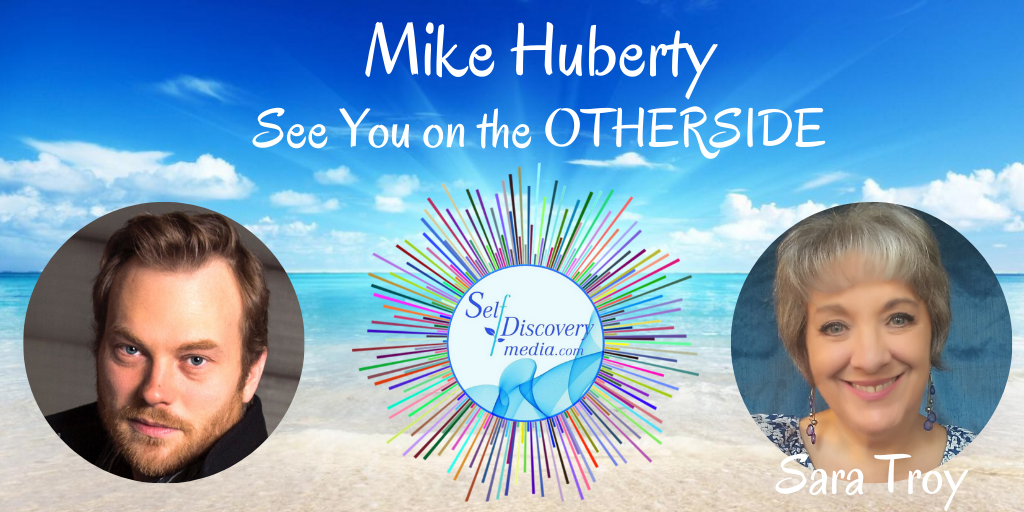
Quantum Spirituality with Sara Troy and her guest Mike Huberty, on-air from June 2nd
Growing up, Mike Huberty was always interested in ghost stories, UFO sightings, and other weird tales. Mike has been performing as a bassist and vocalist in a rock band, Sunspot, since 1997, and in 2010, he founded a tourism company dedicated to preserving local history, folklore, and showing people a great time around Madison, Wisconsin.
In addition to performing with his band and hunting ghosts, he hosts a weekly podcast on the paranormal and pop culture called See You On The Other Side. Since 2010, Madison Ghost Walks has expanded to American Ghost Walks, preserving and boosting haunted history in eight Midwestern cities including the Wisconsin Dells, Milwaukee, Lake Geneva, Minneapolis, St. Paul, Stillwater, and Waukesha, as well as expanding to San Juan, Puerto Rico, with more cities and adventures to come!
Sara’s View of Life with Sara Troy, on-air June 2nd
June 2013 I started my own Podcast network, we have been a few names since then and evolved quite a bit, but still, the core of our “Why” and whom we bring to you is still the same, as by supporting those making a difference in the lives of others.
I truly have found my calling, this is what I have been preparing for all my life and of cause did not know it. My journey has been one of my own Self Discovery, and a path to loving who I am inside and out.
It truly is an honour to be trusted with so many people’s stories, some so intermit and venerable that it warms your heart and shows us all how strong, resilient courageous and capable we can really be.
I hosted on a different network when I first started out, live shows which gave me some good training in dealing with the unexpected. Even when I started my own network with the help of Bill Macquie, it was learning as you go.
Now I do all my own banners, editing, videoing, and blogging and advertising my self. I am proud of that, even though it takes a long time for each show to produce, I love doing it and so glad this is my job. (Yes I do charge my interviewees as I am a service)
I have not reached my true goal as yet, podcast books, supporting the Fund-Action program, but I have started our Community Mentors programwhere our Mentors share their services which helps others on their life’s journey. So please Check out Self Discovery Community to see more of what we have and what is to come.
If you have a journey you wish to share, a service that helps people, and some thing that will inspire others, please BE OUR GUEST.
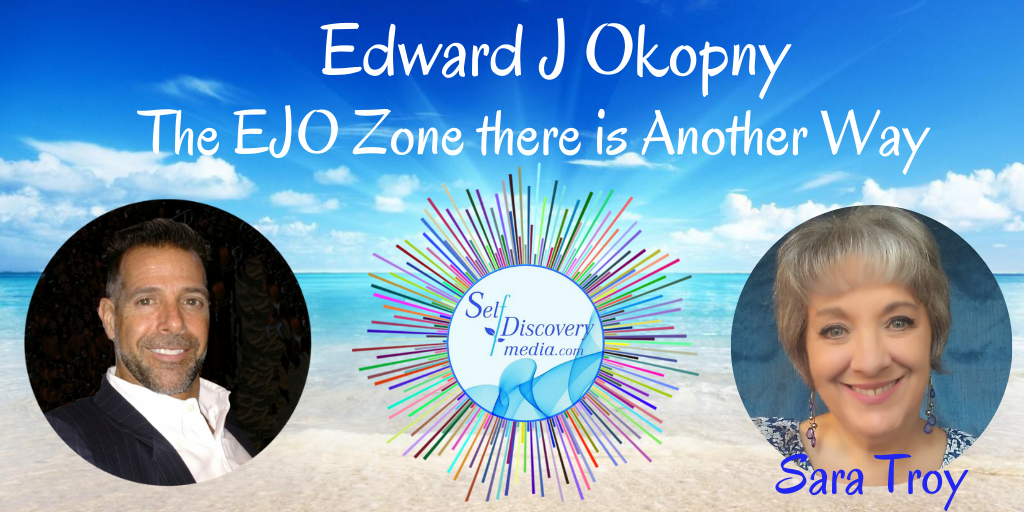
Choose Positive Living with Sara Troy and her guest Edward Okopny, on-air from June 2nd
Why do we Worry so much and is Happiness lost because we do not have a Passion in life?
The question ‘what is my why’ has a simple answer. I’m a happy person and sharing encouragement to live happily is my way of giving back. It’s important for me to leave people better than I have found them.
Overcoming challenges through innovation. When our world changes we sometimes have to get creative to adapt to the new normal. It’s amazing how challenging inspires innovation
I have always been an entrepreneur. Moving through the pioneering days of cellular, the hay-day of white label ATM’s, the Insurance Industry, and into commercial Real Estate. I have now happily evolved into a project-based lifestyle. Sharing my experience to encourage living happily.
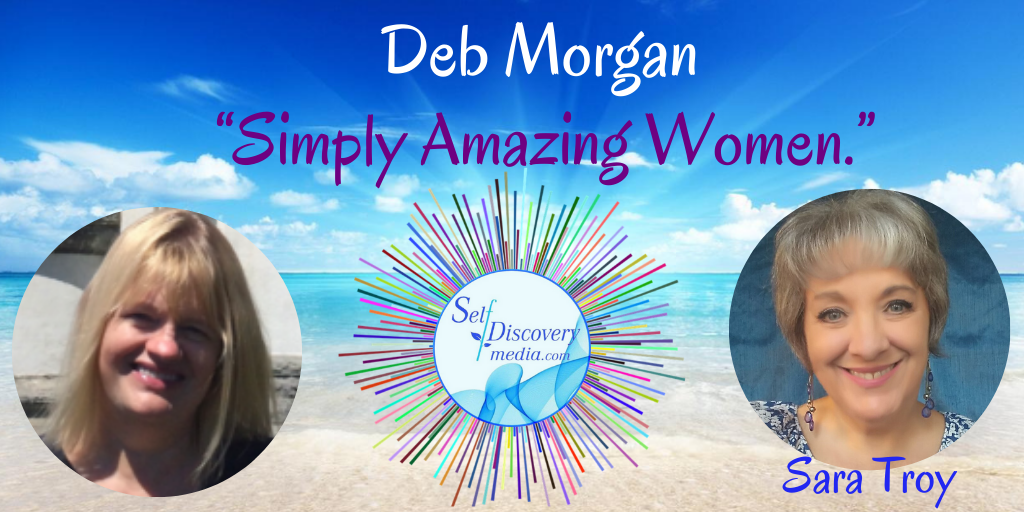
Choose Positive Living with Sara Troy, and her Deb Morgan, on air from May 26th
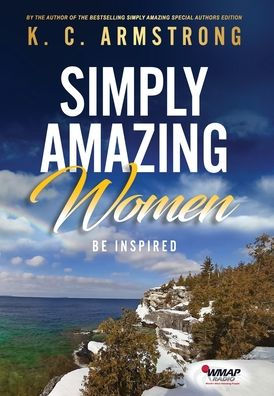
Deb Morgan is a first-time author, advocate, and writer who shares her compelling story of endurance and overcoming. Ms. Morgan, after being a guest on WMAP was chosen as one of several contributing writers for the book titled Simply Amazing Women whichreleases May 2020. It is book two of the best-selling series Simply Amazing by Celebrity WMAP radio host, K. C. Armstrong, a former favorite from the Howard Stern Show. The book is now available on Amazon, Barnes & Noble, and many fine bookstores online.
In these times of fear and uncertainty, we look for examples of facing life’s challenges and courageously moving forward. What’s amazing is what we learn about our own strengths and resiliency in the process as Ms. Morgan shares her story as one of the 13 real women featured in this non-fiction book.
Deb demonstrates a commitment to overcoming, healing, and helping others do the same as a tireless advocate and coming out the other side of addiction, trauma, and much more as a Survivor and Warrior. Her story she shares within a whole chapter is shocking, heartbreaking and one of perseverance. At the tender age of 13 when she took her first alcoholic drink, moving into drug addiction to opioids and other pain killers, to crime, arrested, and found her way into rehab, she began her recovery journey and tireless advocacy. How does a woman overcome? That is what you will read in this first published works of Ms. Morgan.
Today Ms. Morgan is an advocate fighting for other addicts, alcoholics since maintaining two years into sobriety and being clean. She also advocates and has Fibro challenges. A mother of two grown children, when not advocating or writing, Deb enjoys reading, painting, travel, and spending time with her many grandchildren she adores. Deb will release her first full-length book this late spring. She is married and resides outside Eugene, Oregon.….
New Book Release “Simply Amazing Women” Published by Celebrity K.C. Armstrong and Features Author & Advocate, Deb Morgan, and twelve other women who are overcomers.
Simply Amazing Women by Celebrity K.C. Armstrong features advocate of recovery and twelve other women who have overcome life’s challenges and now help others.
New Author and Recovery Advocate, Deb Morgan is a shining example that recovery from addiction works and is possible.
In Celebrity Radio Host K.C. Armstrong’s new book, Simply Amazing Women: ‘Become Inspired by Deb Morgan’ and twelve other women who share their stories of overcoming life’s intense challenges and how each woman is using their overcoming wisdom to help others find purpose, healing, and transformation. Diane Donovan, a Senior Reviewer at Midwest Book Review, states, “If ever there was a good time to publish an inspirational collection of stories, it’s now.” Simply Amazing Women is about choosing the kinds of responses during adversity that translate to survival and courage. While these mini-biographies were compiled before COVID-19, they highlight the ongoing need for inspiration now as never before and are intended, like those in its predecessor, Simply Amazing Special Author’s Edition, to provide the encouragement to not just go on with life, but make it the best possible. The examples posed by these women all demonstrate paths to rising above adversity. Readers receive a survey filled with intense battles involving self-healing, transformation, and the kind of self-improvement that leads to helping others both through example and by outward-oriented effort. Mr. Armstrongs’ many interviews chose these empowering women he has done to pick those writers and stories, and their paths taken were more than just about rising above adversity. These remarkable women’s lives unfolded through interviews designed to pinpoint the origins of their strengths and perspectives; readers are treated to a moving, inspirational account offering various strategies for overcoming adversity. As a new world replete with fear, death, and division emerges, there is no better time for reading and considering this book’s underlying message about not just survival, but building and rebuilding a better life from the ashes of disaster. Very highly recommended as a torchlight guiding the way to transformation. Barbara Bamberger Scott of U.S. Review of Books has applauded K.C. Armstrong for shining an encouraging bright spotlight on the women’s unique experiences. He appropriately prefaces each woman’s account of barriers and successes and, when needed, deftly prompts, offering pertinent facts and gently phrased questions. It’s an effective technique, creating a comfort zone of understanding. Interviewees are respected as they recount defining moments and share accumulated wisdom. This is the second book in the Simply Amazing series, with interviews taking place in Armstrong’s internet and F.M. outlet WMAP (World’s Most Amazing People). His introduction references the current COVID-19 pandemic, remarking that all the stories in this aggregation involve “a personal pandemic that one has to get through somehow.” International in scope, this volume will doubtless be inspirational for women of any age and provide a lively focus for women’s groups and forums across the globe. “Simply Amazing Women” goes on sale, Friday, May 1, 2020. The new book will undoubtedly help encourage all who read it and help us to begin moving forward after this Coronavirus has ended. It can also help us start moving forward in living life again!
All of our shows/interviews are done by donation, if you enjoyed this show please support us here with either a one-time donation or subscribe and support onPatreon.






You must be logged in to post a comment.