95-99% of dreams disappear from memory upon waking, but despite this, famous inventors throughout history have drawn inspiration from their dreams. Scientific evidence exists that dreams can help diagnose illness. Abundant anecdotal evidence also exists that dreams can influence the path of human history – a strong case for adopting habits to remember dreams.
How Dreams Have Changed the World
Science would not have achieved all that it has today, without dreams at work. Rene Descartes had a dream that resulted in the scientific method, upon which all modern scientific process is formatted. James Watson dreamed the form of DNA, Dmitry Mendeleyev the periodic table. Some well-known art has been the result of dreams. Familiar dream-born works of art include “Yesterday” by Paul McCartney, Mary Shelly’s “Frankenstein”, Robert Louis Stevenson’s Dr. Jekyll and Mr. Hyde, James Cameron’s “The Terminator”, Stephenie Meyer’s “Twilight” and Stephen King’s “Misery”.
Health Benefits of Sleep
More than one good reason exists to get a good night’s sleep. Science has revealed that sleep keeps the physical body healthy; a good amount of cell repair and regeneration happens while we sleep. Sleep helps with storage of events to memory and with the processing of emotion.
Spiritual Benefits of Quality Sleep
The most vivid dreams occur during deep sleep, REM (Rapid Eye Movement), and can generate valuable information that an individual may not perceive during waking. Science reveals the whole brain is active during dreaming, even the areas thought to be responsible for intuition; that vague, almost imperceptible internal “voice” or “gut feeling” that may have the potential to generate life-changing insight.
Such noteworthy discoveries as the structure of DNA that have resulted from an inventor’s dream were so moving to the individual, that the dream was documented upon waking. Keeping a dream journal bedside and writing down dreams upon waking is the best way to preserve a dream. Important details toward which to pay particular attention include how the dream made you feel and your own interpretation of your dream.
Dreams are symbolic and can often be interpreted in different ways. As such, the dreamer’s perspective is often the most important in interpreting a dream. Dreams can be part of a significant journey in self-discovery. At the least, the dreamer ends up with a colourful journal, at the most, the information garnered may be enough to change a life and, perhaps, even the trajectory of the world.

 Never give up on your dream, but remember visions change so do the directions of dreams. As long as the core of that dream is still alive, the redirection is just the universe showing you what you need to fulfil that core and make the vision happen.
 I had a dream, I thought it was to be taken in one direction but was redirected to another. When I first started the journey, I had no idea that this was my dream all along. I got out of my way and kept walking forward in belief and purpose, not I am where I should be and know what wonders lay before me, I love who I am doing what I am doing because I fed the core, was flexible but steadfast and willing to bend but stay strong.
 Nanci was blessed from an early age with vision and the power to manifest her dreams. Growing up, her earliest inspiration came from a children’s book: Harold and the Purple Crayon. Like Harold, Nanci could create a world of her own simply by drawing it into being.
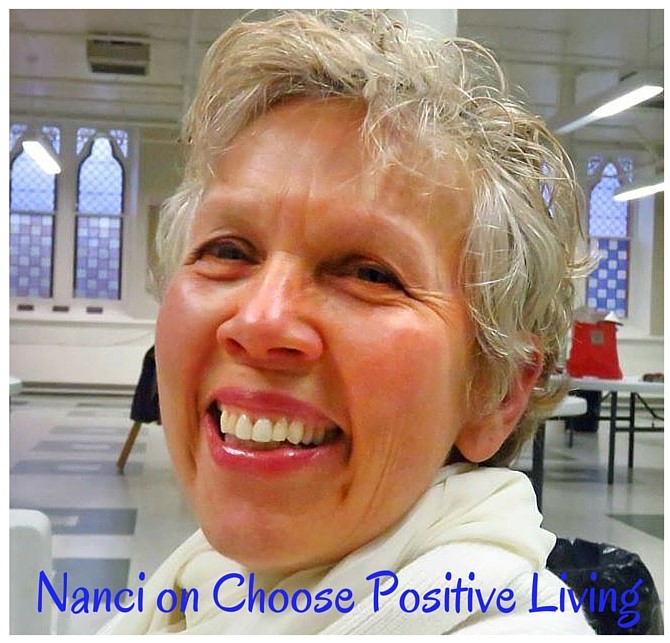 Growing up in an abusive, alcoholic, and drug addicted family, Nanci favoured fantasy over reality and chose to retreat into a world of art. At age 9, she had a repetitive dream in which she crossed over a stone footbridge to find herself in other worlds. From this dream, she discovered she could use her imagination to shape and manifest the reality of her dreams. Over the years, she has brought to life many of her hopes and dreams of travel, education, having a child, buying a home, and building a successful business. In her coaching method, Nanci coaches you on a journey to achieve your dreams and live into them. With credibility and vulnerability, Nanci shares her own journey. For example, when Nanci was told in her mid-thirties she could not have children, she did not give up on her dream of being a mother. Like Harold with his magic crayon, Nanci created a pictorial journal entry of herself holding a baby boy. Today her son, Lucas is in college.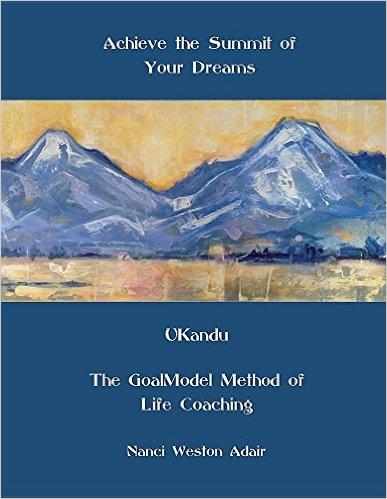


You must be logged in to post a comment.