26-14. Sara’s Second Dacade.


Sara’s View of Life with Sara Troy. On air from March 31st


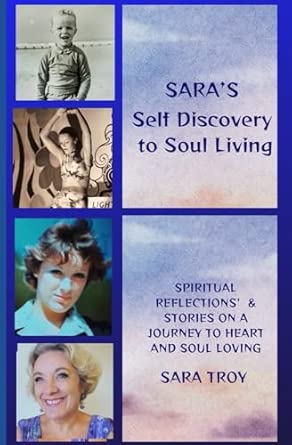
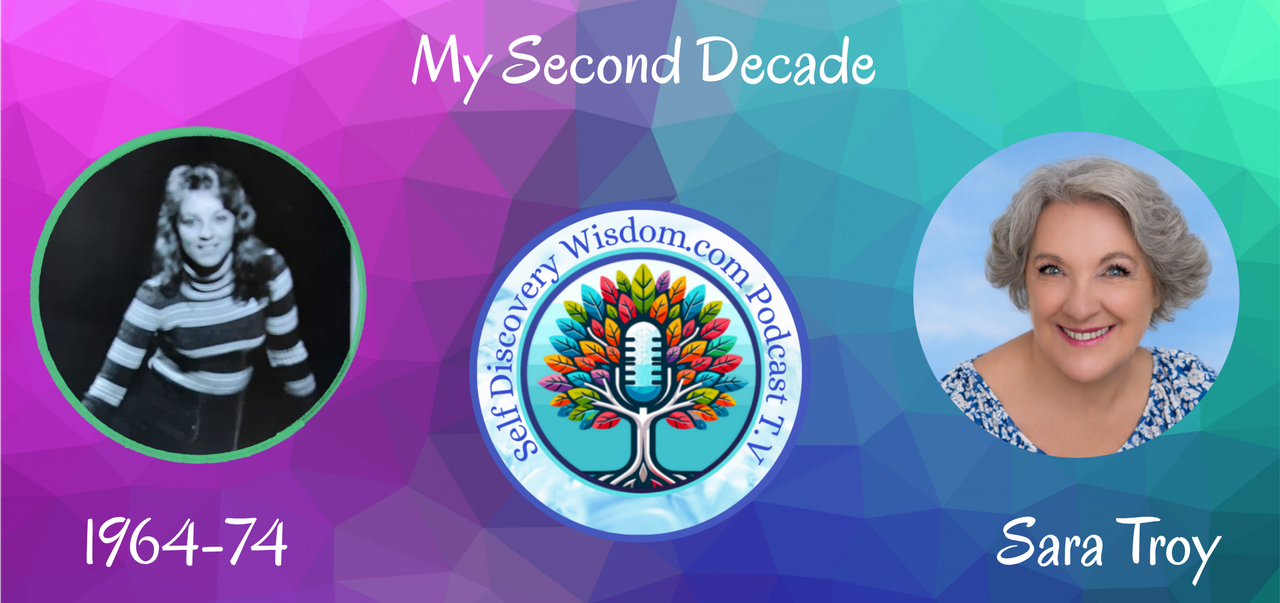
I’m your host, Sara Troy, and this is my second decade. After a recent conversation about turning 71, it was pointed out to me that this represents seven full decades of life—and when you begin to look at life in those ten-year chapters, it shifts your perspective entirely. Although I wrote Sara’s Self-Discovery to Soul Living as a reflection of my journey, I felt called to break my life down into those decades. Last week, I shared my first ten years; this week, we step into the years from 10 to 20—a time filled with profound change, loss, awakening, and the shaping of who I would become.

As I turned ten, life still carried a sense of comfort and familiarity. My father was alive, and we were living in a beautiful home in Louth, England—surrounded by gardens, open space, and a rhythm that felt secure, even though I was away at boarding school for much of the time. Coming home brought a sense of grounding, of knowing where I belonged. But everything changed at eleven. My father suffered another heart attack, and this time, he didn’t recover.

I remember that moment with a clarity that never leaves you. There was love, of course, but also an unexpected feeling of relief—relief that his suffering, his frustration, and the anger that had come with his illness were finally at peace. And with that came guilt, because as a child, you don’t yet understand that two emotions can coexist. I forced myself to grieve in the way I thought I should, yet something deeper in me already understood that death was not an end, but a transition.

In the days that followed, I found myself stepping into a kind of knowingness I couldn’t explain. When I said goodbye to my father, it was simple, heartfelt, and complete. And when I spoke to my mother, words came through me—words far beyond my years—offering a perspective of strength in the face of loss. It was as if, even then, something within me knew how to meet life in its hardest moments.

But life did not soften after that. The reality of loss unfolded quickly—family tensions, financial instability, and the harsh truths of how vulnerable we could be. At school, I faced illness, isolation, and cruelty from others who didn’t understand or believe what I had gone through. Yet even in those moments, something in me endured. I didn’t yet call it resilience, but it was there—quietly forming.

That decade, from ten to twenty, became a shaping ground. It was where innocence met reality, where hardship introduced awareness, and where the seeds of who I would become were planted. It wasn’t an easy time, but it was a defining one—one that taught me, even then, that strength is not loud, and knowing often comes long before understanding.

Then came another turning point. At fourteen, my mother made a bold and life-changing decision—we would leave England and begin again in South Africa. The journey itself was an adventure, a three-week voyage by sea, arriving in a world so different from anything I had known. The light, the heat, the sounds, the energy—it was as though life had shifted into an entirely new landscape.

In South Africa, I began to change. The shy, timid girl who struggled to find her place slowly started to open. I found myself stepping into experiences I never would have imagined—dancing, music, connection, even becoming a go-go dancer and part of the emerging DJ scene. There was a freedom there, an aliveness, a sense of expression that had been waiting within me. Life was no longer just something happening to me—I was beginning to participate in it.

That decade, from ten to twenty, became a powerful shaping ground. It was where innocence met reality, where loss met discovery, and where hardship gave way to expression and growth. It was not an easy road, but it was a transformative one. It taught me that even in the face of change, disruption, and uncertainty, there is always something within us ready to rise, to explore, and to become.

In South Africa, I began to change. The shy, timid girl who once held back started to find her rhythm in the world. It was there that I stepped into something completely unexpected—the world of music, movement, and expression. Through connections and opportunity, I found myself part of a growing disco scene, where energy, sound, and freedom came together in a way that felt alive and liberating.

I became a go-go dancer, and for the first time, I wasn’t hiding—I was expressing. There was joy in it, a sense of belonging in the music, in the beat, in the shared experience of people coming together simply to feel good. Alongside that, I was involved in the DJ world, helping bring music to life at parties, events, and gatherings. In those days, it wasn’t polished or commercial—it was raw, creative, and full of spirit. We carried heavy equipment, set everything up ourselves, and created the atmosphere from the ground up. It was hard work, but it was also exhilarating.

That experience gave me something I hadn’t known before—confidence. It allowed me to step out of my shell, to connect with people, to read energy, and to understand how to move a room, not just physically, but emotionally. Music became a language, and dance became a form of communication. It was no longer about fitting in—it was about showing up as I was, fully present in the moment.

Those years were vibrant, full of discovery, and deeply formative. From loss and uncertainty, I had stepped into expression and aliveness. The girl who once felt small and unsure was beginning to find her voice—through music, through movement, and through the courage to simply be seen.

Yet, even within that sense of freedom and expression, there was another reality unfolding around me—one that was far from free. Living in South Africa during the time of Apartheid meant that, beneath the music and movement, there was a deeply divided and unjust society. It was something you could feel, even when people didn’t openly speak about it. There were invisible lines everywhere—who could go where, who could do what, who was seen and who was not.

At the same time, there was also the weight of Misogyny—something I had already begun to experience earlier in life, but now saw more clearly. Women were often expected to stay within certain roles, to be seen but not truly heard, to follow rather than lead. I had watched my own mother’s independence be taken from her, her business sold without her consent, her voice diminished in a world that prioritized men’s authority.

So here I was—dancing, expressing, finding my voice in one space—while simultaneously becoming aware of how restricted that voice could be in the larger world. It was a stark contrast. On the dance floor, there was freedom, connection, and joy. Outside of it, there were systems built on control, division, and inequality.

And perhaps that contrast became one of my greatest teachers. It showed me the difference between what is and what could be. It awakened in me an awareness of injustice, not just for myself, but for others. It planted seeds—of compassion, of questioning, of a desire for something better, something fairer, something more humane.

Those experiences didn’t harden me—they opened me. They helped shape my understanding of humanity, of the importance of voice, of equality, and of standing in one’s truth. Even then, I was beginning to see that life is not just about surviving what we are given, but about becoming aware enough to help change what no longer serves humanity.

And through all of this, there was my mother—at the center of it, navigating her own journey of loss, identity, and rediscovery. After my father’s passing, she had been a woman stripped of so much—her security, her independence, even her voice in many ways. I had watched how her business was taken from her, how decisions were made around her rather than with her, and how society expected her to quietly accept it all.

But South Africa awakened something in her.

I began to see a different woman emerge—not just the grieving widow, but a woman reclaiming herself. She stepped into new spaces, met new people, and began to rediscover her independence and creativity. There was a light returning to her, a sense of possibility that had been dimmed for so long. She had always had strength, but now it was beginning to express itself in a new way—less confined, more exploratory.

She showed me, not through words but through living, what it means to rebuild. To take what life has stripped away and, piece by piece, begin again. It wasn’t easy, and it wasn’t without pain, but there was a quiet determination in her—a resilience that spoke volumes.

Watching her, I learned something profound. That no matter how much is taken from you, there is always something within that cannot be taken—your spirit, your will, your capacity to rise again. She didn’t fight loudly against the world that had wronged her; instead, she chose to step forward into a new life, carrying both her scars and her strength.

And in many ways, as I was finding my voice through music and movement, she was finding hers through rediscovery and reinvention. Together, without even realizing it, we were both stepping into a new chapter—one shaped not just by what we had lost, but by what we were becoming.

More in the video/audio.


 ITunesSPotify+Video Soundcloud
  AmazonYoutube Music   iHEART
Podvine Podcasher  Podcast Addict
Mixcloud  Radio Public.   FM Player
 Odysee Youtube BusyMumsmedia
DO ENJOY THE WISDOMThanks for listeningFeedspot


FIND MORE SHOWS OF ILLUMINATION HERE

All my links can be found on linktr.ee/saratroy

BE OUR GUEST AND SHARE THE WISDOM

Self Discovery Wisdom is sustained by those who believe in conscious conversation. If this episode resonated with you, subscribe and, if you feel called, make a donation. Your support helps us keep amplifying voices that inspire growth, courage, and compassion. Thank you. Please support Our Forgotten Seniors anthology and help to bring this book to awareness.


26-14. Stress verses Good Vibrations


Sara’s View of Life with Sara Troy. On air from April 7th

This week has been more about admin, household tasks, and giving myself a little breathing room. That does not happen often, and while I still had meetings and responsibilities, I allowed myself a small pause. I have already shared one show this week on my second decade, as I continue this seven-part series on the decades of my life. I did spill a little into the third decade, but I will return to that next week and reiterate. For today, I wanted to do a shorter reflection around the idea of “Don’t worry, be happy” — not as denial, but as a conscious way of living with joy, progress, and purpose while still standing up for what is right and pushing back against what is wrong.

I know I am not alone in feeling deeply affected by the state of the world. I feel the cruelty, the chaos, the insecurity, and the grief, and at times it can become consuming. I do not want to turn away from it, because I still want to be a voice for empowerment, compassion, and change. But I also know we cannot live in a constant state of agitation and expect to be effective. Sometimes we need to step back, turn everything off, and spend time listening to nature, breathing deeply, and choosing where our energy is best placed. We must choose our battles wisely, choose how we stand up, and make sure we do so from the right state of mind.

What I have come to understand is that real change begins within. When we align with our inner compass, when we choose kindness, compassion, love, collaboration, and community, we are already becoming part of the solution. Every person who stands in a higher vibration becomes a light in the world. But getting there requires turning inward. We already know what is happening outside of us; the question is what we can do within ourselves to bring calm, clarity, and equilibrium. For some, that may be nature. For others, it may be movement, music, meditation, or simply finding a place where they can exhale and let go.

For me, music is one of the great healers. It brings balance back into the body and settles the mind. Nature also does that for me the trees, the wind, the ocean, the wildlife, the beauty of simply observing life unfolding. Sometimes all it takes is watching children play, seniors walking hand in hand, or dogs chasing sticks in a park to bring a smile back to the heart. That smile matters. It is the beginning of release. It is the beginning of returning to ourselves. And when we stop overthinking and begin feeling, that is when clarity comes. Thought alone is just data running around in the head. Feeling brings wisdom, and wisdom gives the mind clear direction on what to do next.

That is true in every part of life, in relationships, in business, in healing, in problem-solving, and in how we respond to the world around us. When we are triggered, it is often best to step away, breathe, regroup, and return with presence instead of reaction. When we surrender the turmoil and allow wisdom to move through us, the body relaxes, the mind clears, and the next right step becomes visible. We do not need to know every detail all at once. We just need enough clarity for the next step, and then the next.

In these troubled times, we must find ways of letting go so that despair does not consume us. The more we learn to release, the more empowered we become to rise. And when we rise, we help others rise too. That is the domino effect of healing, of kindness, of compassion, of community. The more of us who embody peace, the more peace we create. The more of us who become love, the more love becomes possible in the world. We cannot wait for someone else to fix everything outside of us while turmoil still rules within. We must become what we wish to see.

Over the past 14 years of podcasting, I have interviewed extraordinary people who have come through some of the darkest chapters of life and chosen healing, growth, courage, and purpose. They now stand tall in their truth and help others do the same. That is what my platform is here for. If you need guidance, support, or inspiration, there are countless voices on SelfDiscoveryWisdom.com ready to serve. My message has always been simple: listen, apply, and allow awareness to lead to caring, and caring to lead to action.

So yes, I know many people are stressed, weary, and overwhelmed right now. But my invitation is this: become the light, become the joy, become the love. Let your heart, soul, spirit, and being guide you forward. Shine brightly, not in spite of the darkness, but because the world so deeply needs your illumination.


 ITunesSPotify+Video Soundcloud
  AmazonYoutube Music   iHEART
Podvine Podcasher  Podcast Addict
Mixcloud  Radio Public.   FM Player
 Odysee Youtube BusyMumsmedia
DO ENJOY THE WISDOMThanks for listeningFeedspot


AMAZON


FIND MORE SHOWS OF ILLUMINATION HERE

All my links can be found on linktr.ee/saratroy

BE OUR GUEST AND SHARE THE WISDOM

Self Discovery Wisdom is sustained by those who believe in conscious conversation. If this episode resonated with you, subscribe and, if you feel called, make a donation. Your support helps us keep amplifying voices that inspire growth, courage, and compassion. Thank you.


ADHD and Fibromyalgia


Shared Threads Between ADHD and Fibromyalgia

1. Nervous System Sensitivity


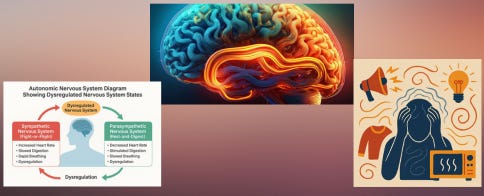
Both ADHD and Fibromyalgia involve a heightened sensitivity in the nervous system.

  • ADHD: the brain processes stimuli differently—often too much, too fast
  • Fibromyalgia: the body amplifies pain signals (called central sensitization)

In both, the system isn’t broken—it’s over-responsive.


2. Neurotransmitter Imbalances


Both conditions are linked to irregular levels of key brain chemicals:

  • Dopamine ? motivation, focus, reward
  • Serotonin ? mood, pain regulation
  • Norepinephrine ? alertness, stress response

This overlap explains why people may experience both focus challenges and chronic pain or fatigue.


3. Brain Fog & Cognitive Strain


Many describe:

  • Forgetfulness
  • Difficulty concentrating
  • Mental fatigue

In ADHD it’s often called distractibility; in fibromyalgia, it’s commonly known as “fibro fog.”
But the lived experience can feel very similar—like trying to think through mist.


4. Sleep Disturbances

Sleep is often disrupted in both:

  • ADHD: difficulty settling the mind
  • Fibromyalgia: non-restorative sleep (you sleep, but don’t feel rested)

This creates a loop ? poor sleep ? worse symptoms ? more poor sleep


5. Emotional Regulation & Stress Sensitivity

Both conditions can heighten emotional responses:

  • ADHD ? emotional impulsivity, overwhelm
  • Fibromyalgia ? stress can trigger pain flares

The body and mind are deeply connected here—stress is not just emotional, it becomes physical.


6. Co-occurrence (They Often Show Up Together)

There’s growing awareness that people with ADHD are more likely to also experience fibromyalgia (and vice versa).

Why? Likely due to shared underlying patterns:

  • Nervous system dysregulation
  • Trauma or chronic stress history
  • Genetic predispositions

A Gentle Way to See It

Rather than viewing either condition as a “fault,” many now see them as different ways of processing the world—with heightened awareness, sensitivity, and responsiveness.

That sensitivity can be exhausting…
but it can also carry deep intuition, empathy, and perception when supported well.


Support Approaches That Often Help Both

  • Nervous system regulation (breathing, gentle movement, meditation)
  • Consistent sleep rhythms
  • Anti-inflammatory nutrition
  • Mind-body practices (like EFT, yoga, somatic work)
  • Structured but flexible routines

The Role of Trauma & Life Experience

Many people with ADHD and Fibromyalgia share a history of prolonged stress or emotional strain.

Not always dramatic trauma—but:

  • long-term pressure
  • feeling unseen or misunderstood
  • constantly adapting to fit in

Over time, the body learns to stay “on alert.”
That alertness can later show up as:

  • racing thoughts (ADHD)
  • amplified pain signals (fibromyalgia)

The body remembers… even when the mind has moved on.


The “Push–Crash” Cycle

This is a big one—and often misunderstood.

Many people experience:

  • bursts of energy, creativity, or hyper focus
  • followed by deep fatigue or pain flares

This isn’t inconsistency—it’s a nervous system rhythm.

The challenge is learning:

  • when to ride the wave
  • and when to gently step back before the crash

That awareness becomes a form of self-leadership.


Sensory Overload Isn’t Just Mental

With ADHD, sensory overload is often talked about in terms of noise or distraction.
With fibromyalgia, it can show up as:

  • light sensitivity
  • sound sensitivity
  • touch sensitivity (even clothing can feel uncomfortable)

It’s the same root:
the system is taking in more than it can comfortably process.


The Diagnosis Gap (Especially for Women)

Many women are:

  • diagnosed late with ADHD
  • or never diagnosed at all

Instead, they may first receive labels like:

  • anxiety
  • depression
  • chronic fatigue
  • fibromyalgia

Only later does the fuller picture emerge.

This can lead to years of:

  • self-doubt
  • pushing harder to “cope”
  • feeling something is off but not knowing what

The Body Isn’t Fighting You

This is perhaps the most important shift.

Instead of seeing symptoms as something to fight…
you can begin to see them as messages:

  • Pain ? “something needs tending”
  • Fatigue ? “you’ve gone beyond your reserves”
  • Distraction ? “your mind needs a different rhythm”

When listened to, the body often softens.


Regulation Over Control

Traditional approaches often focus on “managing” or “fixing.”

But what tends to help both conditions most is:

  • calming the nervous system
  • creating safety in the body
  • allowing rhythms instead of forcing structure

Simple things can be powerful:

  • slow breathing
  • gentle movement (not pushing)
  • reducing overstimulation
  • giving yourself permission to pause

A Perspective That May Resonate With You

There is often a deep, intuitive, perceptive nature in people with these experiences.

They:

  • feel more
  • notice more
  • sense more

Without support, it overwhelms.
With support, it becomes:

  • insight
  • empathy
  • creative intelligence
  • wisdom in action

A Closing Reflection

What if this isn’t something to “overcome”…
but something to understand, support, and work with?

Not less of you…
but a gentler, more aligned way of being you.


Sara Troy

https://linktr.ee/saratroy

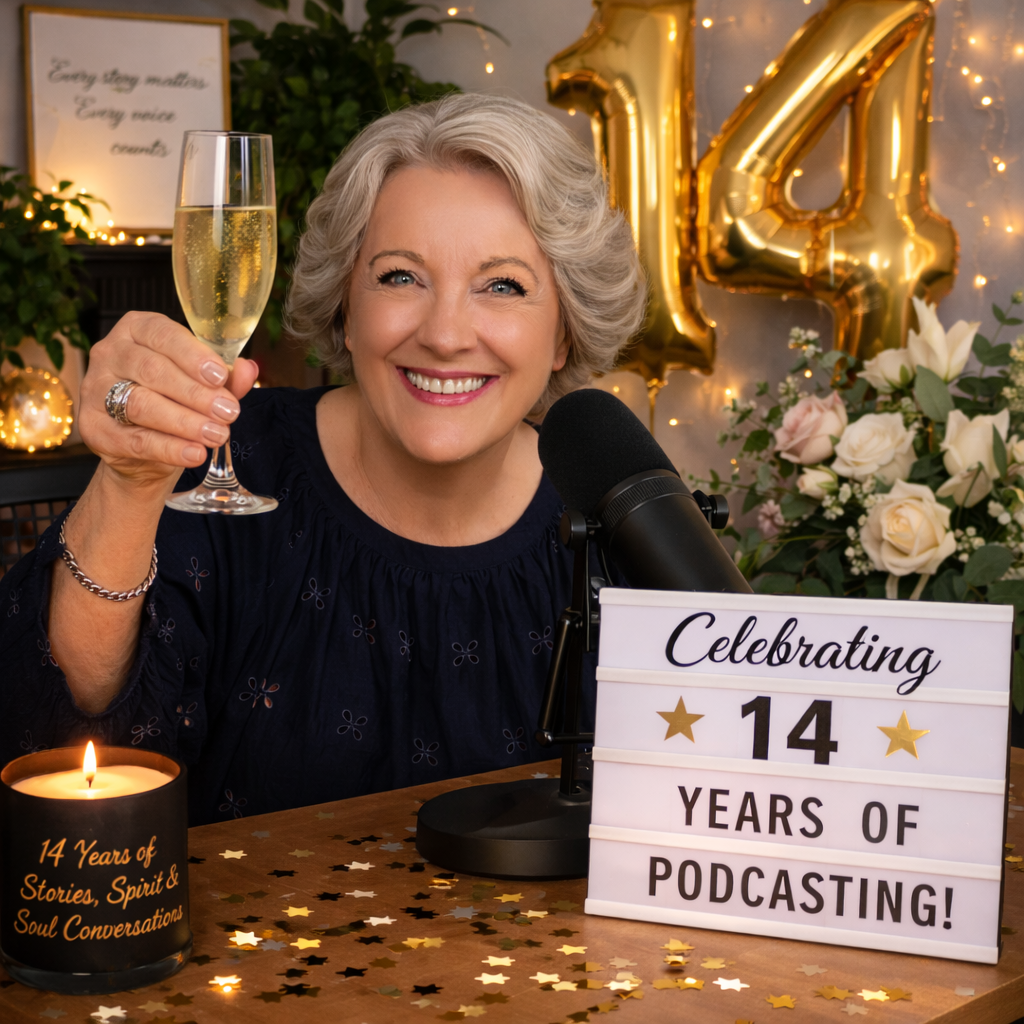
26-13. 14 Years of Wise Voices


Sara’s View of Life with Sara Troy. On air from March 31st


April 4th 2012.

14 Years of Voices, Wisdom & Becoming – The Journey of Self Discovery Wisdom

Fourteen years ago, I said yes to something I didn’t fully understand… but deeply felt.

A microphone… a conversation… an invitation.

Not to perform. Not to impress.
But to listen… to feel… and to allow something meaningful to unfold.

I didn’t know then what it would become.
I didn’t know it would grow into thousands of conversations,
into a global community, into what I now call… an Orchard of Wisdom.

But I trusted the call.


The Journey:

Over these fourteen years, I have had the absolute privilege of sitting with people from all walks of life—
people who have fallen, risen, broken, rebuilt, and found their way back to themselves.

And what I’ve learned is this…

We are not here to be perfect.
We are here to be real.

Every story shared… every tear, every triumph, every truth spoken…
has not just been content—it has been connection.

This platform was never about broadcasting.
It has always been about belonging.


What the Show Became:

Self Discovery Wisdom was never just a podcast.
It became a space… a sanctuary… a mirror.

A place where people could hear themselves in someone else’s story.
A place where wisdom wasn’t taught—but revealed through lived experience.

Over 3,000 episodes later…(that I have personally done, another 800 with other hosts)
what stands strong is not the number—but the impact.

The quiet messages…
The “you helped me through”…
The “I found myself again”…

That is the true measure.


The Lessons:

If fourteen years has taught me anything, it’s this:

  • Your voice matters—especially when it comes from heart truth.
  • Your story is not your burden—it is your offering, a liberation and illumination.
  • And when we share from the heart, we give others permission to heal, to rise, and to step forward.

We don’t grow alone.
We grow in reflection, in conversation, in connection.


The Evolution:

This journey didn’t stay still.

It grew into books
into summits…
into collaborations…
into a global network of people choosing to serve, to share, and to uplift.

And now, as we step forward…
we’re not just telling stories—we’re building legacies.


Looking Forward:

So what does the next chapter look like?

More voices.
More unity.
More courage to speak truth with compassion.

A deeper weaving of wisdom…
where we don’t just listen—we act.

Because the world doesn’t need more noise.
It needs more knowingness.
More heart. More Soul. More Spirit.
More people willing to stand in their truth and serve others through it.

We have an opportunity for seniors to be in our next collaborative book

Come and be part of collaborating in the Our Forgotten Seniors  anthology, helping the world see the richness of what our elders have given, and understand the challenges they are navigating today, and the warning to our young in how to prepare for senior ship.


In Closing:

To every guest who has trusted me with their story…
To every listener who has taken the time to tune in…
To every supporter who believes in this platform…

Thank you.

You didn’t just tune in.
You participated in something that matters.

And if you’re listening today and wondering if your voice matters…

Thank you.

You are not just part of an audience—you are part of this Orchard.
And together, we continue to grow, to share, and to illuminate the path forward.

If you have ever wondered whether your voice matters… it does.

There is no story too small, no heart too small to get its message across, we need your heart, soul, spirit and wisdom.
And when you are ready, there is a place for you here.

You can see all the different show genres here Just listen, share and or become a part of Self Discovery Wisdom community.


 ITunesSPotify+Video Soundcloud
  AmazonYoutube Music   iHEART
Podvine Podcasher  Podcast Addict
Mixcloud  Radio Public.   FM Player
 Odysee Youtube BusyMumsmedia
DO ENJOY THE WISDOMThanks for listeningFeedspot


AMAZON


FIND MORE SHOWS OF ILLUMINATION HERE

All my links can be found on linktr.ee/saratroy

BE OUR GUEST AND SHARE THE WISDOM


26-13. Sara’s First Decade.


Sara’s View of Life with Sara Troy. On air from March 31st

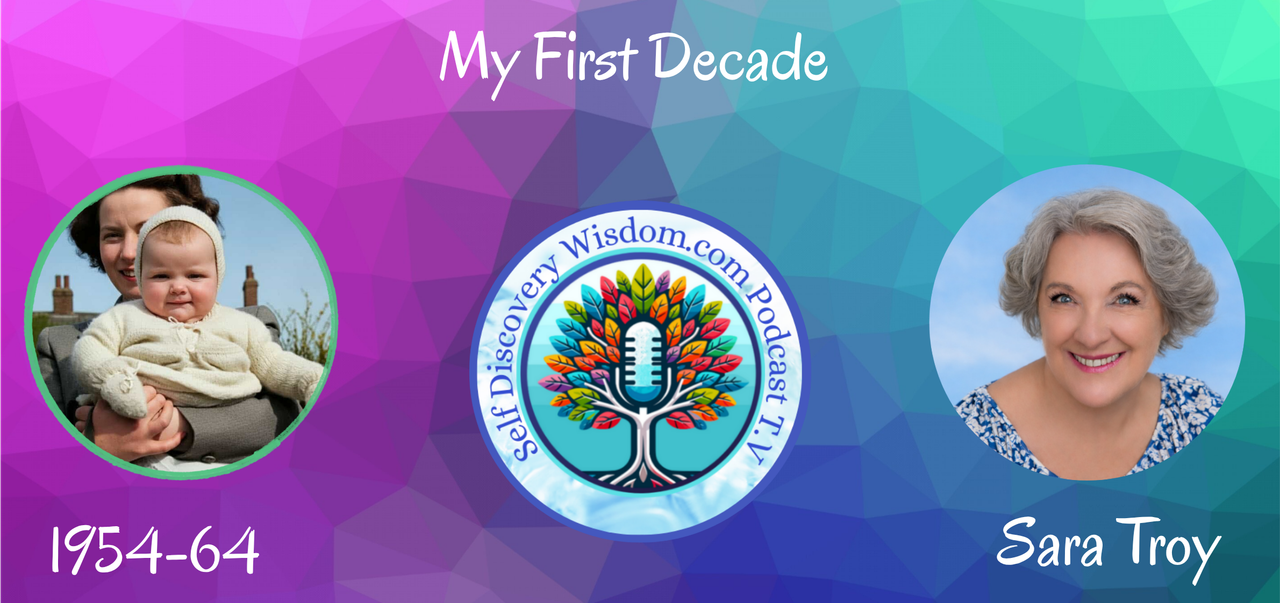
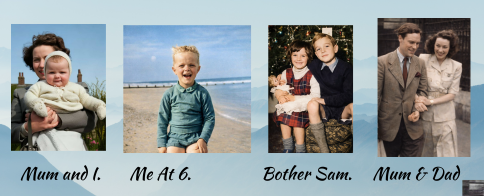
I’m going to be doing a series of seven podcasts, one for each decade of my life. The idea came after a conversation the other day about my being 71. I said that 71 feels like just a number, but when you really stop and look back, it represents seven full decades of living. And when I thought about all that had been packed into each one of those decades, I realized there was more than enough there to reflect on, so I decided to do seven shows, each one devoted to a different ten-year span. This first one is about my first decade.

I was born on October 6th, 1954, just after midnight. My mother had gone into labor on the Wednesday before and had apparently said, “Thank God she’s not going to be a Wednesday’s child, because Wednesday’s child is full of woe.” Well, I waited until just after midnight on Wednesday to be born anyway. Looking back, I can smile at that now, because yes, there has certainly been some woe in my life, but whether we can blame Wednesday for it is another matter altogether.

I was told I was a very healthy baby, though my mother said I looked battered and blue when I arrived because the labour had been so long and so difficult. It had become rather desperate, and by morning they were preparing for an operation. But because I was already in the birth canal, it was going to be complicated. A couple of determined midwives apparently stepped in and managed to get me out. My mother, after all that effort, looked at me and said, “All that for that.” I took that to heart later in life when I had my own children. I made a point of holding them, telling them how beautiful they were, welcoming them into the world with love, and speaking positive words over them, because I wanted their first welcome into life to be filled with warmth.

For the first couple of years, I became a happy, plump little girl, which in those days was considered the sign of a healthy baby. But when I was two, the Asian flu hit England hard, and it struck my mother, my father, and me. I became desperately ill, and that illness ignited what would become a lifelong journey with asthma and eczema. My eczema was severe. My mother used to describe it as looking like red-hot pennies had been dropped all over my body. It was inflamed, painful, and miserable. I remember water feeling like acid on my skin when I was in the bath. It would crack in the bends of my fingers, behind my knees, and in the crooks of my arms. In so many photographs from those years, my fingers were bandaged.

The asthma was more dangerous. In those days they did not have the inhalers we know now. There were tablets to calm the lungs, but they took time to work, and when attacks came on they came hard. I would end up in hospital on oxygen, and whenever my mother sensed an attack coming, she would put me to bed, sit me up, bring steam, and tell me stories to calm me down. Sometimes I would be in bed for weeks. People died of asthma back then. I was one of the lucky ones in that I survived, but one of the unlucky ones in that I never outgrew it. It stayed with me and created barriers all through life.

Because I was so often ill, I missed a great deal of school. I struggled with learning, and much later in life I would discover dyslexia and realize I also had learning differences that were never understood at the time. Back then, you were either considered bright or slow, and I was labeled the slow one. But the truth was that I did not learn conventionally. I learned through conversation, participation, repetition, and lived experience. Books did not speak to me in the way people did. I could look at the page and not take it in. So school was always hard, especially because every time I returned from illness, the rest of the class had moved far ahead and I had been left behind.

I began school very young and later went to boarding school just before my ninth birthday, which was quite normal in England then. My brother and sister had both gone earlier than I did, but I was delayed because of my health. I remember my parents leaving me there and not fully understanding what was happening until they were gone. It was a shock. There were girls everywhere, and I had been told I was going to boarding school, but I did not truly understand what that meant until I was there. I got sick there as well, of course, and would be put back to bed. There were good memories too, once I adjusted. There were paddocks, forts, geese chasing us, woodland walks, and the wonderful lesson of learning not to be overwhelmed by the whole journey, but simply to focus on the next step, and then the next.

There were also difficult moments. Some older girls bullied me because of my asthma and what I could not do. Once they dragged me by my ponytail and tried to bury me in a hole like a weed, right outside the principal’s office, where fortunately they were caught. There was loneliness in those years too. At home I was often alone because my brother and sister were away, and at boarding school I sometimes stayed when others went home for weekends. I spent a lot of time by myself, sick in bed or left to my own imagination, and that solitude shaped me deeply. It was in those quiet, isolated times that I believe my inner world became rich. I escaped the white walls of illness and solitude through imagination, through spirit, through inner knowing, and through what I would later understand as my connection to something beyond the ordinary.

My father was also a huge presence in those early years. He had been a fighter pilot, a squadron leader, a yachtsman, a racing car driver, and a businessman. He was a man who had faced danger head on in war, yet after his first heart attack when I was eight, something in him changed. I look back now and wonder how much of that was trauma never spoken about. In those days, men were expected to keep a stiff upper lip and simply carry on. But trauma does not disappear because it is ignored. It settles in the body, in the heart, in the soul. I saw that in him, and I believe that silence around trauma was one of the greatest harms done to so many people of that generation.

My father and I were only just beginning to know one another when illness and life began shifting around us. He was not naturally affectionate, at least not openly, and yet there were moments I treasured. I used to pretend to be asleep at night, because if he thought I was asleep, he would give me a kiss before turning off the light. If he knew I was awake, he would simply tell me to go to sleep. So I waited for that kiss. That small gesture meant everything to me. Sometimes I would just hug him when he came home and he would, on occasion, hold me. Those little scraps of affection became precious.

Despite the illness and loneliness, there were happy memories too. We had a seaside home called Sandylands where we spent weekends and summers. There were beach huts, steps down to the sand, tea rooms, seaside fun, fish and chips, and wonderful family rituals. My father had a boat, and he and my brother would sail while I played on the beach with the dog. We would go for Sunday lunches dressed up in our proper clothes, and Saturdays often meant lining up for warm jam doughnuts from the bakery. Those memories are bright and golden. There was joy there, and freedom, and something deeply British in the rhythm of it all.

There were also all the small, strange memories of childhood that stay with you: forgetting my knickers at school and being mortified, being proud I remembered the words to “Away in a Manger,” sneaking to watch television through the crack of the door and then being terrified to sit on a chair because of something I had seen, riding my bike, pushing my dolls’ pram down the street, wanting to be a mother from the very beginning, and learning that childhood is filled with both delight and bewilderment in equal measure.

When I look back on those first ten years, I see a child who was often sick, often lonely, often misunderstood, and yet also imaginative, observant, affectionate, spiritually open, and already beginning to sense life beyond what others could see. Those years were rocky, no question. There were highs and lows, laughter and struggle, comfort and confusion. But they set the stage. They shaped the resilience, the knowingness, the empathy, and the storyteller I would become.

So this first decade, from birth to ten, was really the foundation. It was the decade of illness, of solitude, of sensitivity, of learning to survive, and of beginning to understand the world in my own unconventional way. And as I revisit it now, I realize just how much those early years influenced everything that came after. The next decade is even more tumultuous, but this one laid the ground. This one began the story.


 ITunesSPotify+Video Soundcloud
  AmazonYoutube Music   iHEART
Podvine Podcasher  Podcast Addict
Mixcloud  Radio Public.   FM Player
 Odysee Youtube BusyMumsmedia
DO ENJOY THE WISDOMThanks for listeningFeedspot


26-14. Sara’s Second Dacade.

26-15. Sara’s Third Decade.

FIND MORE SHOWS OF ILLUMINATION HERE

All my links can be found on linktr.ee/saratroy

BE OUR GUEST AND SHARE THE WISDOM

Self Discovery Wisdom is sustained by those who believe in conscious conversation. If this episode resonated with you, subscribe and, if you feel called, make a donation. Your support helps us keep amplifying voices that inspire growth, courage, and compassion. Thank you. Please support Our Forgotten Seniors anthology and help to bring this book to awareness.