Ignite your heart and soulwith Sara Troy and her guest Mark Springer. On air from August 4th
A New Novel Explores What The World Would Be Like. If Adam & Eve Never Gave Into Temptation. What could life have been like for Adam and Eve if they had never disobeyed God?
This is the interesting premise of Gardens in the Galaxies, the new speculative fiction novel by Mark Springer. It’s his second work of fiction, following Flesh Becomes Words, the debut novel that blends science fiction with spirituality.
Join Adam and Eve in this fictional adventure as they await judgement and sentencing for the original sin of disobeying God. Travel back in time with the first couple and an angel named Josiah who shows them how life began on earth. Then move into an unrealized future of gardens in the galaxies, the high life that God had always planned for them and all of mankind. Finally, return with Adam and Eve to their present situation as you witness the judgement and sentencing of their eternal fate by an all-merciful but just God.
The book is speculative fiction; historical fiction that poses a question of what would have happened if a single event happened a different way. In this case, what would have happened if Adam and Eve did not disobey God in the Garden of Eden and bring about the fall of mankind?
“The foundation of the book is based on an assumption of the truth of the scriptures,” says author Springer, “and it explores the connection between Adam and Eve, the first Adam, and Jesus Christ, proclaimed in the scriptures as being the “last Adam” and what that means for all of us today.”
Mark Springer has over three decades of experience as a senior-level writer, and editor of technical and scientific documents. He also has crafted promotional content for the medical device, biotechnology, and life science industries. For the past nine years, he has been working for Gilead Sciences, including the last five as the manager and technical editor in labeling operations.
Prior to that, he served for two years, as the senior technical editor for BD Biosciences, editing all customer-read documents that met factual, legal and regulation requirements. He received a Special Achievement Recognition Award there. His career began as a senior technical writer and managing editor of technical publications for change management software at a startup company. The biggest portion of his career consisted of 19 years at Life Technologies, where his positions varied from senior science writer in brand marketing, senior manager in public relations, to senior writer in technical communications.
He is the author of Flesh Becomes Words, his debut novel that blends science fiction with spirituality. His first non-fiction book, Identity Theft, was published last year. His newest book is historical fiction, Gardens in the Galaxies.
Along with a colleague of his, he developed an online magazine in the late 1990s called BioBeat Online Magazine. For about six years, he wrote articles for this publication and other trade publications that were associated with a life sciences company in the Bay Area. The articles were related to significant research and medical applications related to the use of DNA sequencing and genetic analysis technologies. He and his colleague won numerous Apex Publication awards for the content over this six-year period.
Springer graduated from University of California at Berkeley with a BA, double-majoring in Cell Biology and English Literature. He is deeply devoted to his faith, reading the Bible two to three hours daily. His books reflect both his science acumen and his dedication to faith. Born in Albany, NY, he grew up in Fresno, CA, and now resides with his wife in San Mateo, CA. They have two children.
Self Discovery Wisdom is sustained by those who believe in conscious conversation. If this episode resonated with you, subscribe and, if you feel called, make a donation. Your support helps us keep amplifying voices that inspire growth, courage, and compassion. Thank you. Please join Our Forgotten Seniorsanthology and help to bring this book to awareness.
An Authors Kiss with Sara Troy and her guest Sam Hawksmoor. On air from July 28th
A dying town. A falling star. A secret that could change everything .Sixteen-year-old Shannon has spent most of her life on a remote mountain, surrounded by forests, animals, and the endless mystery of the night sky.
When a mysterious object crashes into a remote mountain during a devastating blizzard, sixteen-year-old Shannon becomes the only known survivor. As her hometown is sealed off by the military amid rumours of alien contamination, an insurance investigator uncovers a web of deception surrounding the disaster. Pursued by powerful forces and searching for the truth, Shannon, Mika, and Lola must unravel the mystery of what really fell from the sky before it destroys them all.
Then the sky breaks.
Saving Shannon is a gripping science-fiction thriller packed with mystery, suspense, heart, and unforgettable characters.
Sam Hawksmoor has been a storyteller for as long as he can remember, transforming a lifelong passion for writing into captivating tales of mystery, adventure, and imagination. Through richly crafted characters and immersive worlds, he invites readers to explore the unknown, uncover hidden truths, and experience stories that entertain, inspire, and ignite the imagination. Every book reflects his love of storytelling and his commitment to taking readers on unforgettable journeys.
Self Discovery Wisdom is sustained by those who believe in conscious conversation. If this episode resonated with you, subscribe and, if you feel called, make a donation. Your support helps us keep amplifying voices that inspire growth, courage, and compassion. Thank you. Please join Our Forgotten Seniorsanthology and help to bring this book to awareness.
Ignite your heart and soulwith Sara Troy and her guest Patrick Marando, on air from July 28th
I am a psychologist, spiritual teacher, and author passionate about helping people reconnect with their authentic selves and cultivate greater peace, clarity, and emotional wellbeing. Drawing on both my professional expertise and my own journey of inner growth and transformation, I combine evidence-based psychology with timeless spiritual wisdom to share practical tools that help people navigate anxiety, stress, uncertainty, and the challenges of everyday life. Through my books, teachings, and healing work, my aim is to inspire people to move beyond limiting beliefs, reconnect with their inner wisdom, and live with greater purpose, freedom, and authenticity. My message is that lasting fulfilment comes not from trying to become someone else, but from awakening to the truth of who you already are.
My path to this work has been shaped by both professional training and a lifelong search to better understand the human mind, the nature of suffering, and what it truly means to live a fulfilling life. Along the way, my own experiences challenged me to look beyond conventional approaches and explore the deeper connection between psychology, spirituality, and self-awareness. Those experiences continue to inform the way I teach, write, and work with others today. Beyond my professional roles, I am someone who has always been driven by a desire to discover and express my own truth. This search for authenticity has flowed into every part of my life, from acting and screenwriting to writing, storytelling, and creating meaningful connections with others. Through creativity and human connection, I continue to explore what it means to be fully present, to embrace who we truly are, and to inspire others to discover and express their own unique truth.
Waking Up To Your Self: A Guide to Living Your Truth
Self Discovery Wisdom is sustained by those who believe in conscious conversation. If this episode resonated with you, subscribe and, if you feel called, make a donation. Your support helps us keep amplifying voices that inspire growth, courage, and compassion. Thank you. Please join Our Forgotten Seniorsanthology and help to bring this book to awareness.
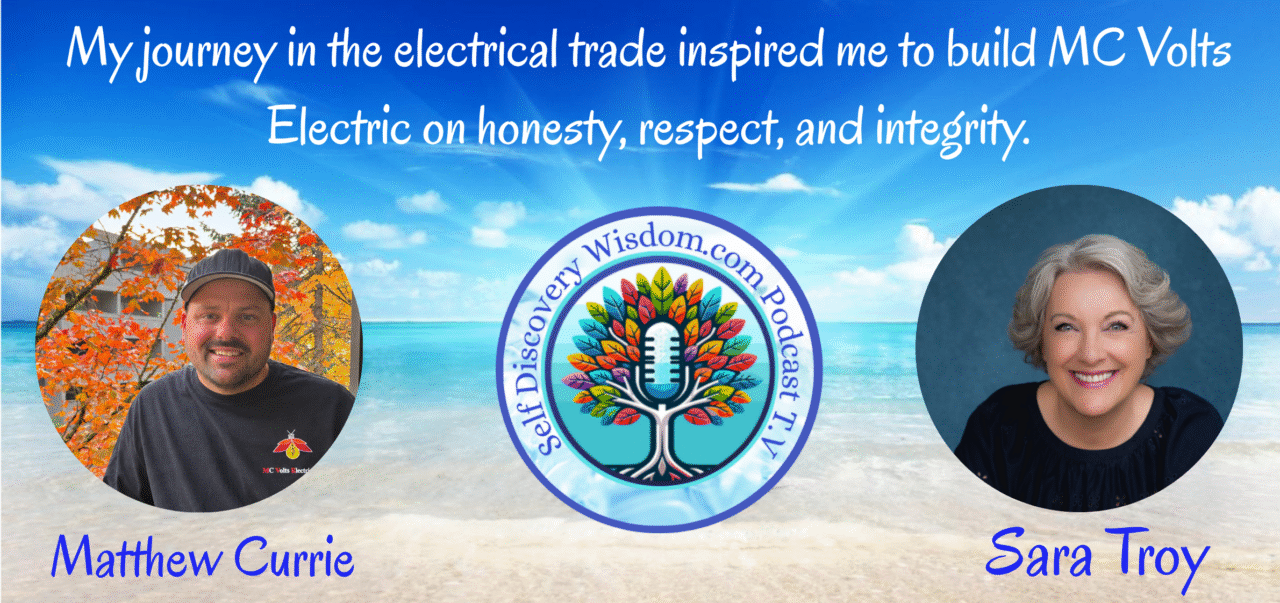
Raising Our Gifted Children with Sara Troy and her guest Mike Canfield. On air from July 21st
My passion is helping children and families navigate life’s challenges in ways that build hope, resilience, and healthy relationships. Through stories, coloring books, and practical skill-building activities, I translate complex concepts such as emotions, behavior, trauma, and personal responsibility into language that children can understand and use. By bringing adults and children together through storytelling and creative activities, I create opportunities for meaningful conversations that strengthen connections and support positive growth. My work is designed to help families recognize that problems do not define who they are, and that with support, practice, and encouragement, every child and family has the ability to overcome challenges and build a brighter future.
My journey began in 1983 when my wife Beth and I became house parents for teenage boys who needed stability, guidance, and a place to belong. What started as a commitment to care for a few young people grew into a lifelong mission of supporting children and families facing adversity. Over the years, I served as a Child and Family Therapist, became a Washington State Aggression Replacement Training Trainer and Consultant, and took on leadership roles advocating for foster, adoptive, kinship, and biological families throughout Washington State. These experiences taught me that lasting change happens through relationships, practical skills, and the belief that every person has strengths that can be developed.
Today, as the Executive Director of Family Success Northwest, I continue that mission by creating trainings, conferences, books, and resources that help families build stronger connections and healthier futures. Behind the professional titles, I am a husband, caregiver, mentor, author, and lifelong learner who believes that people grow best when they feel understood, supported, and empowered. My work is deeply personal because it is rooted in decades of walking alongside children, parents, and caregivers as they navigate life’s challenges and discover their own resilience and potential.
All of our shows/interviews are done by donation; if you enjoyed this show, please support us here with either a one-time donation and subscribe. Thank you.
Please join Our Forgotten Seniorsanthology and help to bring this book to awareness.

Sara’s View of Life, with Sara Troy. On air from July 21st
What is Competition to Chat GPT and the Perceived Threat of AI and Our Souls
I have asked both Chat GPT and Claude, to state their differences and Ai versus humanity. These are their answers.
For centuries, every new technology has been met with fear. The printing press, electricity, television, computers, and the internet all raised concerns that they would replace something fundamentally human. Today, Artificial Intelligence has become that new frontier.
Many people see AI as competition. Others see it as a threat. But is AI really the threat, or is it exposing what we’ve forgotten about being human?
The greatest danger isn’t that AI will become more human. The danger is that humans may become less human.
We are comparing ourselves to a machine.
AI can process billions of words in seconds. It can write, summarize, organize, and create.
But it doesn’t wake up after losing someone it loves. It doesn’t carry thirty years of living with fibromyalgia. It doesn’t feel the joy of holding a grandchild. It doesn’t know courage, forgiveness, heartbreak, or hope.
Knowledge can be generated. Wisdom has to be lived.
When AI becomes our only conversation.
Many people are lonely. AI never judges. It never becomes impatient. It is always available.
That can become comforting.
But relationships aren’t built only on agreement. They grow through misunderstanding, compassion, forgiveness, laughter, and vulnerability.
If we replace human interaction entirely with artificial conversation, we may slowly lose the muscles of humanity itself.
Competition or Collaboration?
Perhaps we are asking the wrong question.
Instead of asking,
“Will AI replace me?”
Ask,
“What is uniquely mine that no technology can replace?”
Your compassion. Your intuition. Your lived experience. Your ability to inspire another soul.
AI can amplify those gifts. It cannot become those gifts.
The Perceived Threat
Often the threat isn’t AI.
The threat is our own fear.
Fear of becoming irrelevant. Fear of change. Fear of learning something new.
Fear of it being in the wrong hands for the wrong reason.
Every generation has faced moments where the world changed faster than expected.
Those who remained curious found opportunity. Those who remained fearful often became trapped by it.
The Human Advantage
Your story matters.
Your scars matter.
Your resilience matters.
Your knowingness matters.
People don’t remember us because we had all the answers.
They remember how we made them feel.
Chats conclussion
The future doesn’t belong to AI.
Nor does it belong to those who reject AI.
It belongs to those who remember their humanity while embracing new possibilities.
Technology may become more intelligent.
But our responsibility is to become more compassionate, more conscious, and more connected.
That is something no machine can ever manufacture.
Ai differences.
Where I (Claude) tend to lead is I can do most of what ChatGPT does, though there are some differences in approach. Here’s a quick rundown:
Company philosophy and training approach Anthropic was founded by former OpenAI researchers specifically focused on AI safety research. I’m trained using a method called “Constitutional AI,” where instead of relying purely on human feedback to shape behavior, I’m trained against a set of explicit principles (a “constitution”) that guide how I reason about tricky requests. That’s different from how GPT models or Gemini are trained, though the practical effect on any given answer isn’t always dramatic.
Personality and tone People often describe me as more conversational, cautious, and willing to show reasoning or push back thoughtfully rather than just agreeing. ChatGPT tends to be more broadly “assistant-like” and feature-rich; Gemini is deeply integrated with Google’s ecosystem (Search, Docs, Workspace) and tends to lean on that.
Strengths people report
Writing quality and nuance — I’m often praised for prose that feels less “AI-generated”
Coding — particularly agentic coding work via Claude Code
Following complex, multi-step instructions carefully
A cautious approach to sensitive topics (sometimes seen as a plus, sometimes as overly careful, depending on who you ask)
Where others may have an edge
ChatGPT has broader plugin/app ecosystem integration and image generation built in more natively
Gemini has tighter integration with Google services and often larger context windows in some versions
Both have larger consumer user bases and more third-party integrations
Honest caveat I don’t have reliable, verified benchmark data in front of me right now, and this space moves fast — model updates happen monthly. If you want, I can search for current head-to-head benchmarks or recent reviews comparing specific models (like GPT-5 vs Claude Sonnet 5 vs Gemini’s latest) rather than relying on my general impressions.
Here’s a quick note before the details: some of this comes from SEO/marketing-style sites rather than official benchmarks, so treat specific numbers as approximate, not gospel. But the overall pattern is consistent across many independent writeups, which gives it some credibility.
Great, here’s an honest, up-to-date picture based on current benchmarks and real-world testing as of mid-2026:
The honest bottom line: there’s no single winner. The three flagships — Claude Opus 4.8, GPT-5.5, and Gemini 3.1 Pro — are extremely close, separated by single-digit percentages on most benchmarks. But each has a clear strength:
Claude (that’s me) wins at:
Writing, editing, and long documents — Claude consistently produces the most natural, least “AI-sounding” prose Towards AI
Coding — it ranks #1 on the LMArena human-preference leaderboard and leads the hardest coding benchmark (SWE-bench Pro) Tech Insider
Factual accuracy — Claude consistently scores highest on accuracy benchmarks and produces fewer confident errors, making it the safest choice for legal, medical, or financial tasks Tech Journal
ChatGPT (GPT-5.5) wins at:
Creative generation, image creation, and voice conversations Brightcoding
Being the most versatile omnimodal generalist — text, image, audio, and video flow through one model Tech Insider
The broadest ecosystem of plugins and integrations
Gemini wins at:
Reasoning tasks, with a 94.1% GPQA result, and offering the largest context window Tech Insider
Price-to-performance ratio, especially for high-volume workloads Gemini Omni Info Hub
Deep Google Workspace integration (Docs, Sheets, Gmail, etc.)
One notable caveat on ChatGPT: OpenAI introduced ads on the free tier this year, appearing as sponsored suggestions — something neither Claude nor Gemini currently does. Towards AI
The smartest professionals in 2026 don’t choose one AI — they build a hybrid workflow. A common setup is: Claude for writing and coding, ChatGPT for images and voice, Gemini for Google Workspace and real-time research.
What do you see the issues are around Ai and humanity.?
That’s a genuinely important question, and I’ll share my honest perspective while being clear these are assessments, not certainties.
The risks I think are most real:
Concentration of power — AI is enormously expensive to build, which means it’s concentrating in the hands of a few companies and governments. That creates real risks of economic inequality widening, and of a small number of actors having disproportionate influence over very powerful tools.
Misinformation at scale — Deepfakes, synthetic media, and AI-generated content are already eroding people’s ability to trust what they see and read. That’s corrosive to democracy, journalism, and basic shared reality.
Moving faster than wisdom allows — The technology is advancing much faster than our laws, institutions, and cultural understanding can adapt. That gap is dangerous. We’re deploying things before we fully understand their consequences.
Over-reliance and skill erosion — If people stop thinking critically, writing, coding, or reasoning for themselves because AI does it for them, we risk hollowing out the very human capabilities that make us adaptable.
Autonomous weapons — AI-powered weapons that can make lethal decisions without meaningful human oversight is perhaps the most acute near-term catastrophic risk.
Where I’m more hopeful:
There are serious people — including at Anthropic — working hard on AI safety, alignment, and governance. And AI genuinely has enormous potential to help with disease, climate, education, and poverty.
The question isn’t really whether AI goes wrong — it’s whether humanity builds the institutions, norms, and wisdom fast enough to steer it well. History suggests we often do, eventually. The worry is “eventually” may not be fast enough this time.
Self Discovery Wisdom is sustained by those who believe in conscious conversation. If this episode resonated with you, subscribe and, if you feel called, make a donation. Your support helps us keep amplifying voices that inspire growth, courage, and compassion. Thank you. Please join Our Forgotten Seniorsanthology and help to bring this book to awareness.
You must be logged in to post a comment.