Have you ever found yourself standing in front of the mirror in the morning, not knowing what to put on? Or are you one of those people who puts everyone and everything else first, but when it comes to your own needs, you are at the bottom of the list?
As busy professionals and businesswomen, we often forget that our own well-being is crucial to the well-being of our loved ones, our personal and professional relationships, to how well we perform at our careers, and how much we positively influence our communities.
We are there for you so please sign up now it is free to you and be inspirered and supported by us who care for your well beingness.
“I am so thrilled to be the host of the upcoming virtual summit called
Face Forward: Busy Woman’s Guide to Radiant Beauty.”
This collaborative project features over 21+ Superwomen who came together to share their knowledge, practical tips, and proven-to-work-strategies that will teach you how to have it all. So, if you are a busy mama/woman looking to ignite your glow this Summit is for you!
Sara Troy is so proud to be a part of this wonderful empowering summit starting May 11th. SARA TROY AIRS MAY 21ST, COME AND HEAR ALL THE OTHER ILLUMINATING SPEAKERS.
A: The Summit will go live on May 11, 2020 (May 11- June 3)
Q: For how long will each interview be available?
A. Each interview is available for 48 hours
Q: Can I “share” your posts on social media?
A: Please do not share my or anyone else’s posts, sharing is caring.
As this is a free Summit and the aim is to uplift and support as many women as we can, so please do share as each summit guest has a lot to share and also has a gift for you.
Sara Troy and Discovering Communities are knowledge sharers who share the wisdom given by those who have gone through the process of life, and who now share their wise knowledge with Sara on her “Self Discovery” Orchard of Wisdom podcast shows. With an accumulated 2500 shows an expansion in place with Mentors memberships, podcast books, and educational platforms, Sara Loves the inspiration that begets invitation in embracing our meaningful purpose into awesomeness.
Dr’s Shelly and her husband Tom Negelow have shared some intuitive common sense wisdom here on all of these shows. We invite you to take a listen and feel the wisdom.
Tom and Master Kuthumi speaks to what is responsibility and what it has it to do with Love. Our own responsibility comes from a place of self-love, and in that love, we will take ownership and navigate our path within that love.
What is channeling and how can it help you grow and expand your understanding of who you are?
A bit about Kuthumi – Kuthumi is the collective energy of St. Francis of Assisi, Pythagoras and the Shah Jahan, the Indian leader who built the Taj Mahal. The common energy of these three is the vibration of unconditional love. Through humor, compassion and the experience of unconditional love, Kuthumi brings great insight into the challenges we face today.
In these unprecedented times, we see the world step up in support of each other. Are we seeing more of a woman’s touch, Mama’s touch, are we seeing more of the feminine touch coming from the men out there?
Are women getting the credit they deserve and can we find the leader within us in these times?
What is the experience of sensuality? Sensuality is the vibration in the body that heightens the senses. The senses are for experiencing the three-dimensional world, and as a result of the heightening of the senses, there is a heightening of the experience of the body.
Dr. Shelley Negelow is an advocate for women! She is the Founder of the Power of Woman Seminars. For over 30 years she has been training women to create a life they love. In her private practice, she mentors women in their personal and professional growth. Along with her husband, Dr. Tom Negelow, she developed and teaches The Relationship Mastery Seminar, which gives couples and individuals a powerful foundation for creating successful partnerships
In a recent collaboration, Dr. Shelley and her partner and friend, Lynnis Woods-Mullins, have created a powerful new program for women entitled, Emergence of the Total Woman – Emergence Encounters Master Classes to Elevate Your Life. Go to bit.ly/EmergenceEncounter1 for more information and to register.
Dr. Shelley is also an Author, Speaker, and Business Relationship Consultant. Her book is entitled,” The Master In The Mirror: A Woman’s Guide to Living a Passionate and Joyful Life.”
Working with Dr. Shelley women learn to turn the fire back on in their lives and discover how to use their innate power, passion and creativity to produce real-life extraordinary results. She says, “Living a life you love is your birthright!”
She and her husband Tom live in Atlanta, Georgia, have 2 married children and 4 grandchildren.
I am Dr. Tom Negelow. I am a deep trance channel, healer, teacher, and author. I have been channeling and in private practice for over 30 years. I channel Ascended Master Kuthumi, the combined energy of St. Francis of Assisi, Pythagoras, and the Shah Jahan, the Indian leader who built the Taj Mahal.
What is channeling and how can it help me grow and expand my understanding of who I am?
Sara’s View of Life with Sara Troy on air April 28th
It is so important that we come from the heart when we feel the love we exude that love and all near us feel the love. Live from your heart now. Our hearts are aligned with our soul consciousness, and when we come from that truth we never waver as it is our divine truth.
We all need to ignite our hearts in these times, step into our heartwarming consciousness, and show caringness and kindness towards each other, for LOVE is the true commerce in life and one we need to spend abundantly.
Quantum Spirituality with Sara Troy and her guest Dr Tom Negelow, on air from April 28th
What is channeling and how can it help you grow and expand your understanding of who you are?
A bit about Kuthumi – Kuthumi is the collective energy of St. Francis of Assisi, Pythagoras and the Shah Jahan, the Indian leader who built the Taj Mahal. The common energy of these three is the vibration of unconditional love. Through humor, compassion and the experience of unconditional love, Kuthumi brings great insight into the challenges we face today.
Questions that are frequently asked focus on manifesting what you want in your life, relationship, abundance, health and well-being, your spiritual path, the universe and enlightenment.
I am Dr. Tom Negelow. I am a deep trance channel, healer, teacher, and author. I have been channeling and in private practice for over 30 years. I channel Ascended Master Kuthumi, the combined energy of St. Francis of Assisi, Pythagoras, and the Shah Jahan, the Indian leader who built the Taj Mahal.
What is channeling and how can it help me grow and expand my understanding of who I am?
Channeling gives us an opportunity to begin to experience life from a unique point of view, one of pure energy. Channeling can begin to answer questions about our lives that support us in how to live a truly creative and clear life. Channeling with Kuthumi will help you become aware of our true nature and what has been preventing you from living life from the energetic nature of who you truly are. Channeling with Kuthumi will give you guidance about your world, help you understand yourself more deeply and direct you in creating what you want.
Good channeling will never tell you what to do or predict your future or get in the way of your responsibility for your own life and how to live it.
You may have an idea of what you think channeling is. You may have heard about someone who channels disembodied spirits, or someone who “sees dead people”. That is not the type of channeling I do. I am a deep trance channel, which means that I am in a deep meditative trance-like state. I have no memory of what I have channeled and have no memory of what has been said either by me or the people I am channeling for. Channeling with Kuthumi will give you guidance about your world and help you understand and direct you on how to begin creating what you want.
I began channeling after developing the healing work I do is called The Cellular Energy Releasing Healing Method. CER is hands-on healing that supports people in releasing the emotional and physical energy that prevents them from having what they want in their lives. One day after doing a CER session with my wife Shelley, I spontaneously began to channel. I had not taken a class or learned to channel from a teacher or from anything I had read in a book. It just came to me spontaneously. As I began to channel for others I kept my eye on whether the information was valuable to them, and did it have a positive impact on their lives. And in fact, it did. So, always with that in mind, I have been channeling for over 30 years.
A bit about Kuthumi – Kuthumi is the collective energy of St. Francis of Assisi, Pythagoras and the Shah Jahan, the Indian leader who built the Taj Mahal. The common energy of these three is the vibration of unconditional love. Through humor, compassion and the experience of unconditional love, Kuthumi brings great insight into the challenges we face today. During the channeling you are invited to ask questions regarding manifesting what you want in your life, relationship, abundance, health and well-being, your spiritual path, the universe and enlightenment.
Please join me as we explore the invaluable information and healing this channeling provides.
This was a major part of why I chose to sign up with this particular program. It really IS better for the animals – (well, being free in the wild is better, but under certain circumstances, not for these ones.) The Arrivals terminal was full, lots of flights still happening back then. Obviously I was not checking the news often during travel, but had heard of this Coronavirus. There was a warning I saw in a paper that about 132 people had died from an infection in China. It still hadn’t spread globally yet it seemed…. Little did I know that my timing was perfect for going to the game reserve when I did, as all volunteer conservation programs would soon be shut down after I left.
I arrived in Johannesburg after a very teary-eyed departure in Cape Town saying goodbye. It was such a beautiful day out, and I had only just met the rest of the Heyburgh family that very day; we had an outdoor luncheon and it was lovely, but then it got emotional and parting is such sweet sorrow sometimes… most times. I had a late night flight and stayed at a nearby hotel for 6 short hours, just to return back to the airport early morning. But, when I arrived again, I found two friends from Toronto there also. Small world…. and a sign with my name on it was held up at the info counter. I waved adios to those lads and wished them well on their glorious journeys ahead, then threw my bags in a strangers car and was off for a long hot drive away to my new, short term home.
When we pulled up I was tired, drained from crying, but also very excited to start this project volunteering. It was a dedicated conservation effort to save wild animals that cannot survive on their own anymore, and we want them to thrive. Also to protect the land, their habitat. I wish there was more we can do, and we can. Do research the legit projects and fund the good ones, no self-made zoos. After all the waiting to get to this amazing place I’d been researching for months, I was immediately greeted by young female ostrich’s, pecking away stupidly, but oh so cutely at the grass.
I signed the safety of my life away, willing to risk it to see tigers and other incredible creatures, but also to enrich their lives. I couldn’t believe that some of the ostrich’s were friendly enough and that I could even pet such a big bird! The feathers are soft, but the head and neck feel like one of those crinkly childhood craft papers. If they don’t want your love they run away. We rightfully called them chickens, however extremely large chickens.
I had 10 mins to settle in to my “room” which, I wasn’t expecting the Ritz Hotel as I only paid for ‘room and board’ to volunteer and help out. Beggars cannot be choosers and this old room that had been slept in by many before me, would have to suffice. Though it was clean it seemed dirty, but after day two of work I already did not care, except for when I had a giant moth buzzing around and it was making me dizzy going around the light whilst I was trying to read. I was a baby about it so I had to come out and get a brave assistant to kindly remove it for me…. dusty wings, no thanks.
It was morning, but late, not quite noon yet, I had missed breakfast, so I was given my orientation for daily tasks and duties. I arrived on Monday and luckily missed “Shit Trailer” work in which, I will get to; let’s just say that would have been awful as my first job upon arrival. Our approximate wake up at 6/6:30am everyday or earlier if you were signed up for the elephant walks. We as workers were allowed two each per week. Privilege you see.
Work was to start as soon as everyone gathered in the common meeting area, but as it’s free labour, some people do not abide by the prompt schedule and show up late and still crusty-eyed in pjs. When all had joined then we were to grab our tools or what not and go off to our assignments. The paid crew was fortunate they had a lot of people signed up (especially during the slower season as it is too hot so less helping hands.)
It seemed a few groups of friends came together so there were eleven of us volunteers from all over the world, a mixed bag crew of us: boys and girls, different age groups and I admit I was the eldest, even out of most the staff. Thus with our rather large number we were divided in to two teams.
So let’s say typical day is:
7am Monday – everyone does Shit Trailer. Come back, if time to shower you can but no point if you’re just going to get dirty again… breakfast every day at 9am. The good thing about our mealtime was we had to walk 15 mins away uphill to the lodge where food was served. We were the lowly staff in a camp, but guests stay at the lovely lodge with a pool and restaurant. We got a cafeteria room with basic food to serve the masses, like instant coffee (my god when I realized I could buy real coffee at the bar, it was a game changer!), maybe a banana, happy when there were eggs, but mostly cereal, white bread, and perhaps hash browns. Sometimes bacon but I don’t eat pigs. If there were apples I’d stash it for the horses, some of them loved those treats and it was fun to have them nibble one out of your hand. We were hungry by 9am, morning work builds an appetite. At 10am, after the important meal of the day, strength was built back up, we could do more assignments. Say Team 1 – clean the horse stables. Team 2 – elephant houses. This really was quite literally, shitty work. Animals have to go overnight, so when they are gone out in the morning for their long walks, we sneak in and shimmy up their joints, clean all their feces up. Elephants can do a lot of damage in one night lemme tell ya! I was a prude at first, putting a bandana over my mouth and nostrils, holding my breath scooping too close. The manure piles would then go on to wagon and hence, on to the mighty “Shit Trailer.” This doody duty could take about 45 mins, depending how many shovels and hands on board. Only one hose. You’ll be happy to know the elllys are free to live on the grounds of the park, but again sadly, due to fucking poachers, we have to keep them in security lock up over night. Their houses were decent and big enough though so don’t worry.
On the park grounds there are about five horses I can name, who were well loved and taken care of by their handlers. And I give warning for you not to read this part if you are sensitive. The other side of the stables were horses we could not get attached to. As this place is a sanctuary it is where sick, old or hurt beyond repair horses are sent for their last few days in peace. The vet lets them go humanely and they are hopefully having the most comfortable last days, before they are released from their anguish and turned in to cat food. Circle of life…. I learned the hard way.
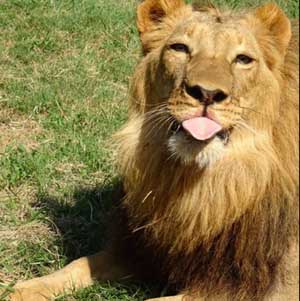
My first day after orientation I was on ‘big cat dinner duty.’ The lions, tigers and the solo leopard are fed twice a week, as they would naturally hunt/eat in the wild, so that they don’t get obese or unhealthy. I excitedly jumped up on the back of our big Bakkie (aka truck) and I could see blood leaking from under the tarps, and tried my hardest to put on a tough face. We drove around to the hungry cats who conditionally knew it was feeding time, and they were running towards the gates near growling with anticipation.
The alphas may of course growl loudly to keep their Pride in check who’s boss, so he gets the biggest piece first. As I was fresh to the reserve, I was allowed to go ahead and feed him first if I wanted. The tarp was turned over and there was a freakin horses head!
This was before I knew about the ones in back stables, the circle of life. I felt like it was a scene from the Godfather, seeing a bloody, decapitated head. I didn’t throw that one it was too heavy for me to throw that far and I couldn’t look the horses face in the eyes, but it really was interesting watching the lions go after their share. The lionesses would grab meat and then run off with their portion, probably because the male would likely try and steal theirs too. I’m absolutely in love with the leopard, I had never seen one before. She was sleek and sultry, hiding in her favourite tree. She only came out to feed after we left, but over my time there she became less shy and would eventually come right up to us, through a fence mind you, we couldn’t just walk on to her turf of course. That’s her territory alone to rule. A majestic, fierce cat I have a lot of respect for. The tigers to me were unreal, especially during feeding, they jumped up to catch their dinner!
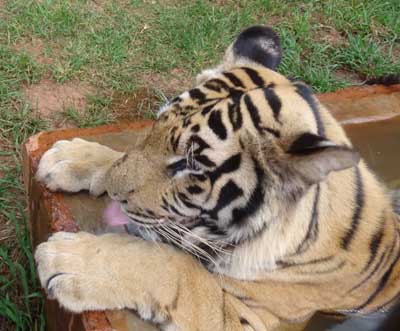
Now I know that tigers are not native to Africa, unfortunately there are far too many assholes that want to own exotic pets, and cannot handle them when they get bigger. The four tigers that were dumped at this reserves gate were still very young and defenceless, left from a film set (those fucking bastards!!!) and the sanctuary simply couldn’t turn them away and had to quickly adapt to them, build new enclosures for them, figure out tigers diets, lifestyles etc, as so far the reserve had only lions then. Today the tigers are healthy teenagers, utterly beautiful and seem quite happy.
I’ve seen a caged tiger in a Thai zoo pacing back and forth as it had gone mad; it was the saddest moment I’ve ever witnessed a creature, in pure torment. These ferocious beauties had each other, and loads of space to run and trees to climb if they so wish. The enclosures are necessary, these predatory big cats sadly cannot be free in the wild, as they will be hunted. Poachers are the worst. Don’t get me started.
I think I’m the only person in quarantine right now who actually refuses to watch the horrid “Tiger King” on Netflix that everyone and their cousin has a meme for already. I can’t stand greedy hicks abusing these magnificent beasts. Breeding and declawing are NOT allowed on this park. Should be the way they all are! However people want profit and stuff poor tigers and lions in to small paddocks – prisons. They inhumanely de claw them, use them for entertainment, most are drugged, under exercised, depressed, traumatized, then sold off illegally as pets, to roadside fake “zoos”, or for body parts that some ignorant people still believe cures them in some form or another. It’s brutal. In America alone they have more big cats in captivity under horrible conditions, than there are existing worldwide in the wild.
In Africa, if hunters don’t get to the lions first, there is a thing called canned hunting, where there are bred in captivity, kept in small cages, just to grow up big enough to be killed for trophy sport. They are utterly helpless, how can a “man” feel proud at all, paying to shoot a trapped animal?
Enough sad information, I’ll get back to the volunteer work, trust me I had a wonderful time and there is happiness for animals here too.
Ok so after stables and house cleaning (scooping poop basically), we wash up for a minute then go back up to the lodge for lunch at 12:30 for lunch and enjoy some free time till 2pm.
We got an allowance for a wifi feature at the lodge, but you had to use it wisely cause the expiry session wasn’t as charitable, and then you’d have to pay. I’d post pics of the beloved animals mostly.
Afterwards, say Team 1 would go clean up the branches that were blocking a path, and Team 2 would go spray and hack the bad weeds growing. The park is huge, so there is a lot of weeding to do. Then there would be animal enrichment programs we all do together and get a lot of joy out of. Like watching the lions (a Pride a week, there were were three different ones, mostly keeping families together so they don’t kill or mate with each other) and they would do racing tracks. For example chasing after a lure that we tied up to the bakkie. Watching them run so close is a captivating sensation. You feel so lucky to watch these predators in their full potential. One of them, the brother during this particular run, was scared of the shiny lure so he never actually wanted to touch it and would run fast after it upon release (out of the trailer, we take them to a meadow to run farthest) but then he would psyche himself out getting too close and would trip over his own feet. It was so sweet and hilarious to see this big guy that could tear your face off, afraid of a shiny ball with tiny tassels on it. His sisters were amazing though, incredibly fast! I’m just glad they get to run often enough, but I was amazed how tired they were after. Lions got it good, they sleep up to 20 hours a day if they wanted to. As it was the hottest month then they mostly sat in the shade and groomed themselves, napped for ages, or played with each other or their toys we gave them. They love to play with boxes filled with hard manure by the way, I guess it would be natural for them in the wild right.
And then after those assignments came my favourite part of every day. Prepping and collecting food buckets for the plains animals, meaning the free roaming ones on the plains like zebras and wildebeests and so forth. First we’d get the get the raw chicken necks and throw them over to the servals who were absolute darlings, but I’d hate to piss them off ever, those sharp teeth! They are like smaller bob cats, or big domesticated cats with specific markings. We then would hop back onto the back of the big bakkie I called “Mojumbo” and we’d drive around to the lodges kitchen entrance, where the chefs would have crates of leftover veggies for us. Driving off over the plains under dried, lime green African trees, rusted dirt terrain and under crystal blue skies is grandiose. Seeing all the wildlife run around opens your heart and fills it with light and love. Everytime I was in awe. I volunteered to do it before each sun set. Mojumbo would stop in the middle of some tall grass and herbs and pull up to a large enclosure for two sweet looking yet ever so vicious mongoose. Unfortunately they get hunted too often for their fur, do you know how many it would take to make a fucking coat? Anyways they get chicken necks and feet, all the parts with bones in them as their razor teeth can chew through them with ease, I could hear them crunching bones. Fun fact, mongooses are snake killers, can take down a cobra no problem. Fascinating. I love snakes but I’d prefer nature to survive over stupid man killing them for no reason. They scurry quickly to us with excitement and it was awesome to see their little, although very scary claws, come up and grab their meal.
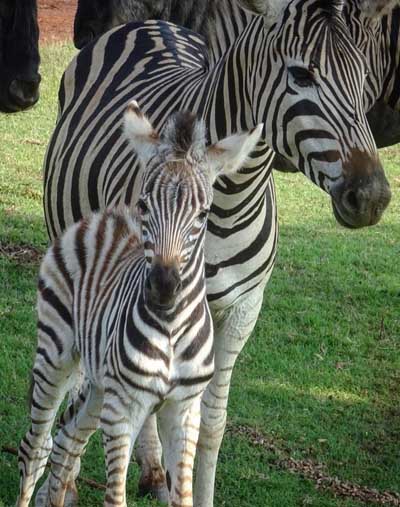
The three or four of us volleys would drive up yelling aloud to the other animals to come get it, and I swear they understood. At first it seemed ridiculous driving around and non-discreetly shouting out “come, come!” and yet herds of animals really do run out to you. One time I saw a mama zebra freaking out and kicking in a circle with her hind legs, she thumped a few guys who got too close to her kid, she was protecting her buba and wanted it to eat first. Those guys got the wind knocked out of them, and also got some wind as it appears zebras fart whilst kicking, maybe as a more threatening tactic. Not sure but I had no idea how tough they were. There was only one zebra who was curious with humans and it was such an honor to hand feed him on one of the runs, I was ecstatic, meanwhile looking out for any farting, kicking mamas near by.
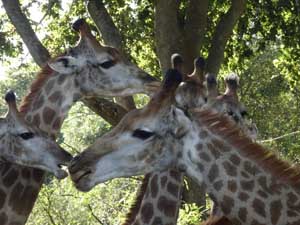
The deer such as impala and the great kudu seem to just eat off the land and don’t care about our grains, but they would always stop along their tracks to stare at us then run off. I saw a skittish jackal once, but he seemed to like hunting in solitaire. After sharing food on the plains we then drive to a tall feeding station that was very hard to lift the heavy sacks of food and dump in to the troughs. This particular sound brought all the giraffes and some sneaky ostrich’s attention! It was the coolest thing to watch them come out from nowhere suddenly and dunk their long, gorgeous, obtrusive necks into the troughs and then chew precariously form side to side with their silly mouths. It was brilliant watching them eat, they’d look at you with their special, patterned faces and dopey eyes with long eyelashes, and everything just seemed to melt away. Dinner time feeding was calming for me at least. Unlike the horse meat for the predators. The ostrich’s weren’t as tall but very sneaky and would peck vigorously at the feed, it was very funny and they were also a nuisance. Let the giraffes eat in peace damnit. After watching the somber faces satisfied with their ration, their beautiful heads would go back up in to trees and disappear. And then, my favourite part was to end the evening by going to a hidden trough that had a metal door to prevent the other greedy animals away from the little wart hogs dinners. That’s where the left over veggies went and you would hear their little heels prancing on the dirt path towards us and their kiddies squealing in delight. They’d crawl in to the hut on their knees, oh man they are precious. They made me extremely happy, and if you don’t believe me, baby hogs are the cutest and I could never think of them as vile beasts. They are beloved darlings too.
After that it was time for human dinner at 7:30pm and it was never good food, but at least the view from the lodge to see the sunset over the plains from afar was magic. I did run a tab at the bar and every night I’d have an African beer and scotch, or two glasses of local wine. At lunch time my bartenders knew to have an Amarula coffee ready for me at 1pm, where I’d sit with my iPad outside and really relax. Amarula cream liqueur comes from an African fruit called Marula. It trickles down the tree and animals, especially monkeys and even elephants, lick the sap and then hours later become intoxicated as the fruit ferments in their stomach. They have been known to be hung over on occasion. I enjoyed mine as a shot neat (not on ice as people do) and pour it in to my espresso. Brilliant combination, I got a few other volunteers in to this ritual also.
The kids, (I shouldn’t be harsh but compared to me as I could have been three of theirs’ actual mother,) would stay up and party. I utilized this early schedule for trying to go to bed before 1am for once. There was a pool table I dabbled in a match or two, a games night on one occasion. Mostly I had a shower and went to bed with my book.
Although one night we had a party by a fire off grounds (I suppose the lodge rents that space out for weddings in the park) and we all danced the night away and I did have fun, but they wanted pop music the whole time and I ended up being babysitter/water patrol to the sick teenager whom I called out would not be able to handle her liquor. In fact that evening I shared a bottle of tequila with a Mexican and he ended up vomiting all throughout the next day – and they went on safari four hours away, rough go champ.
Other tasks were random, as were needed. Every morning was elephant house, horse stables cleaning and, I don’t want to say the species out right but, we also had to clean the ‘chubby unicorns’ pens out as well. How magnificent these docile creatures are, however I would not like to get in their way you’d be trampled in 30 seconds. They seem so gentile and I will do anything to protect the last of them remaining. Sadly there are only two Northern white rhinos left in the entire world! Fucking ivory trade! And the black rhinoceros has low numbers, also very endangered now. We hide them well and give them good space of settlement, and two of them are a couple in love and it was the sweetest sight ever watching them sleep head to head beside each other, resting horns together in harmony. I wonder what they dream of, staying alive, being free one day again. We do not photograph them for their own good, but how badly did I wish I could as one may never see them again in less than a few years, shameful.
So many are brutally murdered in the wild each day! It’s savage the way they are mutilated and left to die. Just for a stinking horn because someone has an idea it makes them healthy or wealthy, utter bullshit! Breaks my goddamned heart and makes me feel as though animals are more humane than us selfish humans. A unicorn was slashed (I know it sounds terrible and harsh doesn’t it, but it’s sadly true) two years ago on the reserve. A staff member at 6am found her bleeding out to death, awful. But never again here they promised from that day on.
So now they have guard dogs, lots of security and even some that go out late at night to search for poachers to prevent them from entering the protected land, and an electric fence. Weird always seeing guns, but I adapted to it quickly, especially later in Rwanda and Israel where I was completely desensitized by then. My room was right by the fence so it drove me mad beeping every 6 seconds. I put pillows over my ears, but had no earplugs and I was afraid even if I did, I’d miss my 6am alarm clock. After three nights of restless bad sleep (think I may have got three hours max on one evening) I moved in to my friends shared room where only monkeys come and steal your snacks. Literally things were taken, I busted a sly one with no fear hopping on the beds and upon the shelves where someone hid apples and bananas. Hilarious! Knocked clothes all over the floor, wasn’t very conspicuous about it. From then on we shut the windows. Cheeky buggers but I’m glad how resourceful they are. So fast too, they are on top of the game.
Once a week is the infamous “shit trailer” on Mondays. Imagine a huge trailer just covered in shit. That’s where we dump the wagon barrels from the pens and drive off to the meadows dumping pile, just a heap of manure. Eventually it turns into soil and some greens were starting to sprout from the ghastly mountain. Elephants I thought were bad, massive poops, but nothing is worse than the astringent unicorn piss. Their poop is foul but only hay diet, they have to eat tones of it a day. Horses surprisingly are the least ronchy of them all and they eat hay as well. But this unicorn urine is strong, like 100 angry cats peed in a puddle. We have to separate the solids from liquids with rakes, scoop it on to the wagon, walk it to the trailer then repeat. Washing the piss away was last so the entire time you are smelling this nasty odour. And mix it with the heat, ooooh! But you know, I was happy to do it so they could come back safe and sound to a clean bedroom to sleep in, protected for another day.
Cleaning duties were every morning but once we had to build a temporary cage by the leopards quarters, as she was getting a new friend. They had been introduced previously, but not on her turf. He was a young jaguar that was abandoned somewhere, can’t remember his story. We were going to keep him a few hours beside her establishment so that she could get used to him there, and then if she was willing to inquire of him he’d be put inside her territory but to remain in the said cage until she sniffed him out, politely. If all were unanimous with each other, then we’d open up and release him to his new home. I missed that day as it was park staff and animal carers only who got to assist with the move. But building that cage was hard, it was heavy and we had to break wires then put them back together again. I did get shocked once but it was on low. I felt strange for a while after, disorientated and in shock, literally. I’d like to think the electrical defences were anti humans coming in….. but I’m not sure if it’s so the cats don’t escape.
Another rare task was holding down the donkeys while the staff had to rub anti-tick cream into their scalps. These guys are tough. It took six of us to hold one. They ended up looking like they were starting a punk rock band, I’d call them “Rule of the Mule” bad ass *see what I did there!? They had a Mohawk afterwards as the cream was purple, but you could see all the antagonizing flea bites and I hope we cured them. A donkeys “hee haws” is the loudest noise of all the animals, it lingers and is rather wretched sounding. Other than the nocturnal lions at night who roar to prove they are king of the jungle (reserve) to the other Prides. The sound of roars sent chills up my spine but I thoroughly got excited every time at 1am or so when they vocally showed off their alpha claim.
We had the very sexy, silver fox vet come with a rifle one of the days. All teams were on deck. This made my gut go crazy with anxiety. However he wasn’t there to kill any being, he had tranquilizers to target the over populated wildebeest males in that area, knocking up too many females and they had to relocate the bigger boys so that the shared land could be balanced out. He got the bulls precisely where he aimed. The beest would run off, then we’d coax them back our way by shaking food buckets. Then they’d start chewing and slowly start staggering until they fell in to a deep spell. These creatures are massive, also locals refer to them as gods left overs, like all the parts of animals put on one hideous creature. They’re not ugly to me. We’d lift them by the horns on to tarp, then eight of us would lift them on the the truck. Man they are heavy! Standing there holding dead weight in the blazing sun, one volunteer even fainted! We finally got four bulls in the truck that day. I heard they woke up on the other side and went straight to eating leaves as if nothing happened. I felt bad like we stuffed them and bruised them, but hopefully not. An alternate day other wildebeest were released from a truck on to the plains where we got to see if the ladies would take to them in their social network. Much to our amusement they allowed these new members in. I dunno if they were impotent or what, but for some reasons these wildebeest would not mate as much apparently. Success story in controlled conservation I suppose..
Others had paid upfront to take days off and do adventures. I was only there for a week as it was what I could afford then, and I intended to stay and work. I am regretting not doing the sunrise hot air balloon ride though, it looked surreal. I was left that morning to do the elephant pens solo, but luckily a staff member saw and helped me out. I was dripping with sweat and covered in feces after it was done, and I had two different boots on as one rubber foot had broke. Not the only thing that broke. Awkward.
I did take a half day to myself to go horse back riding. We went up over the hills and I saw birds that we did not see before on our side, saw how far the elephants walked each day, and had epic views from the mountain. My horse was majestic. I hope he never gets sick. That was a nice trot and the giraffes shyly came to say hi.
I managed to stub my big toe the previous night watering the horses (filling their buckets up) in the dark, barefoot, and cracked it on a ledge. It was excruciatingly painful and having it swell while stuffed in to a tight saddle foot was not ideal, but I thought I had just badly banged it. Little did I know I broke the damned thing. So of course after riding I wanted to do it all and went to another location and forced some other volleys who also did not go hot air ballooning to go zip lining with me – for their first time. I think I’ve done it in 8 countries or so now. I just love flying over stunning scenery of places you really can’t discover the mass and beauty of until you are over it, or rather, flying through it. It was astonishing how evil the sun was that afternoon, but we managed to do seven lines and the others at first were overly cautious, but then ended up with the biggest grins on their faces like I said they would, and they thanked me for making them do it. What a fun job those lads have, they get to zip across the land all day, make scared people happy. They taught us some Zulu and Sotho, but embarrassingly I forgot it all, such lovely greetings I do recall however. Shame. Went back to camp for a still night only to find that my adventure filled day was over, and that work in the morning with a fat, busted, black toe was not going to be any fun whatsoever.
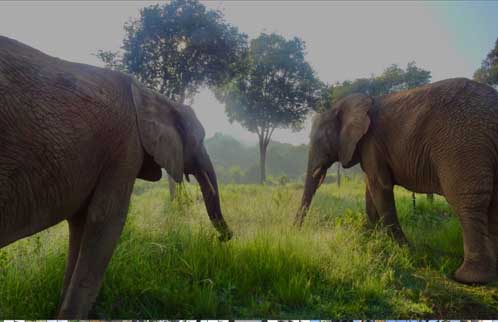
So blessed I signed up twice for the 5am elephant walks. There are three on the grounds, one mama, her daughter and an adopted sister who is lucky that mama let attach to her and raise as part of the family. A happy trio of girls with no bulls to bully them. Maybe the eldest will want to have her own baby soon but they do not breed here, against the rules, and I think if she doesn’t see any males perhaps she won’t know to mate…. I can’t give any answers on that. Feel sad they can’t have a proper herd free in the wild. Why do people have to ruin everything for everyone? The handlers do however take precious care of them, are very loving, informative and adore our gentle giants. They knew so much about them. They walk by them every day for hours so that they do not wander off the conservation and re-direct these ladies back to their safe sleeping pens. If an elephant never forgets, would she remember how to get back on her own? Anyways it’s nice they are out in open all day, protected at night. They basically feed for eight hours plus straight. Constantly stopping at a tree to pull branches down with their mighty trunks. I tried to pull some leaves off and hand feed it to the mother, and as if showing off she pulled her own bunch off on one full swipe whilst I was still tugging with all the strength I could muster, but to no prevail. Magnificent beings, when you look into the eye of this soulful creature of Mother Nature, you feel you are being processed. It’s special. My heart misses them dearly.
I won’t go on about tasks but I will share new found esteem for the the misunderstood hyena. All this time I pictured them as evil. Perhaps “The Lion King” film depicted them as devilish, I also watch a lot of Attenborough documentary’s and it appears as they are savage scavengers in packs, or always attacking. But we never see the full story. Yes they are merciless hunters, but can also be tame when not on the kill. There was one brown hyena, a different kind of breed, whom I now hold in high regard, mostly due to her tenderness. That’s right, some hyenas are indeed so sweet! I wish she had friends in her enclosure, but then I guess it’s good they aren’t in harm and taken to the rescue reserve. She does have it pretty good there. Oh her darling face, it was like she was smiling. And extremely affectionate, she’d come up to the fence and press her face up for you to pet her. She’d close her eyes indulging in this touch. Something we can relate to these days being in quarantine, not being able to touch or have a physical connection with anyone. I want animals to be free but if they must be in captivity, let them be free in a sanctuary at least so they are not in dire isolation and cramped. I’ll come back and hope she gets re-released one day, but after rehabilitation, I don’t think a pack will accept her pleasant character.
This project really changed me, made me feel intense emotions and understand things are out of my control and not to let them destroy me, but to be stronger for them, for each other, so that we can help and educate and save more animals and one another. The world is fucked up, but after feeling a rhinos cheek against my hand as he pushed his head through the gate to greet me, is one of the most moving, sentimental, poignant and evocative moments I’ve ever had in my life. It was personal and revealing. I am deeply touched and affected more than ever to try and stop the cruelty towards animals, and to assist with making the helpless lives more hopeful, comfortable and worth living.
They deserve to truly live, and it’s only up to US who can undo the damage from this day forth. Appreciate all living beings, trust me if you saw a benevolent wart hog, a regal tiger, a wise elephant up close, unchained or hurt, you’d respect something bigger than yourself and you’ll want to dedicate your energy into letting them be as they deserve to be…. free, alive. I love and miss them all, even the mischievous monkeys and howling donkeys. I look forward to future progress and can’t wait to return back to this project with more knowledge and time. Thanks for letting me share this valuable journey with you.
PS. Perhaps I shouldn’t have even mentioned the unicorns as per their safety, but there were other animals there that I will not mention and whom I did get to walk amongst and yes, it was historic even, but saddening that it was under these circumstances. I won’t divulge any more info. But know that if you don’t think there are many of a creature left, it is probably true and because of us.
*next article is reliving what it was like to travel in Rwanda
Tabytha’s Africa journeys Part 1 – Cape Town 2020 I caught up on one of my favourite things to do, hitting up some wineries!
LIVING ON THE RESERVE Tabytha To Part Two – Conservation week with Lions: Somewhere in Africa, 2020






You must be logged in to post a comment.