An Author’s Kiss with Sara Troy and her guest Janna Brooke Wallack, on air from April 15th
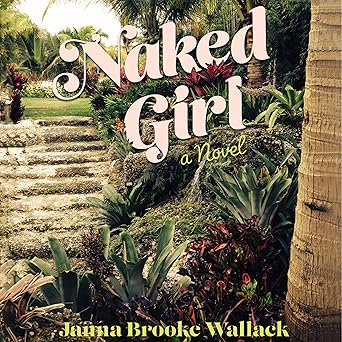
“Naked Girl is a story of the enduring power of love in a family of lunatics,” says Janna Brooke Wallack of her debut novel, a poignant piece of literary fiction. Though not autobiographical, it reads like a memoir. Wallack’s enduring voice and fresh vision evoke the storytelling of masterful novelists like Ann Patchett, Kristin Hannah, and Zadie Smith. Naked Girl is a captivating and moving story that explores the dysfunction of a family, the struggles of ‘fitting in’ and the power of hope, humor, and imperfect love.
Growing up motherless in 1980s Miami Beach, Sienna and her little brother, Siddhartha get by with their charismatic and capricious father, Jackson Jones. When a small windfall relocates them to a condemned mansion on the water, the siblings are forbidden traditional schooling and left to live off the land. As Jackson uses their new home to create a communal cult, the siblings are forced to raise themselves in a carefree, chaotic oasis. Living amidst the vagrant seekers who take up residence in Jackson’s utopia, Sienna and Siddhartha strive to protect their unconventional family.
Janna Brooke Wallack writes with warmth, compassion and comic brilliance in Naked Girl, an enthralling debut novel brimming with the adventure, resilience, humor and heartbreak of growing up on the fringe of decency and longing for the unattainable comfort of home.
Janna Brooke Wallack’s debut novel, Naked Girl, has been named a semifinalist for the 2024 Publishers Weekly BookLife Prize in fiction. She also received recognition from Book Viral’s Golden Quill, Book Reader’s Association Group’s BRAG Medallion, and a silver medal in the Colorado Independent Publishers Association EVVY Award for Literary/Contemporary Fiction.
Her stories have been published or shortlisted by literary publications such as Hobart, Upstreet, Glimmer Train Press, American Literary Review, and many more. Her short story “Campaigning” was a finalist for the Lascaux Prize in Short Fiction. This novel’s prologue, “Five Pictures” was a finalist for Glimmer Train Press’s Short Story Award for New Writers, and her story “Cat and Rose” received a Pushcart nomination by The MacGuffin.
In addition to her writing career, she’s worked as a grant writer, a substance abuse prevention counselor, a wetlands manual editor, a theatre production assistant, and an actress. After spending a couple of years in Hong Kong, she moved to Hoboken, NJ. She raised five children and moved to Stone Ridge in the Catskills of New York, where she ran a permaculture gentleman’s farm.
“In Wallack’s novel, a brother and sister survive a shocking upbringing of drugs, cults, and neglect.… “An endearing and fascinating perspective on a uniquely volatile and dangerous childhood.” —Kirkus Reviews
All of our shows/interviews are done by donation; if you enjoyed this show, please support us here with either a one-time donation or subscribe and support. Thank you. Please support Our Forgotten Seniors anthology and help to bring this book to awareness.
An Author’s Kiss with Sara Troy and her guest, Sam Hawksmoor, on air from April 8th
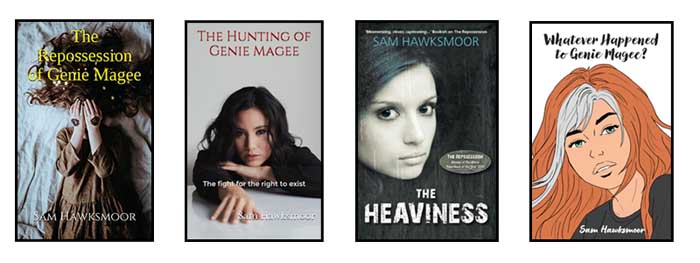
Sam Hawksmoor is a prolific author whose writing career spans several decades. He’s penned captivating stories for both adults and young readers. Today, we’re diving into the final book in his four-part series, which brings the journey of Magie Magee to a powerful and satisfying close.
Set in beautiful British Columbia, Canada, this story spans 15 years of mystery, intrigue, and discovery. Sam Hawksmoor has a way of writing that feels dimensional, layered, and immersive. He always leaves you wondering just how much of it could be true because it all feels so possible, so real.
It reveals the stories of forgotten children—their struggles, abandonment, and the remarkable resilience that rises from it all. These are stories that don’t just tug at the heart; they offer lessons we can all learn from.
“Ever since I was a child, I’ve been lost in the world of words and stories,” says Sam Hawksmoor. “Writing isn’t just what I do—it’s who I am.” What began as simple backyard tales grew into rich, dimensional adventures filled with mystery, heart, and imagination. For Sam, every blank page is a new world waiting to be discovered, every character a living part of his creative soul.
He writes to transport, to illuminate, and to stir the mind. His stories invite readers into unknown territories where the line between fiction and reality often blurs and where every twist holds the whisper of truth. With each book, Sam offers a journey not just into the story but into the depths of his ever-curious, ever-expanding imagination.
All of our shows/interviews are done by donation; if you enjoyed this show, please support us here with either a one-time donation or subscribe and support. Thank you. Please support Our Forgotten Seniors anthology and help to bring this book to awareness.
Ignite Your Heart and Soul with Sara Troy and her guest Ranae Peterson, on air from April 8th
Master Spiritual Coach/Practitioner | International Speaker | Founder of Unwritten: The Teen Girl Empowerment Academy | Award-Winning Empowerment Coach
For nearly two decades, Renae Peterson has been on a mission to transform lives from the inside out. As a spiritual psychologist, empowerment coach, and international speaker, she helps women and teen girls break free from generational wounds, limiting beliefs, and emotional blocks—guiding them to rise with clarity, confidence, and unshakable self-trust.
Renae’s work blends spiritual intelligence, emotional mastery, and conscious leadership, empowering her clients to not just heal, but to reclaim their power and rewrite the narratives that have kept them small. Her approach isn’t about surface-level change; it’s about deep identity evolution, nervous system healing, and stepping into full energetic sovereignty.
As the founder of Unwritten: The Teen Girl Empowerment Academy (formerly Beautiful Inside Academy), Renae has helped thousands of teen girls own their worth, trust their inner knowing, and lead themselves without external validation. But the deeper she went, the more she realized: that healing isn’t just for the next generation—it’s for their mothers, aunts, teachers, and every woman who carries untold stories and unseen wounds. That realization sparked a movement, one that supports women across all stages of life in stepping into their fullest expression.
With over 20 years of experience as a registered nurse specializing in palliative and home care, Renae has walked alongside individuals at the most vulnerable moments of life. She has witnessed firsthand that true healing begins on the inside and that the most powerful work we can do is to deprogram societal conditioning, consciously rewire our identity, and reclaim the power of our own intuition.
At the core of her mission is a simple yet profound truth:
When a woman remembers who she is, she becomes unstoppable.
All of our shows/interviews are done by donation; if you enjoyed this show, please support us here with either a one-time donation or subscribe and support. Thank you. Please support Our Forgotten Seniors anthology and help to bring this book to awareness.
Sara’s View of Life with Sara Troy, on air fromApril 8th
A few years back, I came across the True Colours personality traits, and in doing so, I truly discovered me—why I respond the way I do, how I connect, and what shapes my interactions with the world. In this piece, I’m sharing a glimpse into who I am beyond the mic, beyond podcasting and a little about the heart and soul behind my program.
As a guide in True Colours and a harmonizer of Astrology, Chinese wisdom, and soul traits, I believe in walking the path I invite others to explore— So let me share a glimpse of my own cosmic palette.
? Year of the Horse – Freedom, Energy, and Passionate Movement
People born in the Year of the Horse are spirited, independent, and full of life-force energy. They are action-takers, curious explorers, and often seek meaning through movement and experience. Horses don’t like being fenced in—they thrive when they feel free to roam, grow, and evolve on their own terms.
Core traits: Energetic • Courageous • Social • Restless
Gifts: Motivation, charisma, and a zest for life
Challenges: Impulsivity, fear of stagnation, aversion to control
? Libra – Balance, Beauty, and Harmony in All Things
Libra is ruled by Venus, the planet of love, art, and relationships. Libras seek balance—not only in the external world but also in their inner emotional and spiritual lives. They are peacekeepers and bridge-builders, always sensing the subtle energies in relationships and striving to bring fairness and understanding.
Gifts: Social intelligence, aesthetic sense, emotional diplomacy
Challenges: Over-accommodation, difficulty making firm choices
? True Colour: Blue – The Heart of the Soul
Blue is the colour of connection, authenticity, and emotional depth. Blue personalities are nurturers, caregivers, and spiritual guides. They live with feeling at the forefront and have a powerful need to make others feel seen, heard, and loved.
Gifts: Deep listening, soul-centered love, emotional healing
Challenges: Sensitivity to disharmony, emotional overwhelm, self-neglect
?? The Correlation:
The Horse moves, Libra balances, and Blue feels.
Together, they create a personality that is:
Soulful yet spirited – You need movement, but it must have meaning.
Compassionate but free – You love deeply but must never feel emotionally caged.
Driven by ideals—Your actions come from a place of deep personal truth, whether through justice, connection, or creativity.
Naturally magnetic – People are drawn to your energy, your empathy, and your integrity.
In Harmony: This trio can be incredibly powerful when aligned. The Horse gives you the courage to move, Libra helps you move gracefully, and Blue ensures you move with heart. You have the capacity to inspire, to heal, and to lead by example.
In Challenge: You may feel torn between needing freedom (Horse), wanting harmony (Libra), and feeling deeply responsible for others (Blue). You can over-give, overthink, or overextend—especially when trying to please everyone while staying true to yourself.
? Your Soul Strategy:
Lead with your heart, but let your mind and spirit guide the pace.
Honor your need for emotional expression, even when you’re on the move.
Seek balance, not perfection. Let your peace come from flow, not control.
??? You are a harmonious blend of vision and heart, structure and spontaneity.
Your Libra Sun gifts you with grace, diplomacy, and a deep desire to create balance—in the world and within yourself. You are a natural peacemaker, drawn to beauty, fairness, and meaningful connection.
Your Wood Horse energy brings bold independence and vibrant movement. You’re intuitive yet adventurous, emotionally rich but always ready for the next leap of purpose. This combination makes you both grounded and driven, thoughtful and brave.
? Your True Colours Reflect a Multi-Faceted Soul:
? Blue – The Nurturer You lead with your heart. Empathetic, soulful, and sincere, you care deeply about others and crave connection rooted in truth and authenticity.
? Green – The Visionary Your mind seeks understanding. You are logical, curious, and wise beyond words, always exploring the deeper meanings and patterns behind life.
? Orange – The Adventurer Energy and excitement light your path. You love variety, hands-on experience, and the freedom to express yourself with boldness and creativity.
? Gold – The Anchor Loyalty, tradition, and service ground you. You find fulfillment in commitment, organization, and being someone others can rely on.
? Elemental Harmony in You:
Air lifts your voice and imagination—communication is your gift.
Water flows through your soul—emotions are your strength, not your weakness.
Fire fuels your passion—you move with purpose and light others along the way.
Earth gives you roots—you build, preserve, and nurture all you care about.
? In Essence…
You are a bridge—a soul who balances the seen and unseen, the practical and the mystical, the now and the next. You hold the space for others to grow, and in doing so, you blossom continuously. Your presence is felt as warmth, wisdom, and wonder.
This unique program blends three powerful tools—True Colours, Numerology, and Astrology—to create a clear, compassionate, and complete picture of who you are at your core.
It’s not about labeling. It’s about illuminating—offering clarity, confidence, and deeper connection to your authentic self.
? True Colours Personality Insights
Explore your unique personality makeup through the internationally recognized True Colours assessment. Whether you lead with:
Blue – the harmonizer
Green – the thinker
Orange – the adventurer
Gold – the organizer
This process helps you understand how you interact, communicate, and respond, bringing awareness to your strengths and helping you navigate personal and professional relationships more effectively.
? Numerology – Your Life’s Frequency
Numbers hold energy, and you’ll uncover the deeper vibrations behind your name and birthdate through a personalized numerology breakdown. This reveals:
Natural talents
Life lessons
Inner motivations
Energetic rhythms shaping your journey
It’s a guide to understanding your personal cycles, decision-making style, and long-term path.
? Astrology – Your Celestial Blueprint
Astrology adds another layer of insight, offering a broader cosmic view of your traits, tendencies, and timing. By exploring your unique planetary profile, you’ll discover patterns and potentials that help align your choices with your natural flow.
This isn’t fortune telling—it’s self-mapping.
? The S.E.L.F. Experience
S.E.L.F. stands for:
Self-Discovery
Exploration of Life’s View
Liberation from Limiting Beliefs
Fusion with Inner Soul Wisdom
Together, these layers are not separate systems but threads in the same tapestry—you. When understood in harmony, they offer a grounded, soulful, and practical path toward personal alignment and purpose.
Your View of Life Here, you’ll explore where you are right now in your life’s path. This part is all about identifying any silent saboteurs—those hidden beliefs or patterns that may be holding you back—and gently guiding you toward empowerment.
Soul Awakening In this final phase, you’ll tap into your inner wisdom—your soul’s intellect. This is where the heart speaks, the spirit rises, and the mind aligns with purpose. It’s about stepping into harmony with yourself.
The experience includes reflective forms, one-on-one Zoom sessions, and a personalized audio-video recap to support your continued growth.
All of this is offered for a Spring special USD $188.00, with a complimentary 15-minute consultation to see if it’s the right fit for you.
This isn’t just a program, it’s a soulful invitation to rediscover who you are and why you’re here.
All of our shows/interviews are done by donation; if you enjoyed this show, please support us here with either a one-time donation or subscribe and support. Thank you. Please support Our Forgotten Seniors anthology and help to bring this book to awareness.
Mental Health Awareness with Sara Troy and her guest Don Mesibov, on air from April 8th
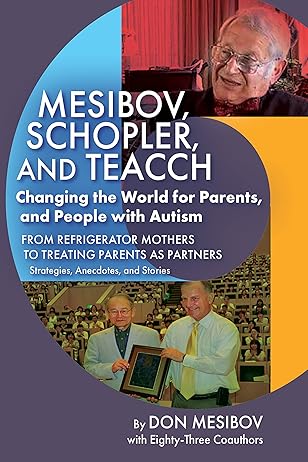
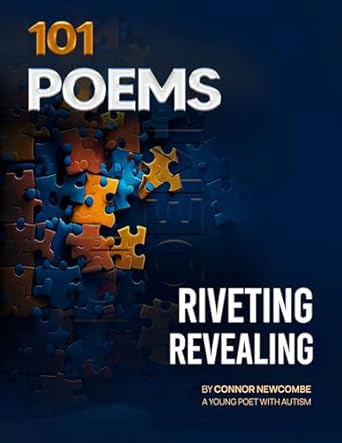
I met Connor Newcombe at a reading of my book on autism. He’s a college graduate, but due to the anxiety and stress rooted in his experience growing up with autism, holding a traditional job isn’t possible for him. Tasks that require long focus become overwhelming. Still, he’s found purpose by joining me in autism workshops.
At one session, a two-hour workshop a 45-minute drive from our town, Connor spoke for just five minutes about what it’s like to live with autism. The 25 participants applauded him warmly. Though he only added a few comments afterward, several attendees made a point to thank him personally.
On the way home, Connor turned to me and said, “Don, this has been one of the best days of my life.” It was a powerful moment—this is someone who’s rarely felt affirmed.
Then, as we drove, Connor told me he writes poetry and asked if our Institute could help publish his work. The next day, he emailed me 43 poems. They were beautiful—reflections on nature, his grandmother, cats, and everyday observations. I had several English teachers read them, and they agreed: his talent was real.
I told Connor, “Your poems are wonderful, but if you want your collection to stand out, write more about your experiences as someone living with autism.”
“How many do I need?” he asked.
“101 sounds like a good number,” I replied.
Without missing a beat, he said, “Then I need 58 more. I’ll send you one poem a day.”
That’s the kind of spirit we believe in, the voices that deserve to be heard, the stories that deserve to be told. That’s why we do this work. Because it matters.
Our ideal customer is one who wants to make the world a better place for ALL people, including but not limited to people with autism.
We are an all-volunteer 30 30-year-old 501 (c) (3) organization of 150 people interested in helping people become aware of what autism is and what it is not.
In recent months, we’ve held eight two-hour Discussion Sessions and reached 175 individuals—educators, first responders, and community members—who regularly engage with people on the autism spectrum, often with little training or support. More sessions are coming in January to Northern NY, North Carolina, and California. These are the people we aim to empower—with understanding, compassion, and practical knowledge.
Don’s commitment runs deep. His brother, Gary, was a global leader in autism education from 1973 to 2018, directing the renowned TEACCH program in Chapel Hill, NC. Gary’s expertise was sought by figures as prominently as the King of Saudi Arabia and a top Russian official whose daughter was autistic.
Why does Don continue this mission with such heart? “We do it because we can, and we do it because it’s right.” — Don
As for Connor, like many on the spectrum, he thrives on structure. When I asked for more poems to help shape his story into a book, he promised one a day. True to his word, he delivered—day after day.
Because with the right encouragement, people rise. And with the right support, voices long unheard begin to sing.
All of our shows/interviews are done by donation; if you enjoyed this show, please support us here with either a one-time donation or subscribe and support. Thank you. Please support Our Forgotten Seniors anthology and help to bring this book to awareness.







You must be logged in to post a comment.