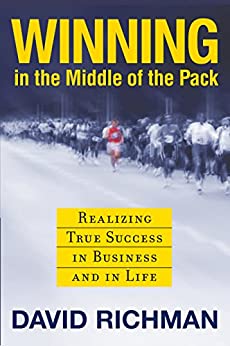
Mental Health Awareness with Sara Troy and her guest David Richman, on air from August 2nd.
Expressive writing, from journaling to structured creative writing, can be extremely therapeutic. Health outcomes include fewer doctor visits, improved organ function, and reduced depression. In an expressive writer’s daily life there are fewer sick days, focus on tasks is enhanced, and interpersonal interaction improves. Once learned, expressive writing opens the door to explore the emotional aspects of one’s traumas, leading to increased emotional health. My expressive writing workshops are led in a guided, personal manner, providing participants a safe and immersive space where they can explore their musings, reflections, and emotions. The process creates a foundation for participants to continue their expressive writing journeys long after the workshops have ended.
BENEFITS TO PARTICIPANTS AND ORGANIZATIONS Expressive writing workshops deepen the relationship between participants and sponsoring organizations. As a result of the improved mental, physical, and emotional health, gratified participants and their supporters will help organizations grow their donor and referral base. THEMES With a goal of showing the traumatized how to examine the suppressed emotional aspects of their experience, this program’s design empowers a transformative and long-term healing process. Traumatized populations include cancer patients, survivors, loved-ones, and caregivers, as well as those in communities that have experienced physical or emotional abuse, including combat-related trauma, sexual assault, childhood trauma, depression, anxiety, and their loved ones and caregivers, and, importantly, the practitioners who serve those communities.
David has been leading very moving and transformative Expressive Writing Workshops geared towards people affected by all manner of trauma. He combines traditional expressive writing techniques with elements of both narrative and creative writing so that the participants will be well-equipped to continue their expressive writing practices well beyond the workshops. Mental health is such an important topic and David brings his passion, skills, and unique approach to help people connect with their emotions in a whole new way and begin a healing journey.
David was born in Miami and raised mostly in the Los Angeles area. He and his wife split their time between homes in Southern California and Southern Nevada. He has worked in real estate, lending, construction, started both an animation company and a skincare company, and then went into financial services. He has college-aged twins who are as aspirational as their father. After losing his sister to brain cancer, David has organized a yearly fundraiser in her memory, the most recent being the impetus for his upcoming book, Cycle of Lives – 15 People’s Stories, 5,000 Miles, and a Journey Through the Emotional Chaos of Cancer.
All of our shows/interviews are done by donation, if you enjoyed this show please support us here with either a one-time donation or subscribe and support on Patreon.
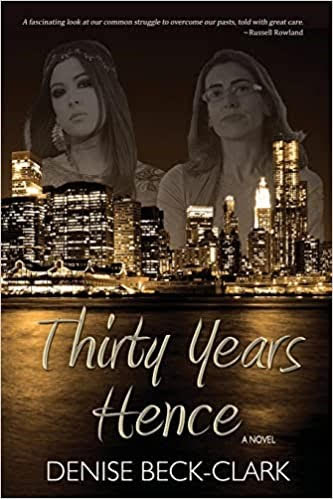
Mental Health Awareness with Sara Troy and her guest Denise Beck-Clark, on air from July26th
In Her Debut Literary Fiction, Psychotherapist-Turned-Novelist Examines How Wounded People Heal From Trauma With The Help Of Friends andUnique Treatment
Set in the 1970’s “me decade,” Thirty Years Hence, is the debut novel of retired psychotherapist Denise Beck-Clark. The story of two women’s developing friendship feels like the opening of a time capsule to when many disillusioned souls sought out quirky, experimental therapies led by gurus to “find themselves”. A confused, 20-ish aspiring writer meets a troubled Psychotherapist-Turned-Novelist and, with NYC as a backdrop, they bond over their mutual experiences of existential crisis. Unpredictable characters and plot twists are sure to interest anyone fascinated with the devil-may-care, anything goes culture of the era. “Thirty Years Hence,” says the author, “is about people dealing with the pain and suffering caused by the war specifically, and the so-called Human Condition generally. That humans have consciousness and the capacity to think is both the good and the bad news. The point of view presented in the book ascribes to both Buddhism and Cognitive Therapy, which in a summary statement might be, ‘Find and be grateful for whatever is good in your life because as bad as it may seem, your life could always be worse.’ This is hopefully what readers of Thirty Years Hence will apply to their own lives if they have a need to.”
How she takes a unique approach to examining the impact of the Holocaust on its survivors many decades after suffering great trauma
How her practice of psychotherapy for three decades inspired — and prepared her for –the writing of this book
How women can develop a friendship while coping with their own individual malaises
Why white supremacists still pose a huge threat to our country – and why anti-Semitism is still a problem today. Can we cure society of hate?
How psychotherapy can help one overcome, and heal from, identity-defining trauma
Why the book is set in 1970s NYC – and what the “Me Generation” was really like.
“That the 70’s were only thirty years after the Holocaust and World War Il is important in understanding its culture,” says Beck-Clark. “The hindsight of today, five decades later, allows us to see that in the 70’s many survivors of the Holocaust were in a state of suppression and reticence. They, and in turn their families, were acting “as if” they just got on with their lives the terrible memories and dreams would subside or even vanish. I think it’s fair to say that in the collective unconscious mind, the psychological aftermath of the Holocaust and the war was very much a reality, and the lives of many people, Jews in particular, were seriously undermined by having endured an unimaginable act of persecution. Perhaps my book puts that into perspective.”
ABOUT THE BOOK: A story of two women in NYC in 1973: Michelle Cooper, age 23, is despairing and without direction, having barely survived the turbulent household of her parents, and her own adolescent foray into sixties’ hippiedom. Forty-something Ida Birnbaum, a Queens, NY wife and mother, and survivor of Auschwitz concentration camp, 30 years later battles her own malaise during a serious and potentially damaging midlife crisis.
Like many folks during the so-called “Me Decade”, both Michelle and Ida indulge in hedonistic and self-destructive activities and then must deal with the consequences. They each turn for support to their evolving friendship and to characters such as Theo, an idealistic young immigrant who lives in an Upper West Side SRO hotel and works for a telephone prayer service run by Charles, another Holocaust survivor, and self-fashioned spiritual guru.
Central to the novel’s conflict and narrative is the mechanism by which Ida and Michelle cope with and attempt to overcome their pasts. Ida, as many survivors did in the 1970s, internalizes her trauma and memories of the Holocaust. She spins out of control one night and has a wild and destructive experience in the tawdry part of the city; the consequences of which cause her much grief. Michelle and Ida then turn to Charles, who has created an experiential program that helps victims of trauma to recover. The results of the program alter Michelle and Ida’s lives forever.
Both Michelle and Ida, Ida’s husband, and even Paul, a white supremacist who stalks Michelle after a one-night stand, seek psychological healing via another of Charles’ creations. The Rogen Treatment Program is a unique process wherein participants “experience” the Holocaust and, through a kind of aversion therapy, conquer their respective individual demons.
“Thirty Years Hence is a powerful and heart-rending story of survival, acceptance, and belonging. Beck-Clark does a great job of tackling weighty topics in a way that inspires introspection without detracting from the narrative flow. She also does extremely well in recreating the New York of the early 1970s, including all the sights, sounds, dreams, and despair. Given the exploration of trauma, it might not always be a comfortable read, but it is an important one.” — San Francisco Book Review
“Denise Beck-Clark’s Thirty Years Hence is an intriguing story where an experimental form of treatment has an unpredictable impact on characters suffering from a wide variety of human frailties. It’s a fascinating look at our common struggle to overcome our pasts, told with great care.” — Russell Rowland, author of 56 Counties and Cold Country
ABOUT THE AUTHOR:
Since childhood, Denise Beck-clark has had the parallel interests of psychology and writing/literature. After spending her twenties writing and earning a living with menial jobs, she spent the next 30-some years as a psychotherapist and social worker, finding time to write whenever possible. Now retired and devoted to writing full-time, Ms. Beck-Clark hopes her writing will have the same positive impact on readers as her work did for patients as a clinician.
Her writing career began with the publication of several nonfiction articles. In 1999, her creative non-fiction book, Concurrent Sentences: A True Story of Murder, Love and Redemption, was published by New Horizon Press. A screenplay adaptation is in process.
She’s recently published flash fiction and essays online, along with a paperback poetry collection, The Zen of Forgetting. She wrote a blog for several years until 2015 and currently writes essays for Medium. Thirty Years Hence is her first published novel.
Beck-Clark started her career in psychotherapy as a social worker at Manhattan Psychiatric Center outpatient clinic, and as a psychotherapist at Flatlands Guidance Center in Brooklyn, in 1986. She had a private psychotherapy practice in Manhattan for 13 years while acting as a psychiatric social worker at Bronx Psychiatric Center inpatient wards until 1999. She then moved to the center’s outpatient clinic, from 1999 – 2011.
She earned a Bachelor of Arts form Columbia University, A Master of Sciences in social work from Columbia University, and a Master of Fine Arts in creative writing from Lindenwood University.
Beck-Clark lives with her adult special needs son in Yonkers, New York. For more information, please visit:
All of our shows/interviews are done by donation, if you enjoyed this show please support us here with either a one-time donation or subscribe and support on Patreon.
Mental Health Awareness with Sara Troy, and her guest Dr. Carole Lieberman, on air July 19th
With so much division among Americans what affect will the overturn of Roe v Wade have on mental health?
The Supreme Court’s overturn of Roe v. Wade means access to abortion services will be up to the discretion of individual states.
Numerous states are poised to severely restrict access in the coming days, while others are advertising themselves as abortion safe havens.
The United State’s leading mental health organization condemned the decision, saying it will worsen the country’s existing mental health crisis.
In response to the Supreme Court’s overturn of Roe v Wade, the country saw outpourings of condemnation and relief from individuals across the political spectrum.
The decision, which removed federal protection for the right to an abortion, has sparked a series of warnings from medical and economic experts alike, forecasting the severe mental health toll this reversal might take.
“This ruling ignores not only precedent but science, and will exacerbate the mental health crisis America is already experiencing,” said American Psychological Association (APA) president Frank C. Worrell in a statement.
Americans’ mental health, already in a state of decline prior to COVID-19, took a turn for the worse during the global pandemic. Compounding these trends are a shortage of mental health care providers and the economic barriers some might face when seeking treatment.
In their statement, the APA expressed “deep concern and profound disappointment” about the Supreme Court’s decision, citing decades of research that shows denial of abortion is linked with increased risks of high anxiety levels, low life satisfaction, and decreased self-esteem compared with those who are able to access the service.
The decision will also have greater effects on individuals already living in poverty, people of color, those in medically underserved areas and other marginalized groups experiencing greater socioeconomic disparities.
Dr. Lieberman is a Board Certified psychiatrist, whose education, training and extensive experience as a Forensic Psychiatrist/Expert Witness make her your most savvy choice in the courtroom. Her unique experience in high profile cases makes her an especially good choice when your case is on the front page and your expert needs to know how to win over a jury and the media.
Dr. Lieberman, has served as a Forensic Psychiatrist/Expert Witness in hundreds of civil and criminal cases nationwide, including domestic violence cases, and is a media commentator on crimes and trials. She also writes a column entitled “Inside the Criminal Mind” for FrontPageDetectives.com.
All of our shows/interviews are done by donation, if you enjoyed this show please support us here with either a one-time donation or subscribe and support on Patreon.
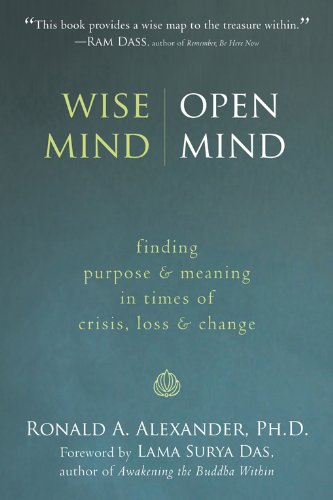
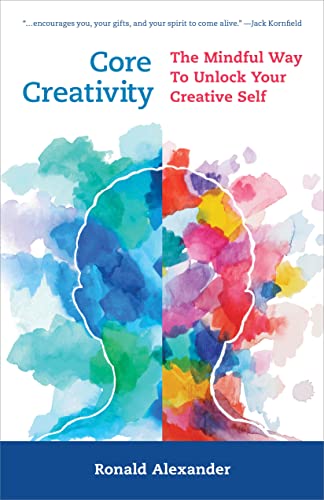
Mental Health Awareness with Sara Troy and her guest Ronald A. Alexander, on air from June 28th
The Big Idea: When artists describe their creative process, they inevitably talk about being in an open mind state where the download of core creativity can happen. Musicians such as The Band’s Robbie Robertson’s description that “Creativity comes from the womb of emptiness” to James Taylor’s observation about “waiting to hear it” and having “to be in a place where you can receive the song” reveal that creativity isn’t a rational, calculated activity. It’s about allowing oneself to become receptive.
The So-What: Mindfulness meditation takes us out of overthinking and into the mind state of receptivity. The stillness and focus involved in meditation alters our brainwaves, and therefore, our mind state. Distraction-free time leads us to an open mind. Both core creativity and intuitive wisdom and knowledge can be accessed in an open mind state — not because we have an open mind, or are trying to be open minded, but because we’re in a state of pure receptivity after giving ourselves over to emptiness.
Key Messages: Ron Alexander can expound on the exciting possibilities available to us all to open the mind and stimulate creative responses. He explores:
Where ideas ultimately originate from
What valuable mind-sets and habits can prepare us to achieve creative breakthroughs
How to activate the “witnessing self” to become less emotionally reactive and more open to new experiences
How to embrace what Buddhists call beginner’s mind to approach what’s familiar with a fresh perspective
How dreams offer clues to what’s unfinished or unexpressed in our lives
We are on 5 sites and 16 audio and 2 video platforms as seen here.
The Source: Ronald A. Alexander, PhD, is a psychotherapist, a mindfulness trainer and a creativity, business and leadership coach. He has a private psychotherapy and executive coaching practice in Santa Monica, California. He’s the executive director of the OpenMind® Training Program that offers personal and professional training programs in mindfulness-based mind-body therapies, transformational leadership and meditation.
In today’s era of COVID, political unrest and inflation why is creativity more important than ever to navigate all these upheavals?
What is Core Creativity and how does it differ from ordinary creativity?
How can someone who wants to make changes in their life use core creativity to help them experience a reinvention?
What can block us from accessing our Core Creativity?
Tell us about Mindfulness and Creativity Psychology. What does the research have to say about it and why are so many psychotherapists integrating meditation and mindfulness into their practices?
In your book you discuss the Core Creative terms: Absorbing Mind, Open Mind, and Generating Mind. What role do they play in accessing one’s core creativity?
Why is mindfulness important to accessing creativity?
How can someone tell if their intuition is genuine or false?
How have some of your clients incorporated core creativity into their lives and business?
You have a chapter on Mindful and Creative Leadership. What are some of the traits of a wise leader?
I’d be happy to send a bylined article, “Find Creative Solutions by Emptying Your Mind,” to send a review copy of his new book, or to schedule an interview with Ron Alexander.
All of our shows/interviews are done by donation, if you enjoyed this show please support us here with either a one-time donation or subscribe and support on Patreon.
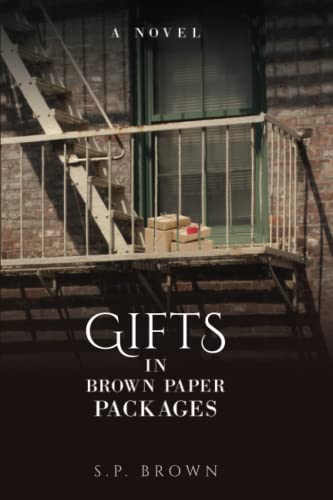
Mental Health Awareness with Sara Troy and her guest Shanell Parrish-Brown, on air from May 24th
GIFTS IN BROWN PAPER PACKAGES,AN EMOTIONALLY HARD-HITTINGCOMING OF AGE STORY BASED ONHER REAL LIFE TRIUMPH OVER ADVERSITY
The Narrative’s No Holds Barred ThemesOf Domestic Violence Tie In PerfectlyWith the Author’s Dedicated Work OnBehalf of The Safe Center of Long Island (TSCLI),A Non-Profit Serving Nassau County, NY
Drawing courageously from painful experiences of her childhood while embracing and sharing her hard-won self-truths for the first time, author S.P. Brown’s powerful debut novel Gifts in Brown Paper Packages has earned out of the box acclaim and success – including debuting at #1 in three categories on Amazon within the first 72 hours of its Christmas week release.
Driven by the powerful, often harrowing but ultimately life affirming and triumphant narrative of 17-year-old protagonist Kyrie, the emotionally impactful book ended its second day at #38 in the highly competitive “New Releases Coming of Age” category and #1 “Musical Reference” due to the author’s inclusion of both old school and contemporary artists (from Marvin Gaye & Tammi Terrell to Deniece Williams, Lauryn Hill, Ed Sheeran and Bruno Mars) as the soundtrack to Kyrie’s experiences. Currently, it is also ranked on the Kindle Store’s Black & African American Christian Fiction list.
Evoking some difficult experiences from her own childhood growing up in Harlem, Brown uses the fictional character of Kyrie as a vehicle to reflect on her ability to overcome the trauma of domestic abuse and somehow, miraculously, turn her physical and emotional survival into a triumphant and thriving life. The New York based author wrote the hard-hitting, flashback driven coming of age narrative over the course of one year while working her demanding high profile job as Vice President, Employment Counsel for a major entertainment conglomerate, often in quiet stolen hours in the middle of the night after her three children (now ages 14, 17 and 23) were in bed.
The breathtaking journey chronicled in Gifts in Brown Paper Packages hinges on a single question. In the wake of another emotionally and physically abusive episode with the person she refers to as “Man,” should she take the leap through her bedroom window into the unknown? Leaving her mother and young brother behind, she has no idea if she can make it on her own, but choosing the risk of the streets seemed like a better option than staying. With no plan but survival, Kyrie’s story is driven by strength, personal growth, a journey to self-awareness and ultimately acknowledging her deepest truths.
The theme of Gifts in Brown Paper Packages ties in perfectly with Brown’s dedicated involvement with The Safe Center of Long Island (TSCLI), a non profit agency comprehensively serving the needs of victims of domestic violence and inner personal trauma in Nassau County – and the only organization in the county providing free services to child and adult victims of domestic violence, sexual assault, child abuse and human trafficking. In addition helping to raise funds for a Capital Campaign project to build an expanded new safe house facility, she has served on the nominating committee for the past two years, with the goal of helping to identify diverse talent for TSCLI’s Board of Directors; she is currently their only African American Board Member. In 2020, Brown was named Vice President of the Executive Committee of the Board of Directors. She has agreed to become President of the Board in May 2022.
“For many years, I felt a lot of guilt and shame associated with those stories and felt like sharing them in my professional circles as a lawyer and even in my social circles wouldn’t engender real respect,” Brown says. “Eventually I realized my truth and that every part of my background, including the terrible, painful memories, served a purpose and informed what I consider this fabulous end product. That strength and resilience came from my path. It’s not necessary for readers to know the real life experiences versus the instances where I employed creative license or drew from other’s real life experiences.
“The point of the book,” she adds, “is to inspire readers to look at their lives with the proper lens, and allow those hard knocks and terrible experiences to ultimately work towards defining greatness in them as opposed to defeat. Those lessons don’t always show up beautifully adorned. Sometimes you have to dig through the ugly wrapping to discover the strength within the package. Everyone experiences difficult trials in their lives. The difference between a person who rises above them and succeeds and the one who doesn’t is perspective.”
S.P. Brown’s out of the box acclaim and success with her first novel Gifts in Brown Paper Packages is stunning proof that wherever we may be in our life’s journey, it’s never too late to embrace, share and inspire the world with our inner truths – no matter how raw and painful they may be and how vulnerable they make us feel.
Drawing from some difficult experiences of her own childhood growing up in Harlem, the author uses the fictional character of 17-year old Kyrie as a vehicle to reflect on her ability to overcome the trauma of domestic abuse and somehow, miraculously, turn her physical and emotional survival into a triumphant and thriving life. The New York based author wrote the hard-hitting, flashback driven coming of age narrative over the course of several years while working her demanding high profile job as Vice President, Employment Counsel for a major entertainment conglomerate, often in quiet stolen hours in the middle of the night after her three children (now ages 14, 17 and 23) were in bed.
In the first 72 hours of its Christmas week release, Gifts in Brown Paper Packages debuted at #1 in three categories on Amazon, including ending the second day at #38 in the highly competitive “New Releases Coming Of Age” category and #1 in “Musical Reference” due to her dynamic inclusion of both old school and contemporary artists (from Marvin Gaye & Tammi Terrell to Deniece Williams, Lauryn Hill, Ed Sheeran and Bruno Mars) as the soundtrack to experiences. Currently, it is also ranked on the Kindle Store’s Black & African American Christian Fiction list.
Of the dozens of five-star customer reviews posted so far, perhaps this says it best about the book’s enduring impact on its readers: “I truly enjoyed following Kyrie’s journey through life and how she was able to overcome everything that life threw at her. Reading this story and enjoying every page as much as I did has reconnected me with my love for reading. I cannot wait for more from S.P. Brown.”
The breathtaking journey chronicled in Gifts in Brown Paper Packages hinges on a single life changing question. In the wake of another emotionally and physically abusive episode with the person she refers to as “Man,” should she take the leap through her bedroom window into the unknown? Leaving her mother and young brother behind, she has no idea if she can make it on her own, but choosing the risk of the streets seemed like a better option than staying. With no plan but survival, Kyrie’s story is driven by strength, personal growth, a journey to self-awareness and ultimately acknowledging her deepest realities.
Kyrie’s experiences are sometimes amusing, often shocking and so real and intense that it almost reads like a memoir rather than fiction. Along the way, she learns how to embrace the life lessons (gifts) that strife, struggle, perseverance and the tackling of overwhelming challenges can ultimately grace us with, if only we’re open to seeing life’s hardships that way.
The theme of Gifts in Brown Paper Packages ties in perfectly with Brown’s dedicated involvement with The Safe Center of Long Island (TSCLI), a non-profit agency comprehensively serving the needs of victims of domestic violence and inner personal trauma in Nassau County – and the only organization in the county providing free services to child and adult victims of domestic violence, sexual assault, child abuse and human trafficking. In addition to helping to raise funds for a Capital Campaign project to build an expanded new safe house, she has also served on the nominating committee for the past two years, with the goal of helping to identify diverse talent for TSCLI’s Board of Directors; she is currently their only African American Board Member. In 2020, Brown was named Vice President of the Executive Committee of the Board of Directors. She recently agreed to accept the role of President of the Board beginning May 2022.
Brown laid the foundation for her emergence as an influential first time novelist back in 2009, when she began writing fantasy fiction at night to, as she says, “assuage an undeniable creative itch to write something other than corporate policy and emails chock full of legal advice.” Her choice of genre was inspired by her childhood passion for books, and particularly stories that took her mind far from the day to day dark reality. She wrote seven chapters in six months and received incredible encouragement from her long ago literature professor at Hunter College, where Brown earned her BA in Human Communications. But then, for whatever reason, she got a crippling case of writer’s block and shut down.
As a person of deep faith, the author has come to trust that God sets us on certain paths for specific, sometimes mysterious reasons. In Brown’s case, her creative output was on the back burner for years until a lawyer friend who was running a program at the DA’s office for youth development and community reentry of former felons, invited her to audit a writing program – some of whose attendees were formerly incarcerated felons. Though she attended as an observer, she felt challenged when the facilitator asked, “What is your ‘Day One’ story if you had to talk about a specific time in your life? What is the lightbulb moment your life was changed?’”
She felt prompted to share some of her experiences with the group, and the sense of catharsis she felt led her to write what ultimately became the first chapter of Gifts in Brown Paper Packages that night on the plane en route to a conference. After she had written four or five entries, Brown made the decision that she would develop it into a novel written from a third person perspective, telling parts of her story, with fictionalized elements, through Kyrie’s eyes. For a time, she was concerned about writing explicitly about the domestic violence she endured in her youth, but ultimately decided that the narrative could have tremendous impact on others. She felt it was an important part of her life, even though her life had not historically been defined as a domestic violence survivor.
“For many years, I felt a lot of guilt and shame associated with those stories and so felt like sharing them in my professional circles as a lawyer wouldn’t engender real respect,” Brown says. “Eventually, I realized that my truth is characterized by every aspect of my background, including the terrible, painful memories, which served a purpose and informed what I consider this fabulous end product. I acknowledged that strength and resilience came from my path. It’s not necessary for readers to know the real life experiences versus the instances where I employed creative license or drew from other’s real life experiences.
“The point of the book,” she adds, “is to motivate people to look at their lives through the proper lens, and allow those hard knocks and terrible experiences to ultimately work towards cultivating greatness in them as opposed to defeat. Those lessons don’t always show up beautifully adorned. Sometimes you have to dig through the ugly wrapping to discover the strength within the package. Everyone goes through difficult trials in their lives. The difference between a person who rises above them and succeeds and the one who doesn’t, is perspective.”
“I am proud of the story I tell in Gifts in Brown Paper Packages, and the way I was able to put it together,” the author says. “In line with all the musical references, I truly feel there is a melody in the way it was written. What will make me the happiest is if the book is exposed to the masses and people get something out of it and feel inspired. I am so grateful for all the wonderful feedback I have received thus far, and I want to put myself in the position where I have more opportunities to speak to people who need to hear it. I want Kyrie’s story – and ultimately my own – to touch people and make an important difference in their lives.”
All of our shows/interviews are done by donation, if you enjoyed this show please support us here with either a one-time donation or subscribe and support on Patreon.








You must be logged in to post a comment.