Building your businesswith Sara Troy and her guest Jennifer Watson, on air from August 25th
I have spent my life fascinated by human excellence—the incredible ability of the human body and mind to perform, adapt, and create at the highest levels. My journey began as a high-level athlete, where I experienced excellence early in life, but over time I lost connection with the very system that made that excellence possible. Through my own journey of achievement, burnout, and rediscovery, I learned that sustainable performance does not come from pushing harder or becoming someone else. It comes from returning to the brilliance already designed within us. My work explores the intersection of neuroscience, physiology, leadership, and human potential—helping leaders reconnect with their mind and body so they can communicate, decide, and perform with greater clarity, resilience, vitality, and authenticity. My upcoming book, Known: Returning to the Original Design, shares this journey and explores how each of us can return to the core of who we are, becoming fully seen and fully expressed. The unexpected discovery is that when we return to ourselves, performance becomes more natural, powerful, and sustainable.
Jennifer Watson is a dynamic speaker, elite-performance strategist and leadership advisor with a gift for providing high-level advisory support to CEOs, business leaders, and high-impact decisionmakers navigating complex transitions and high-stakes decisions with focus, clarity and strategic insight. A former D1 collegiate track athlete and two-time All-American, she has been featured on the TEDx stage, NBC, FOX Radio, and top summits. With a clinical background in physical therapy and over 25 years of experience in behavioral science, mind-body performance, and leadership development, she guides top-tier professionals in mastering their internal ecosystem for elite results in any environment. Whether I’m facilitating a boardroom workshop, keynoting a leadership summit, or advising an executive in transition, she helps people unlock their next-level leadership through embodied strategy, powerful insight, and deeply human performance tools. She integrates science and energetics to elevate mind-body wellness, leadership expansion, and performance optimization through transition, growth, and change.
Self Discovery Wisdom is sustained by those who believe in conscious conversation. If this episode resonated with you, subscribe and, if you feel called, make a donation. Your support helps us keep amplifying voices that inspire growth, courage, and compassion. Thank you. Please join Our Forgotten Seniorsanthology and help to bring this book to awareness.
Their Story Matters with Sara Troy and her guest Giselle Roeder. On air from SEPTEMBER 1ST
Please be advised that this conversation contains difficult and graphic accounts of war, torture, rape, murder, starvation and violence against adults and children. Please listen with care and discretion.
Giselle’s Memoir developed into a trilogy. As stated in Nanaimo Magazine, “Giselle had one hell of a life.” It was impossible to fit into an ordinary book without becoming one with a thousand pages. Smiling, Giselle says, the book title could be “The Nine Lives of Gila.”
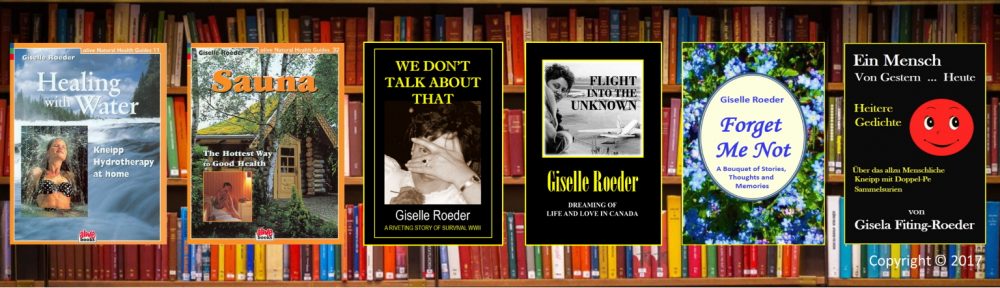
The first book, “We Don’t Talk About That,” is a riveting story of surviving WWII and its aftermath. It reads more like history rather than a memoir. It begins after WWI and outlines changes in the social makeup of many European countries, particularly post-war Germany. Unemployment and staggering inflation, where half a loaf of bread cost billions and two beers a mere one-hundred billion led to the rise of Adolf Hitler, an Austrian man. He promised work and bread and kept his promises. The following years brought an upswing in life but also carried Germany into WWII. The invasion of Eastern Germany by the Russian army brought horror with unspeakable atrocities to ordinary people. Most survivors’ attitude is “we don’t talk about that.” Part 1 of the shows with Giselle.
Gila’s life turned tragic when the fighting approached her neighbourhood. Rape, murder and hunger were part of everyday life. The Russians took her father and every 16 to 60-year-old non-disabled person to Siberia. The rest of the population, including Gila’s mother and her siblings, were evicted. They joined the trek of thousands on the road to nowhere.’ Gila was witness to gruesome acts of violence, aging her beyond her years. She barely survived diphtheria while on the road. Months later, recovering from typhoid fever, she took responsibility for her three siblings while her mother worked. Despite her interrupted schooling due to circumstances beyond her control, Gila’s determination enabled her to become a Physical Education teacher. Gila lived the first ten years of her life under the Nazis and her teenage years under communist rule. Germany’s division into East and West, with its political ramifications, forced her to escape to West Germany. Gila’s story is one of heartache, courage, pain, love, and longing for liberation.
The second book, “Flight Into The Unknown,” deals with Gila’s life in the West. She came across an ad placed by a former German man living in Canada. He looked for a new mommy for his four-year-old daughter. Intrigued, she wrote a reply, never expecting a response. A large envelope with several ‘Beautiful British Columbia’ magazines, a letter, and photographs arrived. The Canadian man’s father, a lawyer, called. “My son is not a fly-by-night. ” Gila visited the lawyer’s family. Three months later, she got ‘engaged’ by telephone. While on holiday, the lawyer and his wife organized the wedding without ever asking Gila.
Gila did not know how to disentangle herself. She left Germany seven months after answering the ad and immigrated to Vancouver, Canada. She soon realized she had made the biggest mistake of her life. Her husband used her money to pay his debts. Gila had been blinded by his well-to-do parents, thinking, ‘the apple does not fall far from the tree.’ She made the best of it and took English classes, feeling lost without mastering the language. Five months later, they moved to Winnipeg. Gila welcomed a second stepdaughter and gave birth to a son the same year. The baby kept the family together. After a bankruptcy, Gila lost her drive for life and faced suicide. She couldn’t do it because of her little boy. Her husband told her, “Their mother left the girls, and if you do that, you’ll ruin them for life.” Trials and tribulations were constant companions. After twenty years of marriage, raising the kids, and finally succeeding in her own business, the husband had an affair, leading to a nasty divorce. Gila lost everything and moved back to Vancouver, hoping to start a new life. Coming September 15th
“Set Sail for Life After 50,” the trilogy’s final book, deals with being single again and new beginnings. This book is a work in progress. To follow
Content Warning: This story contains accounts of horrific cruelty inflicted upon East German civilians. Although these painful truths need to be heard, some details may be deeply disturbing. Please listen with care.
Giselle Roeder is the author of four books: two about healthy living, followed by “Forget Me Not,” A Bouquet of Stories, Thoughts, and Memories about people who influenced her life, and last but not least, the memoir that went around the world:
“We Don’t Talk About That” – covering the riveting story of surviving WW II during her first thirty years.
Giselle sequel, writing about her life in Canada. Following her emigration to Canada in 1963, Giselle succeeded in business, was interviewed on radio stations across the country, hosted her own Television Show for 9 years, and became well-known as an international public speaker in the developing field of alternative health.
Today, she will tell us about her life under different political systems:
Ten years as a child under Nazi rule –
Ten years as a teenager growing up in Communist East Germany –
Her life as a young adult in Capitalist West Germany after she escaped from East Germany.
Giselles next show on living in East & West Germany then on to Canada
Self Discovery Wisdom is sustained by those who believe in conscious conversation. If this episode resonated with you, subscribe and, if you feel called, make a donation. Your support helps us keep amplifying voices that inspire growth, courage, and compassion. Thank you. Please join Our Forgotten Seniorsanthology and help to bring this book to awareness.
Sara’s View of Life, with Sara Troy. On air from August 25th
Did you hear that? I mean, did you truly hear it? Were you listening and absorbing what was being said? Did it illuminate, astonish or enlighten you? Did it reveal something within you?
That is what podcasting is all about, and why I have continued doing this work for more than fourteen years. I want you to hear the message—not merely the words, but who is speaking, why they are sharing and what their story can teach us.
I recently recorded an extraordinary two-hour conversation with Giselle Roeder, a survivor of the Second World War. As a young girl living in Eastern Germany, she experienced the destruction of war firsthand. Her family had lived a humble but loving rural life until the arrival of the Russian army turned their world upside down.
Giselle witnessed violence, displacement, hunger and unspeakable atrocities. Her father was taken away and sent to Siberia, along with other able-bodied men and women between sixteen and sixty. Her mother was left to protect and care for her children under horrific circumstances. Giselle was only eleven years old, yet the things she witnessed forced her to grow up far too quickly.
Her story is important because history continues to repeat itself—under different names, uniforms and circumstances. We see suffering in Ukraine, Gaza, and many other places around the world. We continue to say, “Never again,” but somehow we allow fear, hatred, division and the hunger for power to lead humanity back into violence.
Who wins a war? No one. The emotional, spiritual, economic and environmental wounds can take generations to heal. Yet, despite everything history has taught us, humanity continues to reach for weapons instead of conversation, understanding and peaceful solutions.
Many of the people I interview share stories of struggle, pain and loss—but also courage, resilience and healing. They faced the darkness in their lives and found a way through it. Those who embrace healing often emerge with a profound commitment to peace, because they know that peace is what settles the heart, spirit and soul.
Those who do not heal can become trapped in bitterness, blame and vengeance. Hurt people often hurt others. This is why listening matters. If we listened to people before their pain became rage, helped them discover their value and give them meaningful ways to participate, perhaps fewer people would be manipulated by those who use anger and division to gain power.
Our significance begins within us. It comes through our participation, contribution and willingness to take responsibility for our own journey. We cannot become significant in the world until we recognize our significance in our own lives. This is the journey of self-discovery, self-love and meaningful purpose.
Today, we have access to more stories, knowledge and guidance than ever before. People share their experiences through books, podcasts, talks and social platforms. They show us how they moved from darkness into light and found courage, compassion and hope. The wisdom is available—but what are we choosing to read, watch and hear?
We cannot claim ignorance when suffering is happening before our eyes. Awareness invites us to care, and caring calls us to respond. We cannot fight every battle, because carrying the pain of the entire world can overwhelm us. But we can choose something meaningful to stand for, something harmful to stand against and someone vulnerable to stand beside.
Standing with another person can make an enormous difference, even if all we can offer is the knowledge that they are not alone.
We do not all have to look, think or live alike. There are many colours in the rainbow of life, and every one of them contributes to its beauty. I do not care about someone’s colour, nationality, economic standing, gender or orientation. What matters to me is their frequency, their consciousness and whether they genuinely care about humanity and planet.
Are you listening? Are you truly hearing and seeing what is happening—or are you choosing to look away?
Please listen to my conversation with Giselle. It is long and, at times, difficult to hear, but her story needs to be remembered. If we believe such atrocities cannot happen again, we only need to look around. They are already happening under different labels and in different forms.
I believe we are kinder and more intelligent than this. I believe we possess the conscious hearts needed to choose another way. We must listen more deeply, pay attention and find something we are willing to stand for. We must push back against those who use fear and division for power while standing beside the innocent, the wounded and even those beginning to realize they have been deceived.
Let us stand together as one human race, regardless of colour, creed or origin. Let us place humanity, our planet and all life upon it first. Let us practise kindness toward ourselves and one another, because until we do, we will continue travelling down a path of destruction.
Until next time, I truly wish you love and peace. May you discover them within yourself and share them with everyone around you.
Self Discovery Wisdom is sustained by those who believe in conscious conversation. If this episode resonated with you, subscribe and, if you feel called, make a donation. Your support helps us keep amplifying voices that inspire growth, courage, and compassion. Thank you. Please join Our Forgotten Seniorsanthology and help to bring this book to awareness.
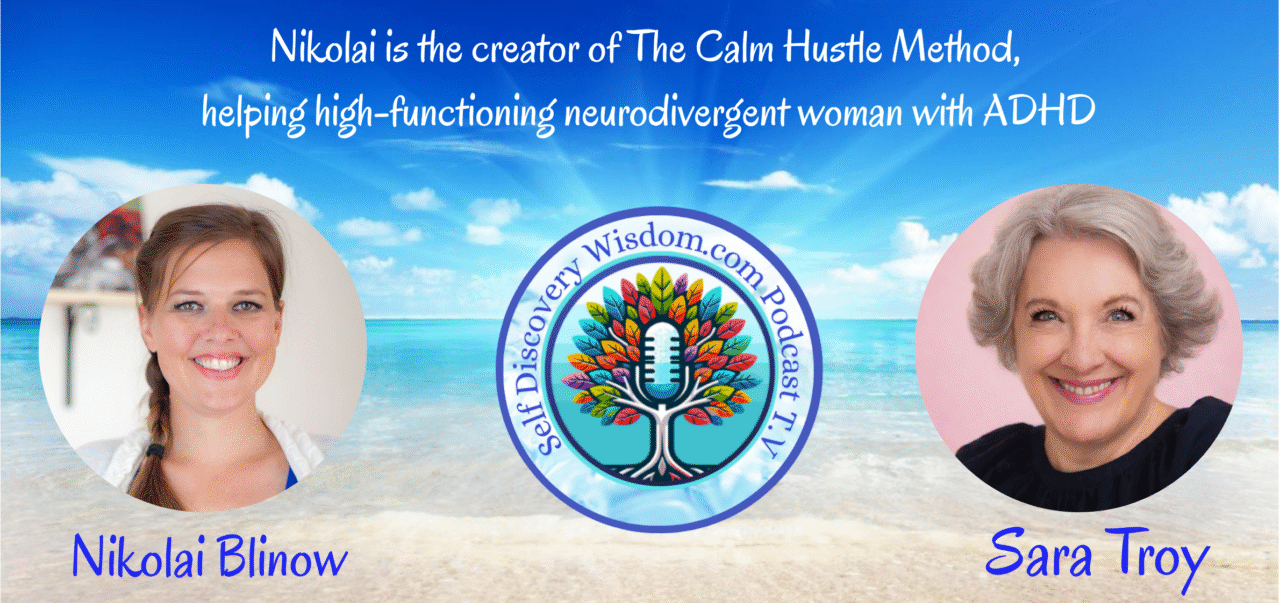
Mental Health Awareness with Sara Troy and her guest Nikolai Blinow. On air August 25th
Nikolai Blinow, LMHC. I am the creator of The Calm Hustle Method, TEDx speaker, and licensed therapist in RI & MA, with nationwide licensure coming soon.
My “why”: After years of struggling with my own burnout, inner-perfectionist, and overachiever, and the eventual discovery that I am a high-functioning neurodivergent woman with ADHD who has flown under the radar for many, many years, I’m now passionate about helping fellow ambitious women with ADHD or other types of neurodiversities embody success without the chronic stress and personal life consequences (chronic pain, autoimmune issues, stress-related health conditions, anxiety, depression, personal life challenges, the list goes on!)
I’m the daughter of an Eastern European immigrant and an American woman without a higher education who was taught that the path to success is stability and financial success. And so I developed a tendency to work hard and be a perfectionist. After a year and a half of AmeriCorps service, and obtaining my “perfect” job, I realized that the secret to being happy wasn’t creating the stability and achievement I thought I wanted. So I took a leap, went back to school to become a therapist, and eventually found my way, at aged 37, to a late-in-life high-functioning ADHD diagnosis. This explained so much about why I could never relax, why achievement felt like the secret to safety, and how I needed to heal my nervous system, to truly settle in and enjoy my success. Now, I help other ambitious women struggling with anxiety, perfectionism, and ADHD do the same.
Free monthly self-care challenges for ambitious women with anxiety, perfectionism, and ADHD who want help experiencing success without the stress:
Self Discovery Wisdom is sustained by those who believe in conscious conversation. If this episode resonated with you, subscribe and, if you feel called, make a donation. Your support helps us keep amplifying voices that inspire growth, courage, and compassion. Thank you. Please join Our Forgotten Seniorsanthology and help to bring this book to awareness.
Sara’s View of Life, with Sara Troy. On air from August 18th
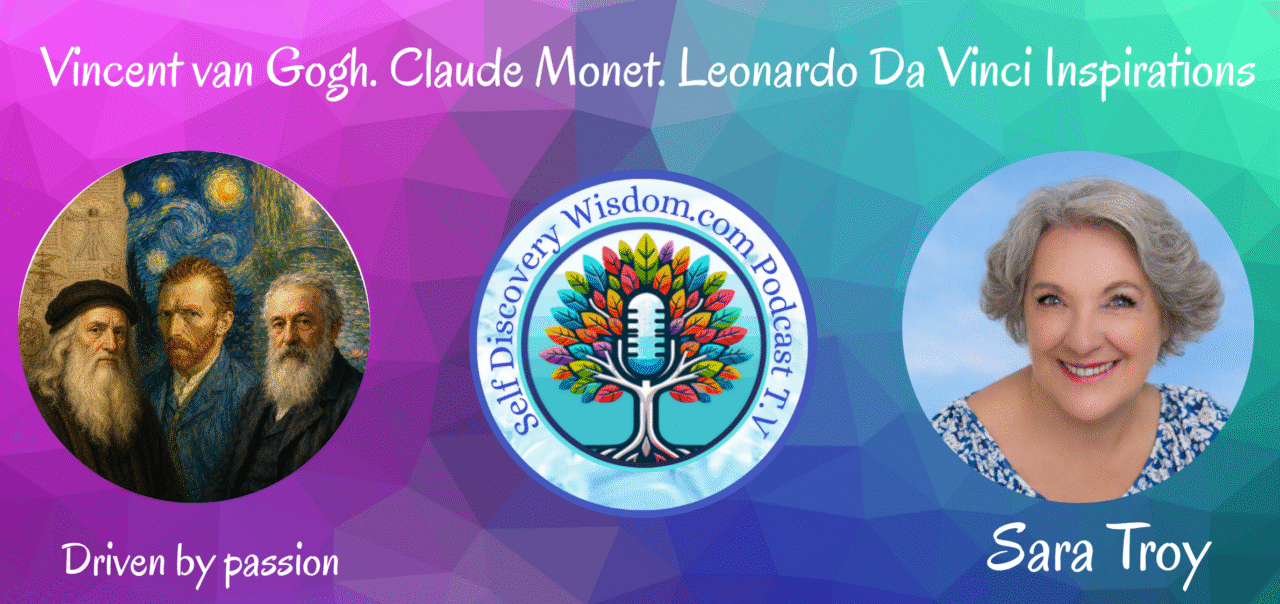
I recently saw the Van Gogh exhibit with Monet and I was transformed. The colours, the hues, the flow, the storytelling. If it comes to your neighborhood, please go and see it. I was so moved I wanted to do a show on them and Leo.
Van Gogh, Leonardo da Vinci, and Claude Monet did more than create extraordinary paintings—they changed how we see and understand the world. Van Gogh expressed deep emotion through colour, Leonardo united art with science and an endless curiosity about life, and Monet captured the ever-changing beauty of light and nature. Each faced hardship, criticism, and resistance, yet remained devoted to his unique vision. Today, we explore the men behind the masterpieces and discover what their lives can teach us about creativity, perseverance, curiosity, and remaining true to ourselves.
Vincent van Gogh: Painting what he felt
Vincent van Gogh was born in the Netherlands in 1853. Before finding his artistic direction, he worked as an art dealer, teacher, bookseller, and lay preacher. He did not seriously decide to become an artist until he was 27. Van Gogh Museum
Van Gogh experienced emotional and mental distress, loneliness, poverty, and periods of serious illness. His brother Theo supported him financially and emotionally, and their letters provide a remarkable window into Vincent’s inner life.
His early paintings were dark and earthy. After moving to France, his work became brighter and more expressive. He used bold colour and swirling brushstrokes to paint what he felt, not merely what he saw.
His best-known works include:
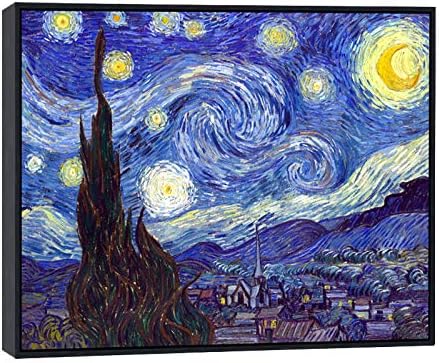
The Starry Night
Sunflowers
Irises
The Bedroom
His many self-portraits
Van Gogh created roughly 2,000 artworks, including about 900 paintings, yet achieved little financial success during his lifetime. He died in 1890 at only 37. His work later became some of the most recognized and valuable art in history. Van Gogh Museum
It is important not to romanticize his suffering. His illness did not make him a great artist; he created great art while struggling with illness. Painting gave him purpose, expression, and moments of healing.
What Van Gogh teaches us: Recognition does not determine the value of what we create. Sometimes the world takes time to understand a unique soul.
Claude Monet: Capturing light and change
Claude Monet was born in Paris in 1840 and grew up in Le Havre, Normandy. The artist Eugène Boudin encouraged him to paint outdoors and study nature directly.
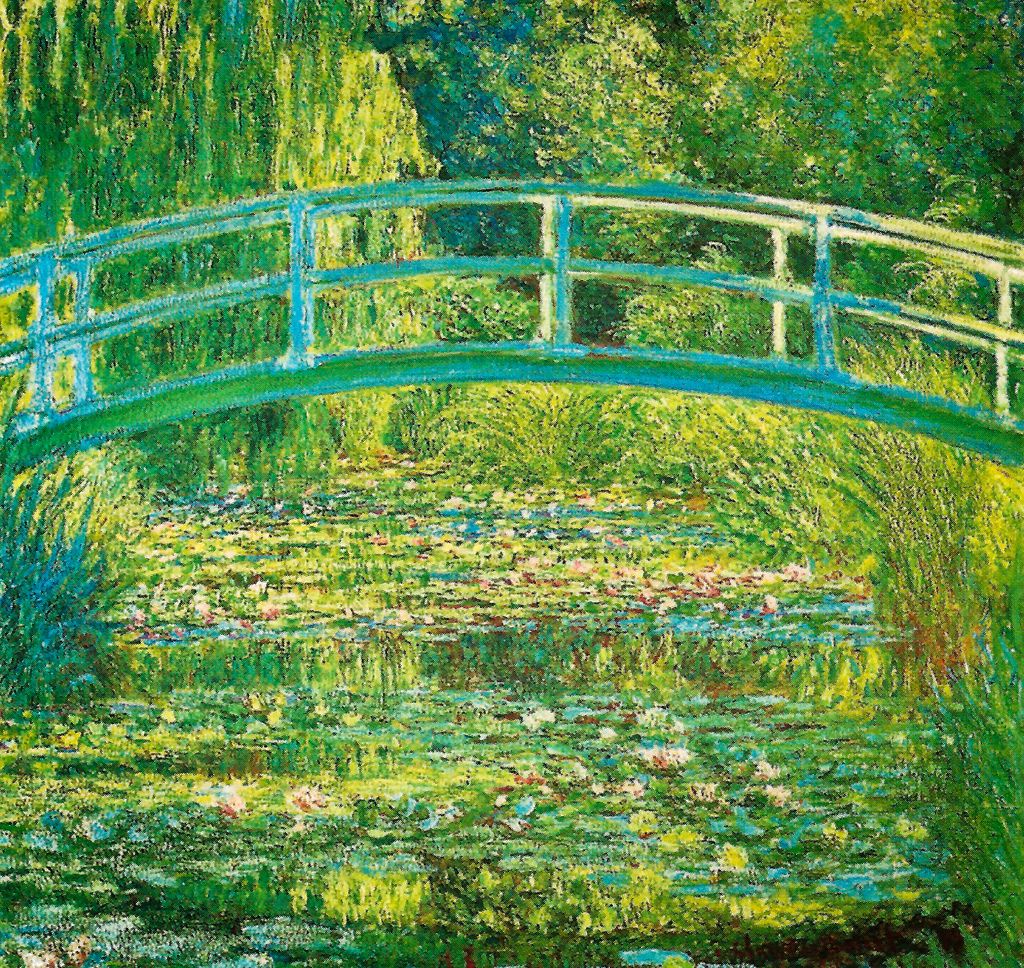
Monet became one of the founders of Impressionism. The movement received its name from his painting Impression, Sunrise. Instead of painting every object with exact detail, the Impressionists captured light, atmosphere, colour, and the feeling of a passing moment. Musée de l’Orangerie
Monet often painted the same scene repeatedly at different times of the day and in different weather. His subjects included:
Haystacks
Poplar trees
Rouen Cathedral
The River Thames
His garden and Japanese bridge
The water lilies at Giverny
Monet endured financial hardship, grief, and failing eyesight. Cataracts altered his ability to see colour, yet he continued painting. His later water-lily works became increasingly expansive and almost abstract.
After moving to Giverny in 1883, Monet created the garden and pond that inspired his most famous paintings. His monumental Water Lilies panels were offered to France as a symbol of peace following the First World War.
What Monet teaches us: Nothing remains exactly the same. When the light changes, our way of seeing can change with it.
Leonardo da Vinci: The Man Who Wanted to Understand Everything
Leonardo da Vinci was born on April 15, 1452, near the small Tuscan town of Vinci in Italy. This is where his name came from—Leonardo da Vinci simply means “Leonardo from Vinci.”
He was born outside marriage to a wealthy notary father and a young mother named Caterina. Because of his birth status, Leonardo did not receive the traditional classical education available to many wealthy boys. Yet this may have allowed his mind to develop more freely. Instead of accepting what books told him, he observed life directly.
As a child, Leonardo was fascinated by water, birds, animals, plants, rocks, light, movement, and the human body. Nature became his first teacher.
Becoming an artist
As a teenager, Leonardo moved to Florence and trained in the workshop of Andrea del Verrocchio, one of the city’s leading artists. There, he learned painting, sculpture, metalwork, mechanics, and engineering.
According to a famous story, Leonardo painted an angel in one of Verrocchio’s paintings so beautifully that his teacher declared he would never paint again. The tale may have been exaggerated, but it reflects how exceptional Leonardo’s talent appeared to others.
Leonardo eventually moved to Milan, where he worked for Duke Ludovico Sforza. He presented himself not only as an artist but also as an engineer who could design bridges, weapons, canals, and buildings.
While in Milan, he painted The Last Supper, which captured the emotional moment when Jesus told his disciples that one of them would betray him. Unfortunately, Leonardo experimented with an unusual painting method, and the work began deteriorating within years of its completion.
The artist and scientist
Leonardo did not see art and science as separate. To paint the human body truthfully, he studied anatomy. To capture movement, he examined muscles, bones, animals, and flowing water.
He dissected human bodies and produced remarkably detailed drawings of the heart, spine, muscles, organs, and a baby developing within the womb. His investigations of the heart led to important observations far ahead of his time. Royal Collection Trust
Thousands of pages from his notebooks survive. They contain ideas for:
Flying machines
Parachutes
Bridges and canals
Military machines
Mechanical devices
Human anatomy
Plants, water, geology, and astronomy
Many designs were never built, but they reveal a mind constantly asking, “How does this work?”
Leonardo often wrote in mirror writing, moving from right to left. We do not know exactly why. It may have felt natural because he was left-handed, or it may have helped prevent the ink from smudging.
The mystery of the Mona Lisa
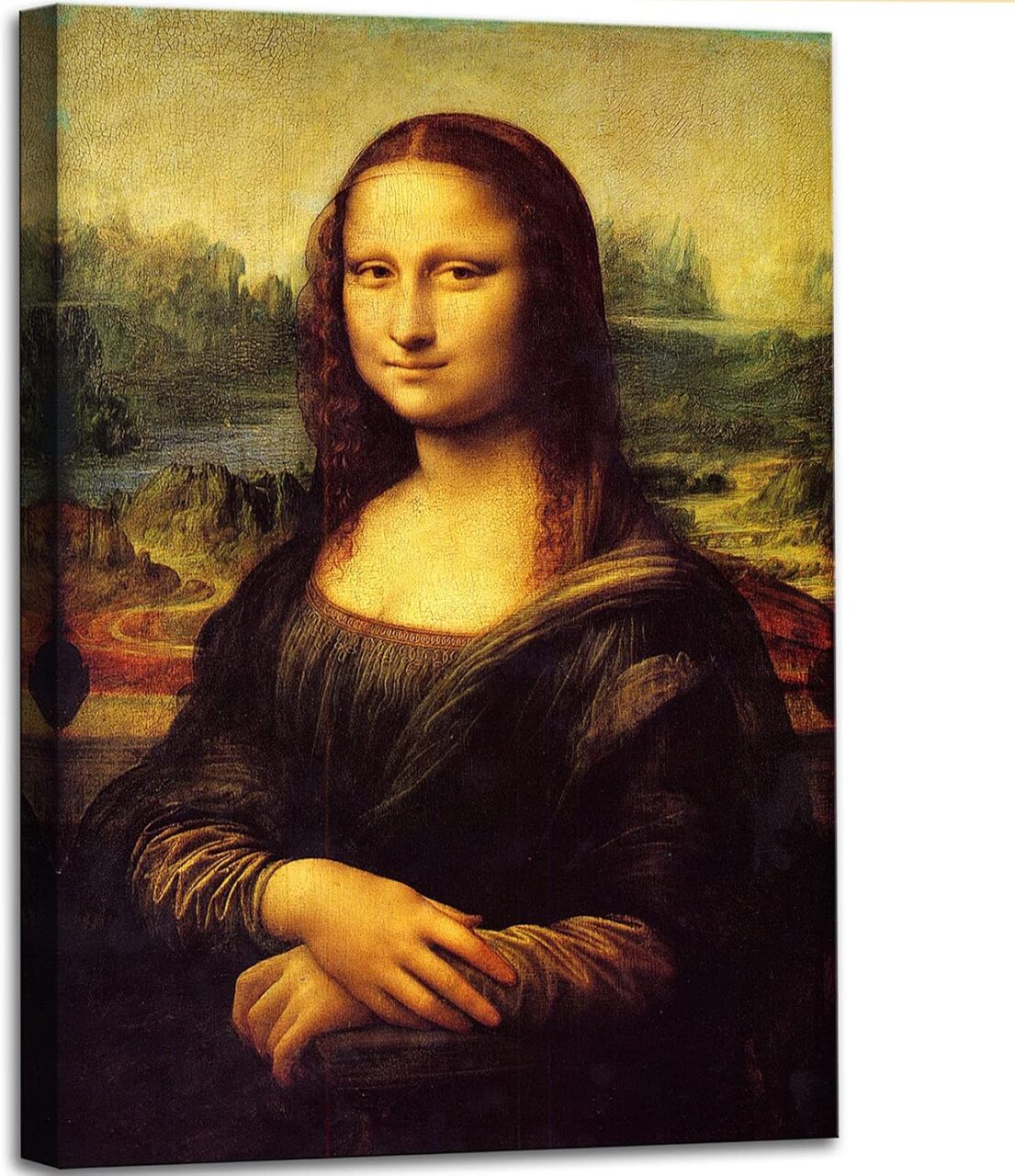
Around 1503, Leonardo began painting the portrait now known as the Mona Lisa. The woman is generally identified as Lisa Gherardini, the wife of Florentine merchant Francesco del Giocondo.
Leonardo used a technique called sfumato, applying very thin layers of paint to create soft, smoky transitions without harsh outlines. This helped make her expression appear to change as we look at her.
He apparently kept the portrait with him for many years and continued refining it. King Francis I later acquired it after inviting Leonardo to France. Today, it is housed in the Louvre and is considered the world’s most famous portrait. Musée du Louvre
A brilliant but restless mind
Leonardo imagined far more projects than he completed. His curiosity repeatedly pulled him from painting into anatomy, engineering, architecture, mathematics, and nature.
He produced relatively few completed paintings. Some patrons became frustrated by his slow pace and unfinished commissions. However, Leonardo was not simply procrastinating. He was continually investigating, reconsidering, and searching for a deeper understanding.
He did not want merely to paint the appearance of life—he wanted to understand the forces that created it. The Louvre describes his investigation of the world as the “science of painting,” through which he attempted to bring life into his art.
His final years
In 1516, King Francis I invited Leonardo to France and gave him a home at Clos Lucé, near the royal château at Amboise. Leonardo brought several treasured paintings with him, including the Mona Lisa.
His health declined, but he continued drawing, teaching, designing, and sharing his ideas. He died in France on May 2, 1519, at the age of 67.
What Leonardo teaches us
Leonardo reminds us that curiosity has no boundaries. He did not allow himself to be defined as only an artist, scientist, engineer, or inventor. He followed every question that awakened his imagination.
His life also shows that unfinished work does not necessarily represent a wasted life. Leonardo completed only a small number of paintings, but the depth of his observation changed how people understood art, nature, and the human body.
Leonardo’s deeper message: Never stop observing, questioning, learning, and wondering. The desire to understand something can be as valuable as the final creation.
In reflection
Leonardo da Vinci saw connections where other people saw separate subjects. Art led him to science, science returned him to nature, and nature deepened his understanding of humanity. Perhaps his greatest masterpiece was not any individual painting or invention—it was the extraordinary way he taught himself to see.
Self Discovery Wisdom is sustained by those who believe in conscious conversation. If this episode resonated with you, subscribe and, if you feel called, make a donation. Your support helps us keep amplifying voices that inspire growth, courage, and compassion. Thank you. Please join Our Forgotten Seniorsanthology and help to bring this book to awareness.




You must be logged in to post a comment.