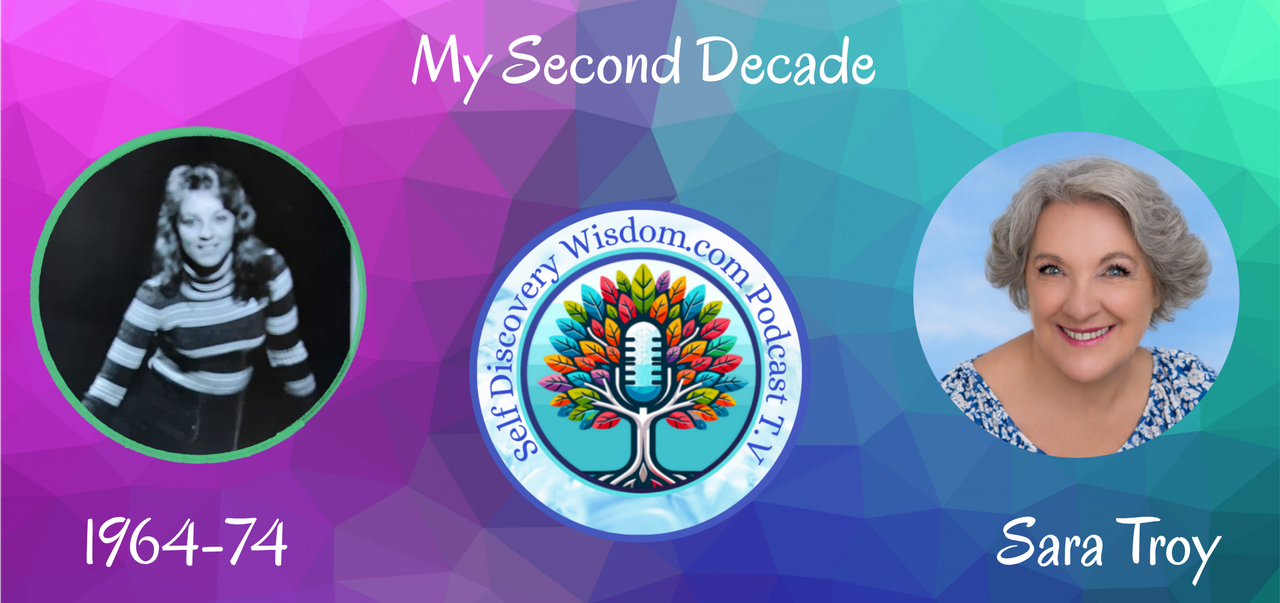
Sara’s View of Life with Sara Troy. On air from March 31st
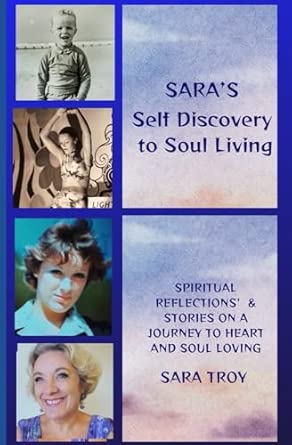
I’m your host, Sara Troy, and this is my second decade. After a recent conversation about turning 71, it was pointed out to me that this represents seven full decades of life—and when you begin to look at life in those ten-year chapters, it shifts your perspective entirely. Although I wrote Sara’s Self-Discovery to Soul Living as a reflection of my journey, I felt called to break my life down into those decades. Last week, I shared my first ten years; this week, we step into the years from 10 to 20—a time filled with profound change, loss, awakening, and the shaping of who I would become.
As I turned ten, life still carried a sense of comfort and familiarity. My father was alive, and we were living in a beautiful home in Louth, England—surrounded by gardens, open space, and a rhythm that felt secure, even though I was away at boarding school for much of the time. Coming home brought a sense of grounding, of knowing where I belonged. But everything changed at eleven. My father suffered another heart attack, and this time, he didn’t recover.
I remember that moment with a clarity that never leaves you. There was love, of course, but also an unexpected feeling of relief—relief that his suffering, his frustration, and the anger that had come with his illness were finally at peace. And with that came guilt, because as a child, you don’t yet understand that two emotions can coexist. I forced myself to grieve in the way I thought I should, yet something deeper in me already understood that death was not an end, but a transition.
In the days that followed, I found myself stepping into a kind of knowingness I couldn’t explain. When I said goodbye to my father, it was simple, heartfelt, and complete. And when I spoke to my mother, words came through me—words far beyond my years—offering a perspective of strength in the face of loss. It was as if, even then, something within me knew how to meet life in its hardest moments.
But life did not soften after that. The reality of loss unfolded quickly—family tensions, financial instability, and the harsh truths of how vulnerable we could be. At school, I faced illness, isolation, and cruelty from others who didn’t understand or believe what I had gone through. Yet even in those moments, something in me endured. I didn’t yet call it resilience, but it was there—quietly forming.
That decade, from ten to twenty, became a shaping ground. It was where innocence met reality, where hardship introduced awareness, and where the seeds of who I would become were planted. It wasn’t an easy time, but it was a defining one—one that taught me, even then, that strength is not loud, and knowing often comes long before understanding.
Then came another turning point. At fourteen, my mother made a bold and life-changing decision—we would leave England and begin again in South Africa. The journey itself was an adventure, a three-week voyage by sea, arriving in a world so different from anything I had known. The light, the heat, the sounds, the energy—it was as though life had shifted into an entirely new landscape.
In South Africa, I began to change. The shy, timid girl who struggled to find her place slowly started to open. I found myself stepping into experiences I never would have imagined—dancing, music, connection, even becoming a go-go dancer and part of the emerging DJ scene. There was a freedom there, an aliveness, a sense of expression that had been waiting within me. Life was no longer just something happening to me—I was beginning to participate in it.
That decade, from ten to twenty, became a powerful shaping ground. It was where innocence met reality, where loss met discovery, and where hardship gave way to expression and growth. It was not an easy road, but it was a transformative one. It taught me that even in the face of change, disruption, and uncertainty, there is always something within us ready to rise, to explore, and to become.
In South Africa, I began to change. The shy, timid girl who once held back started to find her rhythm in the world. It was there that I stepped into something completely unexpected—the world of music, movement, and expression. Through connections and opportunity, I found myself part of a growing disco scene, where energy, sound, and freedom came together in a way that felt alive and liberating.
I became a go-go dancer, and for the first time, I wasn’t hiding—I was expressing. There was joy in it, a sense of belonging in the music, in the beat, in the shared experience of people coming together simply to feel good. Alongside that, I was involved in the DJ world, helping bring music to life at parties, events, and gatherings. In those days, it wasn’t polished or commercial—it was raw, creative, and full of spirit. We carried heavy equipment, set everything up ourselves, and created the atmosphere from the ground up. It was hard work, but it was also exhilarating.
That experience gave me something I hadn’t known before—confidence. It allowed me to step out of my shell, to connect with people, to read energy, and to understand how to move a room, not just physically, but emotionally. Music became a language, and dance became a form of communication. It was no longer about fitting in—it was about showing up as I was, fully present in the moment.
Those years were vibrant, full of discovery, and deeply formative. From loss and uncertainty, I had stepped into expression and aliveness. The girl who once felt small and unsure was beginning to find her voice—through music, through movement, and through the courage to simply be seen.
Yet, even within that sense of freedom and expression, there was another reality unfolding around me—one that was far from free. Living in South Africa during the time of Apartheid meant that, beneath the music and movement, there was a deeply divided and unjust society. It was something you could feel, even when people didn’t openly speak about it. There were invisible lines everywhere—who could go where, who could do what, who was seen and who was not.
At the same time, there was also the weight of Misogyny—something I had already begun to experience earlier in life, but now saw more clearly. Women were often expected to stay within certain roles, to be seen but not truly heard, to follow rather than lead. I had watched my own mother’s independence be taken from her, her business sold without her consent, her voice diminished in a world that prioritized men’s authority.
So here I was—dancing, expressing, finding my voice in one space—while simultaneously becoming aware of how restricted that voice could be in the larger world. It was a stark contrast. On the dance floor, there was freedom, connection, and joy. Outside of it, there were systems built on control, division, and inequality.
And perhaps that contrast became one of my greatest teachers. It showed me the difference between what is and what could be. It awakened in me an awareness of injustice, not just for myself, but for others. It planted seeds—of compassion, of questioning, of a desire for something better, something fairer, something more humane.
Those experiences didn’t harden me—they opened me. They helped shape my understanding of humanity, of the importance of voice, of equality, and of standing in one’s truth. Even then, I was beginning to see that life is not just about surviving what we are given, but about becoming aware enough to help change what no longer serves humanity.
And through all of this, there was my mother—at the center of it, navigating her own journey of loss, identity, and rediscovery. After my father’s passing, she had been a woman stripped of so much—her security, her independence, even her voice in many ways. I had watched how her business was taken from her, how decisions were made around her rather than with her, and how society expected her to quietly accept it all.
But South Africa awakened something in her.
I began to see a different woman emerge—not just the grieving widow, but a woman reclaiming herself. She stepped into new spaces, met new people, and began to rediscover her independence and creativity. There was a light returning to her, a sense of possibility that had been dimmed for so long. She had always had strength, but now it was beginning to express itself in a new way—less confined, more exploratory.
She showed me, not through words but through living, what it means to rebuild. To take what life has stripped away and, piece by piece, begin again. It wasn’t easy, and it wasn’t without pain, but there was a quiet determination in her—a resilience that spoke volumes.
Watching her, I learned something profound. That no matter how much is taken from you, there is always something within that cannot be taken—your spirit, your will, your capacity to rise again. She didn’t fight loudly against the world that had wronged her; instead, she chose to step forward into a new life, carrying both her scars and her strength.
And in many ways, as I was finding my voice through music and movement, she was finding hers through rediscovery and reinvention. Together, without even realizing it, we were both stepping into a new chapter—one shaped not just by what we had lost, but by what we were becoming.
More in the video/audio.
| ITunes | SPotify+Video | Soundcloud |
| Amazon | Youtube Music | iHEART |
| Podvine | Podcasher | Podcast Addict |
| Mixcloud | Radio Public. | FM Player |
| Odysee | Youtube | BusyMumsmedia |
| DO ENJOY THE WISDOM | Thanks for listening | Feedspot |
FIND MORE SHOWS OF ILLUMINATION HERE
All my links can be found on linktr.ee/saratroy
BE OUR GUEST AND SHARE THE WISDOM
Self Discovery Wisdom is sustained by those who believe in conscious conversation. If this episode resonated with you, subscribe and, if you feel called, make a donation. Your support helps us keep amplifying voices that inspire growth, courage, and compassion. Thank you. Please support Our Forgotten Seniors anthology and help to bring this book to awareness.


Discover more from Self Discovery Wisdom Podcasts
Subscribe to get the latest posts sent to your email.