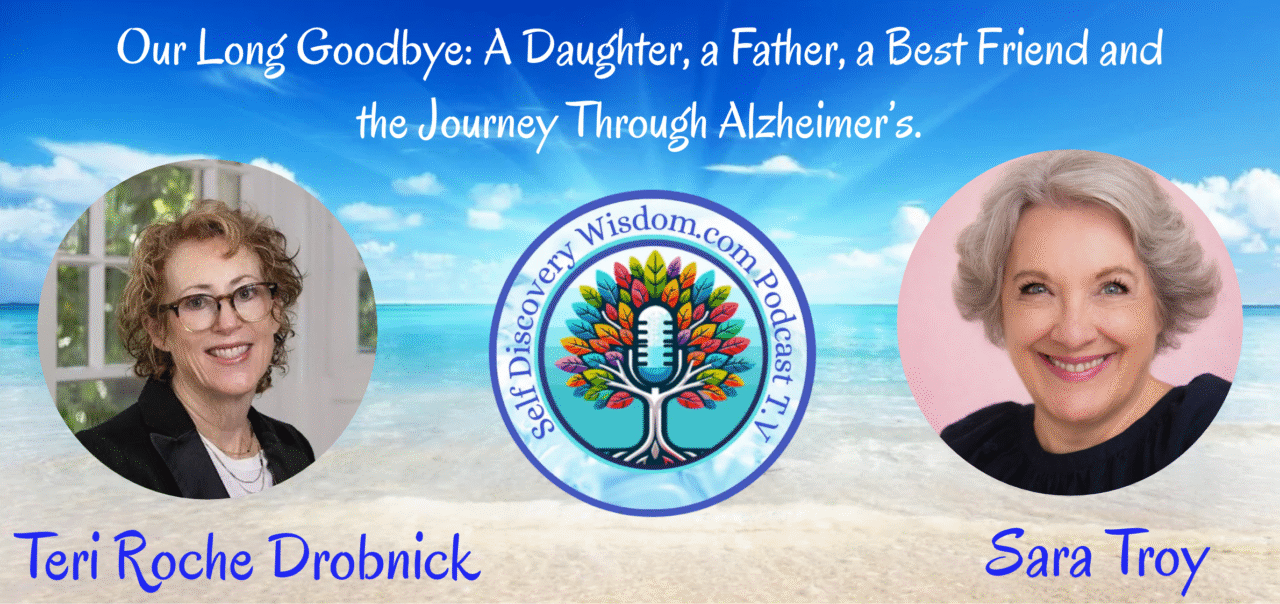
MH26-44. Teri Roche Drobnick, Our Long Goodbye.


Mental Health Awareness with Sara Troy and her guest Teri Roche Drobnick. On air November 3rd

Teri Roche Drobnick, Author of Our Long Goodbye: A Daughter, a Father, a Best Friend and the Journey Through Alzheimer’s.

After experiencing the arduous journey of Alzheimer’s with my father, I am eager to help others. My goal is to inform, instill hope, and to let people know they are not alone.

Teri worked in the medical field as a licensed clinical social worker and now writes full time. Since losing her father to Alzheimer’s, she has worked as a volunteer community educator for the Alzheimer’s Association. In her memoir, OUR LONG GOODBYE: A Daughter, a Father, a Best Friend, and the Journey Through Alzheimer’s, Teri writes about how important her father’s friendships are for him as he declines. In a poignant twist, his friends matter to Teri as well – her dad’s best friend of eighty years tells her dad’s stories for him, and Teri reconnects with her father through those stories. And then the best friend and Teri become friends in their own right. She can address the following topics:

Friendship is a lifeline for those living with dementia and for those caring for them. As memories fade and communication changes, friendship becomes less about words and more about presence, patience, compassion, and connection. Caregivers also need friendship, understanding, and support as they navigate this emotional journey. A gentle touch, a familiar voice, a smile, or simply being there can speak volumes. Dementia may change how we connect, but it never takes away our need to feel loved, valued, and understood.


 ITunesSPotify+Video Soundcloud
  AmazonYoutube Music   iHEART
Podvine Podcasher  Podcast Addict
Mixcloud  Radio Public.   FM Player
 Odysee Youtube BusyMumsmedia
DO ENJOY THE WISDOMThanks for listeningFeedspot

TERI ROCHE DROBNICK worked in the medical field as a  licensed clinical social worker and now writes full time. Since losing her father to Alzheimer’s, she has worked as a volunteer community educator for the Alzheimer’s Association.

She is the author of a children’s book, Moving Day, which Publishers Weekly called “charming, entertaining, and full of heart.” You can learn more about Moving Day on her website, where she also shares resources for teachers and information about school visits.

Kirkus Reviews called her memoir, OUR LONG GOODBYE: A Daughter, a Father, a Best Friend, and the Journey Through Alzheimer’s, “a thoughtful and universal meditation on the life and death of a loved one.”

When Teri’s not writing, she can be found hiking or rowing on the Petaluma River. Raised in Lafayette, CA, she has two grown daughters and currently resides in Petaluma, CA, with her husband and her best friend, Hobie, a Goldendoodle.


AMAZON Barnes & Noble Target


https://www.alz.org/alzheimers-dementia/facts-figures#quickFacts

teridrobnick.com

Instagram.com/teri.drobnick

Facebook.com/teri.drobnick

X.com/teridrobnick

Substack.com/@teridrobnick


FIND MORE SHOWS OF ILLUMINATION HERE

All my links can be found on linktr.ee/saratroy

BE OUR GUEST AND SHARE THE WISDOM

Self Discovery Wisdom is sustained by those who believe in conscious conversation. If this episode resonated with you, subscribe and, if you feel called, make a donation. Your support helps us keep amplifying voices that inspire growth, courage, and compassion. Thank you. Please join Our Forgotten Seniors anthology and help to bring this book to awareness.


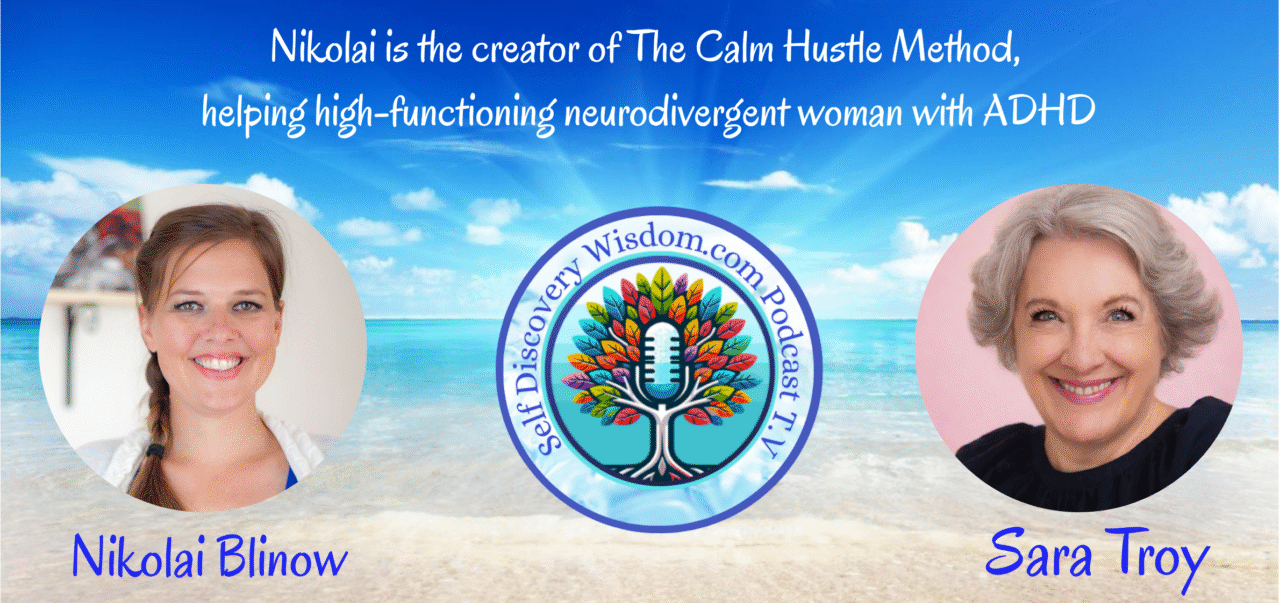
MH26-34. Nikolai Blinow and Calm A.D.H.D


Mental Health Awareness with Sara Troy and her guest Nikolai Blinow. On air August 25th

Nikolai Blinow, LMHC. I am the creator of The Calm Hustle Method, TEDx speaker, and licensed therapist in RI & MA, with nationwide licensure coming soon.

My “why”: After years of struggling with my own burnout, inner-perfectionist, and overachiever, and the eventual discovery that I am a high-functioning neurodivergent woman with ADHD who has flown under the radar for many, many years, I’m now passionate about helping fellow ambitious women with ADHD or other types of neurodiversities embody success without the chronic stress and personal life consequences (chronic pain, autoimmune issues, stress-related health conditions, anxiety, depression, personal life challenges, the list goes on!)


 ITunesSPotify+Video Soundcloud
  AmazonYoutube Music   iHEART
Podvine Podcasher  Podcast Addict
Mixcloud  Radio Public.   FM Player
 Odysee Youtube BusyMumsmedia
DO ENJOY THE WISDOMThanks for listeningFeedspot

I’m the daughter of an Eastern European immigrant and an American woman without a higher education who was taught that the path to success is stability and financial success. And so I developed a tendency to work hard and be a perfectionist. After a year and a half of AmeriCorps service, and obtaining my “perfect” job, I realized that the secret to being happy wasn’t creating the stability and achievement I thought I wanted. So I took a leap, went back to school to become a therapist, and eventually found my way, at aged 37, to a late-in-life high-functioning ADHD diagnosis. This explained so much about why I could never relax, why achievement felt like the secret to safety, and how I needed to heal my nervous system, to truly settle in and enjoy my success. Now, I help other ambitious women struggling with anxiety, perfectionism, and ADHD do the same.


Free monthly self-care challenges for ambitious women with anxiety, perfectionism, and ADHD who want help experiencing success without the stress:

https://www.ompowermentpsych.com/freechallenge

www.ompowermentpsych.com

www.linkedin.com/in/nikolai-diana-blinow-


FIND MORE SHOWS OF ILLUMINATION HERE

All my links can be found on linktr.ee/saratroy

BE OUR GUEST AND SHARE THE WISDOM

Self Discovery Wisdom is sustained by those who believe in conscious conversation. If this episode resonated with you, subscribe and, if you feel called, make a donation. Your support helps us keep amplifying voices that inspire growth, courage, and compassion. Thank you. Please join Our Forgotten Seniors anthology and help to bring this book to awareness.


MH26-28. Denise Joseph & “Called Into Confidence”.


Mental Health Awareness with Sara Troy and her guest Denise Joseph, On air from July 14th

You are Unique by Design: Owning Your Lane

Denise Joseph believes we have been sold the idea that the goal is to be equally good at everything, but she advocates that specialization is by design, not a weakness. Using the analogy of a body, she notes that the eye doesn’t try to be the hand, nor the ear a foot; similarly, the most effective teams, families, and communities are those where individuals know and own their unique ‘lane.’ This conviction drives her work at Called Into Confidence, where she helps purpose-driven individuals and teams bridge the ‘thinking gap’—the root of miscommunications that leave people feeling unheard or stuck in circular conversations. By utilizing the Whole Brain Thinking framework (HBDI®), Denise empowers her clients to move from frustration to clarity, allowing them to rediscover their inherent capacity and embrace their specific strengths. Her simple message to pass on is to stop apologizing for how you think. The world doesn’t need a diluted version of someone else. it needs, the full, courageous, specific version of you.


 ITunesSPotify+Video Soundcloud
  AmazonYoutube Music   iHEART
Podvine Podcasher  Podcast Addict
Mixcloud  Radio Public.   FM Player
 Odysee Youtube BusyMumsmedia
DO ENJOY THE WISDOMThanks for listeningFeedspot

Denise Joseph is a Public Health Analyst and Whole Brain Thinking practitioner whose journey began in Trinidad. Navigating the complexities of cultural identity and professional service shaped her unique perspective on how we connect across ‘different worlds’. This path eventually led her to specialize in the HBDI® to help teams and individuals find lasting change. When she isn’t helping clients rediscover their confidence, Denise is a curious explorer who finds joy in dancing, thrifting, and traveling, always seeking to embrace life’s simple moments with gratitude.


www.calledintoconfidence.com  

calledintoconfidence@gmail.com

https://www.linkedin.com/in/dmdjose 

https://substack.com/@djoseph


FIND MORE SHOWS OF ILLUMINATION HERE

All my links can be found on linktr.ee/saratroy

BE OUR GUEST AND SHARE THE WISDOM

Self Discovery Wisdom is sustained by those who believe in conscious conversation. If this episode resonated with you, subscribe and, if you feel called, make a donation. Your support helps us keep amplifying voices that inspire growth, courage, and compassion. Thank you. Please join Our Forgotten Seniors anthology and help to bring this book to awareness.

MA26-24. Dr Susan Blumberg on Adult women with ADHD


Mental health Awareness with Sara Troy and her guest Dr Susan Blumberg. On air from June 16th

Adult women with ADHD frequently experience delayed diagnosis due to internalizing symptoms like inattentiveness, emotional dysregulation, and heavy masking. Special considerations for women include hormonal impacts on medication efficacy, higher rates of comorbid anxiety and mood disorders, and a significant risk of burnout from compensating for executive dysfunction, either at work or home, or both. 

Women often don’t get diagnosed until their children are diagnosed and they recognize their symptoms, they begin to experience difficulties at work, or treatment of their misdiagnosis of depression or anxiety stops working. 

 Cognitive behavioral therapy, life coaching focused on executive functioning and communication skills, support groups, and targeted medication management are all effective interventions.


 ITunesSPotify+Video Soundcloud
  AmazonYoutube Music   iHEART
Podvine Podcasher  Podcast Addict
Mixcloud  Radio Public.   FM Player
 Odysee Youtube BusyMumsmedia
DO ENJOY THE WISDOMThanks for listeningFeedspot

I’m a married mother of two young adult, twice-exceptional children. I’ve lived in Colorado for over 40 years, but I still think of myself as a New Yorker!

My background in cognitive behavioral therapy informs my work as a life coach, as I help people set goals, plan their journey, and achieve success. I worked as a licensed clinical psychologist for over 20 years, in mental health agencies, in private practice, and for the federal government overseeing child welfare and adoption services in the Rocky Mountain region. This has given me a solid and varied background, and extensive level of experience.

Working as a special education advocate for 40 years means I have honed my skills as a negotiator, my ability to collaborate, and my understanding of being a team member. I always put your child first. I have training from the Arc, Wrightslaw, and I was a member of COPAA, the Council Of Parent Attorneys and Advocates. I have sat on both sides of the IEP table, as a professional and a parent, which gives me an unique perspective. Though I am not currrently taking new clients, I am available for consultation as needed.

I am also the coauthor of multiple books, including Fighting for Your Marriage (2010, Markman, Stanley & Blumberg), 12 Hours to a Great Marriage (2003, Markman, Stanley & Blumberg) and Parenting a Child with Sensory Processing Disorder: a family guide to understanding and supporting your sensory-sensitive child (2006, Auer & Blumberg).

University of Denver, MA, 1983; PhD, 1991 Brandeis University, BA, 1980.

Certified Neurodiversity Professional

Certified Autism Professional


Free Gift. Free 30 mintute call with Susan

https://drsusanblumberg.com

https://drsusanblumberg.com/contact-us

https://www.linkedin.com/in/susan-l-blumberg-phd

https://www.facebook.com/susan.blumberg

https://www.instagram.com/drsusancoaching


FIND MORE SHOWS OF ILLUMINATION HERE

All my links can be found on linktr.ee/saratroy

BE OUR GUEST AND SHARE THE WISDOM

Self Discovery Wisdom is sustained by those who believe in conscious conversation. If this episode resonated with you, subscribe and, if you feel called, make a donation. Your support helps us keep amplifying voices that inspire growth, courage, and compassion. Thank you.


ADHD and Fibromyalgia


Shared Threads Between ADHD and Fibromyalgia

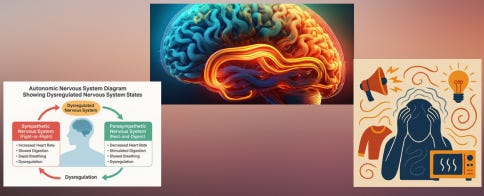
1. Nervous System Sensitivity


Both ADHD and Fibromyalgia involve a heightened sensitivity in the nervous system.

  • ADHD: the brain processes stimuli differently—often too much, too fast
  • Fibromyalgia: the body amplifies pain signals (called central sensitization)

In both, the system isn’t broken—it’s over-responsive.


2. Neurotransmitter Imbalances


Both conditions are linked to irregular levels of key brain chemicals:

  • Dopamine ? motivation, focus, reward
  • Serotonin ? mood, pain regulation
  • Norepinephrine ? alertness, stress response

This overlap explains why people may experience both focus challenges and chronic pain or fatigue.


3. Brain Fog & Cognitive Strain


Many describe:

  • Forgetfulness
  • Difficulty concentrating
  • Mental fatigue

In ADHD it’s often called distractibility; in fibromyalgia, it’s commonly known as “fibro fog.”
But the lived experience can feel very similar—like trying to think through mist.


4. Sleep Disturbances

Sleep is often disrupted in both:

  • ADHD: difficulty settling the mind
  • Fibromyalgia: non-restorative sleep (you sleep, but don’t feel rested)

This creates a loop ? poor sleep ? worse symptoms ? more poor sleep


5. Emotional Regulation & Stress Sensitivity

Both conditions can heighten emotional responses:

  • ADHD ? emotional impulsivity, overwhelm
  • Fibromyalgia ? stress can trigger pain flares

The body and mind are deeply connected here—stress is not just emotional, it becomes physical.


6. Co-occurrence (They Often Show Up Together)

There’s growing awareness that people with ADHD are more likely to also experience fibromyalgia (and vice versa).

Why? Likely due to shared underlying patterns:

  • Nervous system dysregulation
  • Trauma or chronic stress history
  • Genetic predispositions

A Gentle Way to See It

Rather than viewing either condition as a “fault,” many now see them as different ways of processing the world—with heightened awareness, sensitivity, and responsiveness.

That sensitivity can be exhausting…
but it can also carry deep intuition, empathy, and perception when supported well.


Support Approaches That Often Help Both

  • Nervous system regulation (breathing, gentle movement, meditation)
  • Consistent sleep rhythms
  • Anti-inflammatory nutrition
  • Mind-body practices (like EFT, yoga, somatic work)
  • Structured but flexible routines

The Role of Trauma & Life Experience

Many people with ADHD and Fibromyalgia share a history of prolonged stress or emotional strain.

Not always dramatic trauma—but:

  • long-term pressure
  • feeling unseen or misunderstood
  • constantly adapting to fit in

Over time, the body learns to stay “on alert.”
That alertness can later show up as:

  • racing thoughts (ADHD)
  • amplified pain signals (fibromyalgia)

The body remembers… even when the mind has moved on.


The “Push–Crash” Cycle

This is a big one—and often misunderstood.

Many people experience:

  • bursts of energy, creativity, or hyper focus
  • followed by deep fatigue or pain flares

This isn’t inconsistency—it’s a nervous system rhythm.

The challenge is learning:

  • when to ride the wave
  • and when to gently step back before the crash

That awareness becomes a form of self-leadership.


Sensory Overload Isn’t Just Mental

With ADHD, sensory overload is often talked about in terms of noise or distraction.
With fibromyalgia, it can show up as:

  • light sensitivity
  • sound sensitivity
  • touch sensitivity (even clothing can feel uncomfortable)

It’s the same root:
the system is taking in more than it can comfortably process.


The Diagnosis Gap (Especially for Women)

Many women are:

  • diagnosed late with ADHD
  • or never diagnosed at all

Instead, they may first receive labels like:

  • anxiety
  • depression
  • chronic fatigue
  • fibromyalgia

Only later does the fuller picture emerge.

This can lead to years of:

  • self-doubt
  • pushing harder to “cope”
  • feeling something is off but not knowing what

The Body Isn’t Fighting You

This is perhaps the most important shift.

Instead of seeing symptoms as something to fight…
you can begin to see them as messages:

  • Pain ? “something needs tending”
  • Fatigue ? “you’ve gone beyond your reserves”
  • Distraction ? “your mind needs a different rhythm”

When listened to, the body often softens.


Regulation Over Control

Traditional approaches often focus on “managing” or “fixing.”

But what tends to help both conditions most is:

  • calming the nervous system
  • creating safety in the body
  • allowing rhythms instead of forcing structure

Simple things can be powerful:

  • slow breathing
  • gentle movement (not pushing)
  • reducing overstimulation
  • giving yourself permission to pause

A Perspective That May Resonate With You

There is often a deep, intuitive, perceptive nature in people with these experiences.

They:

  • feel more
  • notice more
  • sense more

Without support, it overwhelms.
With support, it becomes:

  • insight
  • empathy
  • creative intelligence
  • wisdom in action

A Closing Reflection

What if this isn’t something to “overcome”…
but something to understand, support, and work with?

Not less of you…
but a gentler, more aligned way of being you.


Sara Troy

https://linktr.ee/saratroy