Transforming Relationships with host Julieanne O’Connor, on air from June 20th
Tune-in for an episode about mindful living with your partner and kindness to the people you love. Now that it’s SUMMER, check out what’s happening in your community!
TUNE IN HERE FOR ON-DEMAND LISTENING
For mobile/tabletsyou can download free apps here: CLICK HERE
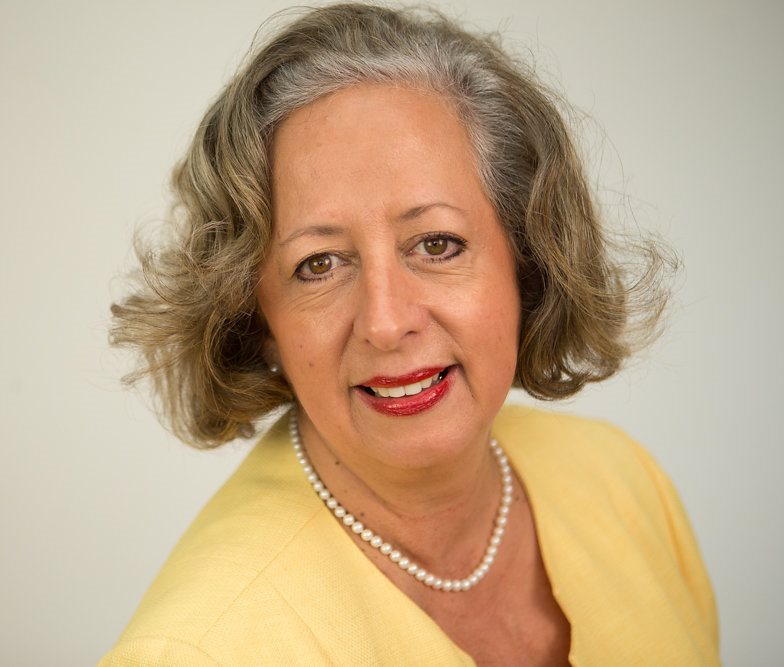
Choose positive Living with Sara Troy and her guest ELIZABETH PATRICIA CONNOR, on air from July 4th
Elizabeth Patricia is a bestselling author, workshop leader, transformational coach and sought-after inspirational speaker.
Elizabeth Patricia is currently designing and directing the construction of a holistic retreat center in Costa Rica. For many years she envisioned a beautiful place surrounded by nature with a breathtaking view of the ocean where people could stay, be at peace, learn and heal from whatever ailed them whether it be spiritual, emotional or physical.
In May 2016, she and her husband decided to celebrate their 25th wedding anniversary in Costa Rica. As she stepped onto a piece of land high in the mountains, she knew that it was the place she had envisioned.
For the past four years, Elizabeth Patricia has lead Heartmind Community Café on Sunday mornings. Her desire is to offer a place where people could gather with like-minded people to enjoy inspirational talks and listen to talented musicians. Elizabeth Patricia and her team welcome everyone with open arms and celebrate their presence.
She is the co-founder of Kindness is Key Training & Publishing Inc., home of the Heartmind Wisdom Inspirational Anthology Collection. In 2012 and 2013, Elizabeth Patricia, her business partner, Joyce M. Ross, and the co-authors of the books sponsored The Largest Human Peace Sign Concert.
At an early age, Elizabeth Patricia recognized her inner-calling to inspire, educate and empower others. Through writing and speaking, Patricia shares her insights and the tools she has mastered throughout her personal and working life.
Her desire to propagate spiritual, as well as emotional and physical health for all, led her to become an ordained minister, a practitioner of aromatherapy, herbology, Bach flower remedies, Reiki, and Reconnective Healing.
She has worked as a Stop the Violence Counsellor for Battered Women Support Services was a Director of Development Resources for the Surrey Women’s Center, and was a director of Human Resources at Radarsat International Inc.
Patricia is happily married and lives in Delta, British Columbia. She is available to speak to groups and can be contacted via email at epatriciaconnor@gmail.com and by phone at 604-764-0140.
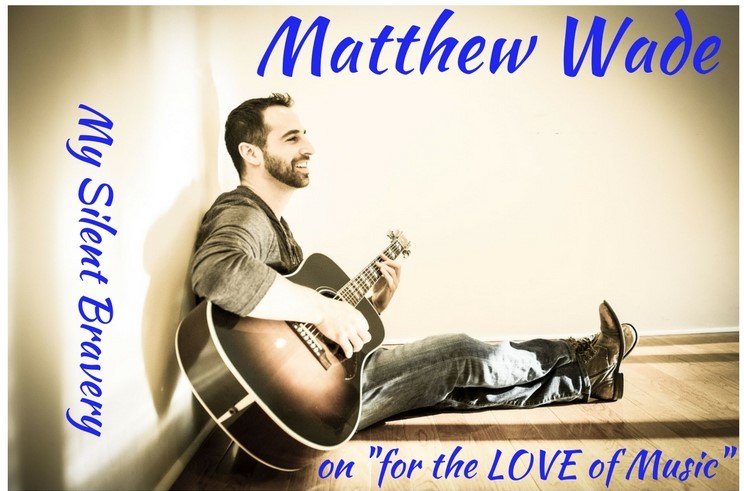
for the LOVE of Music with Sara Troy and her guest Matthew Wade, on air from June 27th
Billboard Magazine states, “My Silent Bravery plays like a major label signing, from its production savvy, eloquent lyrics, authoritative imaging, polished website, a dedicated Northeast U.S. fan following, merchandising, and most important, a chockablock collection of winning songs. My Silent Bravery is destined to make major noise.”
My Silent Bravery symbolises persistence, perseverance and inner strength to overcome obstacles in the face of adversity. It is this type of determination that helped Matthew Wade of My Silent Bravery overcome a sports injury in his youth which led him to pursue his passion in music. The injury opened the door to spirituality and a higher calling. Matthew realised he wanted to become a better person and a more sharing individual. Through personal work and transformation, he learned the importance of “paying it forward” and now feels one of his missions in life is to help inspire others to do the same by delivering his positive message to the masses through the music of My Silent Bravery.
MSB released its new album “Breakthrough” on September 28, 2016. The album features an all-star array of producers including Grammy® Award-winner Mike Mangini (Joss Stone, David Byrne, Smash Mouth), Peter Zizzo (Avril Levine, Jennifer Lopez, Jason Mraz), and Anthony Resta (Elton John, Collective Soul, Guster). Matt has already released the album’s first two singles. The song and video for “Drunk off the Sun” was released in late spring and has already surpassed half a million views on YouTube. The video trended overseas and reached #1 on youtube’s most popular chart in Brazil and cracked the top ten in Norway, Finland, and Sweden. The video was also featured on AXSTV programming reaching over 53 million homes. ‘Drunk Off the Sun’ was also featured on United Airlines’ playlist, “The Hits List,” throughout the summer, at 35,000 feet altitude, globally. The albums second single and video, ‘Warning Signs’ was released in August 2016 via Paste Magazine. It also trended overseas on YouTube and was a finalist in the 2016 International Acoustic Music Awards. Warning Signs was most recently featured on XM Sirius Satellite radio station XM The Pulse on Train Tracks with Pat Monahan. “Breakthrough Acoustic” followed in spring of 2017, and its single Face to Face amassed over 300K views on YouTube and also trended and reached #1 on YouTube’s most popular chart in Canada.
TUNE IN HERE FOR ON-DEMAND LISTENING
For mobile/tabletsyou can download free apps here: CLICK HERE
Diamond from Coal was the previous full-length LP from MSB and it debuted in the Top 40 of the iTunes Singer/Songwriter Best-Sellers chart and in the top 20 on Amazon’s Hot New Releases. The album was produced by Anthony Resta (Collective Soul, Guster, Shawn Mullins) & Warren Huart (Aerosmith, The Fray, Augustana) and was recorded in Boston and Los Angeles. The single “Forever” was a semi-finalist and “On My Side” was the runner-up for “Song of the Year” award in the Songwriting Competition Song of the Year. The music video for the first single “Amazing” was picked up for rotation on MTV, VH1, & CMT. Diamond from Coal was also nominated for “Album of the Year” at the Limelight and New England Music Awards.
Following the success of Diamond from Coal, My Silent Bravery released Diamond from Coal the Remixes in 2015. This album takes the beloved singer-songwriter songs from Diamond from Coal and adds electronic ethos and artist collaborations to create an entirely unique experience for MSB fans. The Remix album debuted into the top 100 on Amazon’s Hot New Releases. The album features remixes by Kool Kojak (Flo Rida, Nicki Manaj, Kesha), Richard Fraioli & Erik Mason, and JQA and collaborations with Maurico, Shea Rose, Hyrbid Infamous, and Joe Craze. The lead single and video from the new album, P.O.V. (feat. Shea Rose) premiered on Vevo and was also added to rotation by MTV & VH1.
Always in demand, My Silent Bravery played over 300 shows between 2009-2011 and from 2012-2017, MSB has shared the stage with national acts including Daughtry, Delta Rae, Howie Day, Kris Allen, John Waite, The Wailers, Candlebox, Ryan Cabrera, Jason Castro, O-Town, Teddy Geiger, Ed Kowalczyk (Live), Iron Butterfly, Saving Abel, Rusted Root, Tyler Ward, Anna Nalick, Lee Dewyze, David Choi, Brendan James and Aaron Carter. Most recently, MSB toured with Emerson Hart (Tonic), Meiko, Tyler Hilton, Kate Voegele, Eric Hutchinson, Elliot Yamin, Blake Lewis, and Lee Dewyze.
Matthew has continued his DIY approach and released music independently under his own label MWS Records without major label backing. MSB continues to grow its “Braveheart” fan base organically through touring and its ever-growing social media presence which now reaches over 100,000 fans across multiple social networks including Facebook, Twitter, Instagram and its YouTube channel has featured several trending singles which have collectively accumulated over 3,000,000 views. Paste Magazine recently stated, “My Silent Bravery may be the best-undiscovered artist around”.
MSB is currently putting the finishing touches on its new album, entitled “Willing to Try”. The album features twelve tracks and will be released in 3 separate Eps over the next year. The album was co-written and produced by Jim McGorman (Gwen Stefani, Avril Levine, Poison). The first single, “Got it Going On” is set for release summer of 2017.
Choose Positive Living with Sara Troy and her guest Lucca Hallex, on air from June 27th
I provide a safe, non-judgmental space in which to work.
Life unfailingly provides the material.
Life is a unique adventure for each of us and it isn’t over until it’s over, and then it may continue in another realm. The only things that can truly go with us when we die are our experiences, what we’ve learned and how we’ve loved. BE-ing who we really are is empowering. It’s the stuff of ‘me-ness’ that will find a way to express itself, no matter what.
I have a way of getting at the truth; the truth of who we are, of what we really feel and of our great potential. Quite simply, we are each unique. I encourage and empower individuals to be self-full and share their gifts so they ripple out to touch the world in a way that has a heart.
Whether I’m engaged in Private Counsel, doing psychic readings for individuals, groups or organisations, running workshops, or having conversations with guests on my radio show, I help my clients to gain more awareness about all the different aspects of themselves.
With increased awareness comes the ability to see more options. With more options comes choice and therefore empowerment.
I invite you to chart the edges of your life map in the creative tension between your known and unknown self. This is a sacred territory and I encourage you to linger here and savour the learning it offers.
My job is to pay attention to you, to be curious about you and to provoke your imagination and creative resources by observing and asking questions. Together we play with the tension that arises at the edge. I believe that we are even bigger than we think we are. Working with me will be an adventure into your whole self. Expressing who you truly are is your greatest gift and value in the world. Collectively, in organisations, we collaborate to express our common vision as a mosaic of our personal gifts.
I work with my powerful intuition, actively refined over the past twenty-five+ years, paying attention to myself as an instrument of laser-like insight into who you really are and what you are called to express in your life. Read more…
What I do could be termed ‘psi-coaching’. When the timing is right for us to work together, and you will know when it is, the Private Counsel contract usually involves some aspect of your empowerment, even if you are already powerful by society’s standards. We integrate the creative and the linear aspects of your expression so that you are working from your wholeness. Your inner compass will be your intuition, which we explore and reinforce over time. Read more…
Being able to ‘tune in’, hear your intuition, get validation and insight from my lifetime of psychic counsel, this could be a game-changer for you and your business. Put this power-booster in your back pocket this year! Read more…
You’re probably using your intuition in your professional life more than you think you are. This monthly professional intuition development group meets for 9 sessions over a stretch of 9 months and helps you recognize your intuitive voice and use it to give you an advantage in your personal and professional life. Alumni can go even deeper through bi-weekly Master Sessions once you complete the basics. Read more…
All of our shows/interviews are done by donation, if you enjoyed this show please support us here with either a one-time donation or subscribe and support onPatreon.
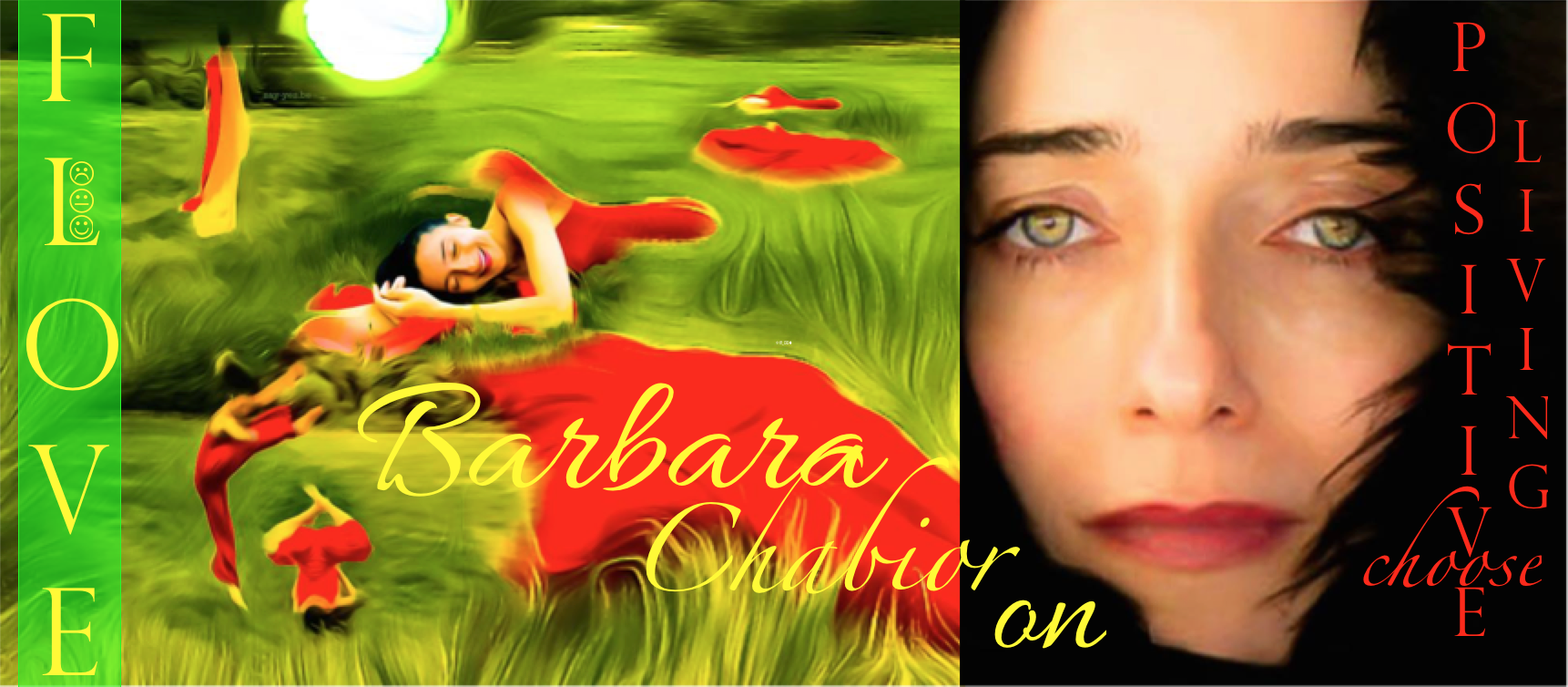
Choose Positive Living with Sara Troy and her guest Barbara Chabior, on air from June 27th
Can we find the connection in our life experiences between body and mind by how present we are in the moment; how deeply we are listening and participating; how much critical self-reflection we engage in, to be able to bring as much awareness as possible to the depth, the complexity and the intricacy of what is going on? How deep, metaphorically and multi-dimensionally speaking, can you be in the present moment, to get the most out of that moment?
Barbara Chabior invites you to ‘Say Yes’ to every experience. Her holistic coaching methods combine ancient Eastern traditions of wisdom and contemporary Western therapeutic techniques. Above all, Barbara’s work is informed by profound compassion and her conviction that every person should be treated as a unique individual. She enables others to ‘Say Yes’, encouraging them to stay with disturbing thoughts and physical sensations before embarking on inspiring journeys of change. Her one-to-one sessions are tailor-made to aid your personal development and spiritual growth.
Barbara’s person-centred approaches combine the power of Holistic Voice Therapy and mindfulness practices with elements of kinetic, acoustic, visual and imaginative play. Barbara spiritual skills include clearing at the DNA cellular level and facilitating the birth of The Highest Expression of Self-enabling one to make Guided, Powerful and Compatible Life Choices in creating Perfect Formula for Success on the Inside and Outside. Each session unfolds gently and with kindness, encouraging you to discover your true Self, free from the mind’s unhelpful chatter and ingrained patterns of self-limiting beliefs. Barbara Chabior moved from Poland to London in 2002 in search of fresh creative ideas and the inspiration necessary to realise her vision of international Say Yes Spa-ce, Holistic Playgrounds® where people’s psyche and soma can flow in consonant harmony with their environment. She was immersed in the natural world during her childhood in a small village in the mountains of southern Poland and realised later how vital the expression of play, interaction with our surroundings and the freedom of intrapsychic dynamics are to our being in the world. This breakthrough came while she was working in the British social care system and discovered the constant flow that exists in states of meaning and meaninglessness, of positive and negative, of passion and neutrality.
Barbara attended many training and workshop sessions. Her studies have introduced her to everything from Process Work Psychology and Neuro-linguistic Programming to Sesame Institute Drama and Movement Therapy. She obtained a Master’s degree in Psychodynamic and Systemic Thinking and Psychology of the Group at the Tavistock Institute in 2011 and qualified two years later as a Holistic Voice Therapist under the aegis of the British Academy of Sound Therapy (BAST).
“My main goal is to grow and contribute toward the growth of others by sharing what I have learned. This is all part of a process, of my lifetime’s work. My life’s purpose is living in non-resistance. I’ve brought together so much knowledge into one piece, which I call Flove. We always resonate at some frequency, with shame, guilt, pride, aspiration, inspiration. Once you allow these conditions to flow together with love, and find the balance between negative and positive resonances, everything flows. Like a film director, you work with each character and embrace every trait that appears on the scene. I needed to embrace my emotionality. I learned to own, live, love and express the traits of hurting myself, and how to let them go. I really invested in loving those traits of avoidance and denial, neglecting myself, and so on. It’s not about this cheesy word ‘love’; rather, it’s about cultivating the ability to engage unconditionally with all the frequencies of loving and loathing without negativity, resentment or infatuation around these. I can say openly that I love not having a clue about things that don’t matter to me; I love being vulnerable and embracing all my traits…”.
“My identity as I experience it today is closely linked to my philosophy of no identity, of being able to let go of attachment to any fixed view of who ‘I’ am. That process of owning and then letting go of myself has been very empowering for me…”
Specialized in:
Image Consultancy, Personal Styling, Colour Analysis, Photography
Holistic Voice Therapy
Drama and Movement Facilitation
Personalised Care and Therapy
Corporate Consultancy
NLP Life Coaching
Registered with:
Colour Me Beautiful, BAST, BRCP, ICNM, CAM, IBPDA, HCPC
Masters in Working with Groups: Psychoanalytic and Systemic Theories
Registered member of the Tavistock and Portman NHS Foundation Trust
All of our shows/interviews are done by donation, if you enjoyed this show please support us here with either a one-time donation or subscribe and support, thank you..


 She is the co-founder of Kindness is Key Training & Publishing Inc., home of the Heartmind Wisdom Inspirational Anthology Collection. In 2012 and 2013, Elizabeth Patricia, her business partner, Joyce M. Ross, and the co-authors of the books sponsored The Largest Human Peace Sign Concert.


 Barbara Chabior moved from Poland to London in 2002 in search of fresh creative ideas and the inspiration necessary to realise her vision of international Say Yes Spa-ce, Holistic Playgrounds® where people’s psyche and soma can flow in consonant harmony with their environment. She was immersed in the natural world during her childhood in a small village in the mountains of southern Poland and realised later how vital the expression of play, interaction with our surroundings and the freedom of intrapsychic dynamics are to our being in the world. This breakthrough came while she was working in the British social care system and discovered the constant flow that exists in states of meaning and meaninglessness, of positive and negative, of passion and neutrality.

You must be logged in to post a comment.