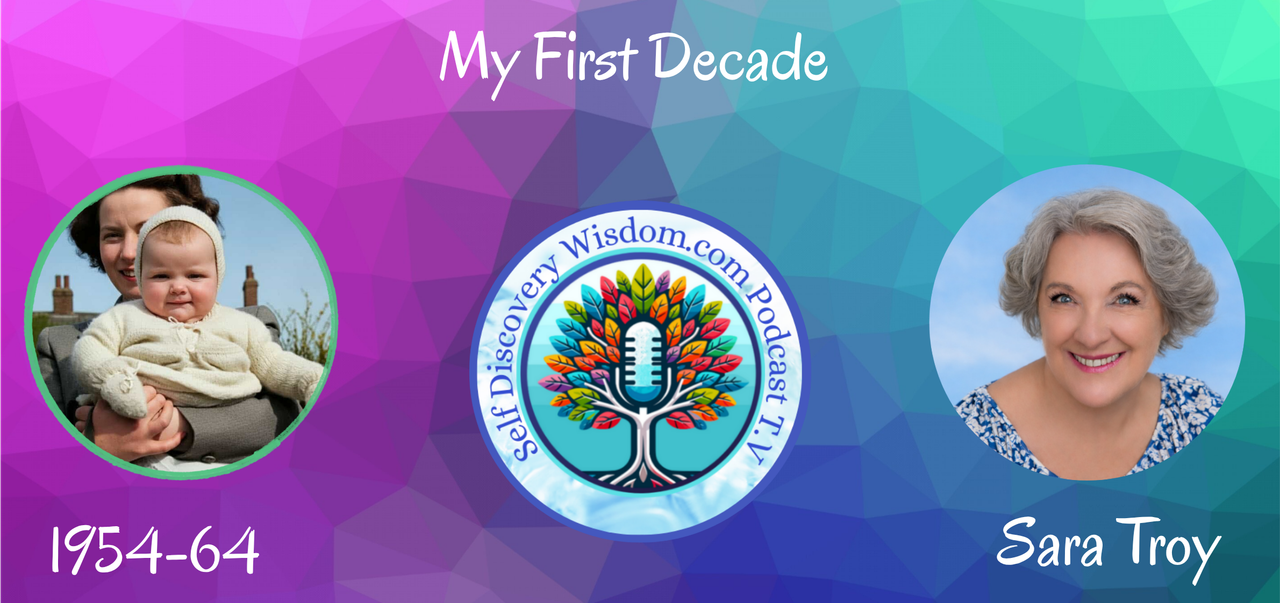
Sara’s View of Life with Sara Troy. On air from March 31st
I’m going to be doing a series of seven podcasts, one for each decade of my life. The idea came after a conversation the other day about my being 71. I said that 71 feels like just a number, but when you really stop and look back, it represents seven full decades of living. And when I thought about all that had been packed into each one of those decades, I realized there was more than enough there to reflect on, so I decided to do seven shows, each one devoted to a different ten-year span. This first one is about my first decade.
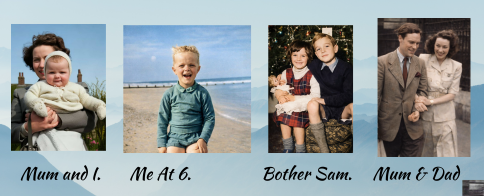
I was born on October 6th, 1954, just after midnight. My mother had gone into labor on the Wednesday before and had apparently said, “Thank God she’s not going to be a Wednesday’s child, because Wednesday’s child is full of woe.” Well, I waited until just after midnight on Wednesday to be born anyway. Looking back, I can smile at that now, because yes, there has certainly been some woe in my life, but whether we can blame Wednesday for it is another matter altogether.
I was told I was a very healthy baby, though my mother said I looked battered and blue when I arrived because the labour had been so long and so difficult. It had become rather desperate, and by morning they were preparing for an operation. But because I was already in the birth canal, it was going to be complicated. A couple of determined midwives apparently stepped in and managed to get me out. My mother, after all that effort, looked at me and said, “All that for that.” I took that to heart later in life when I had my own children. I made a point of holding them, telling them how beautiful they were, welcoming them into the world with love, and speaking positive words over them, because I wanted their first welcome into life to be filled with warmth.
For the first couple of years, I became a happy, plump little girl, which in those days was considered the sign of a healthy baby. But when I was two, the Asian flu hit England hard, and it struck my mother, my father, and me. I became desperately ill, and that illness ignited what would become a lifelong journey with asthma and eczema. My eczema was severe. My mother used to describe it as looking like red-hot pennies had been dropped all over my body. It was inflamed, painful, and miserable. I remember water feeling like acid on my skin when I was in the bath. It would crack in the bends of my fingers, behind my knees, and in the crooks of my arms. In so many photographs from those years, my fingers were bandaged.
The asthma was more dangerous. In those days they did not have the inhalers we know now. There were tablets to calm the lungs, but they took time to work, and when attacks came on they came hard. I would end up in hospital on oxygen, and whenever my mother sensed an attack coming, she would put me to bed, sit me up, bring steam, and tell me stories to calm me down. Sometimes I would be in bed for weeks. People died of asthma back then. I was one of the lucky ones in that I survived, but one of the unlucky ones in that I never outgrew it. It stayed with me and created barriers all through life.
Because I was so often ill, I missed a great deal of school. I struggled with learning, and much later in life I would discover dyslexia and realize I also had learning differences that were never understood at the time. Back then, you were either considered bright or slow, and I was labeled the slow one. But the truth was that I did not learn conventionally. I learned through conversation, participation, repetition, and lived experience. Books did not speak to me in the way people did. I could look at the page and not take it in. So school was always hard, especially because every time I returned from illness, the rest of the class had moved far ahead and I had been left behind.
I began school very young and later went to boarding school just before my ninth birthday, which was quite normal in England then. My brother and sister had both gone earlier than I did, but I was delayed because of my health. I remember my parents leaving me there and not fully understanding what was happening until they were gone. It was a shock. There were girls everywhere, and I had been told I was going to boarding school, but I did not truly understand what that meant until I was there. I got sick there as well, of course, and would be put back to bed. There were good memories too, once I adjusted. There were paddocks, forts, geese chasing us, woodland walks, and the wonderful lesson of learning not to be overwhelmed by the whole journey, but simply to focus on the next step, and then the next.
There were also difficult moments. Some older girls bullied me because of my asthma and what I could not do. Once they dragged me by my ponytail and tried to bury me in a hole like a weed, right outside the principal’s office, where fortunately they were caught. There was loneliness in those years too. At home I was often alone because my brother and sister were away, and at boarding school I sometimes stayed when others went home for weekends. I spent a lot of time by myself, sick in bed or left to my own imagination, and that solitude shaped me deeply. It was in those quiet, isolated times that I believe my inner world became rich. I escaped the white walls of illness and solitude through imagination, through spirit, through inner knowing, and through what I would later understand as my connection to something beyond the ordinary.
My father was also a huge presence in those early years. He had been a fighter pilot, a squadron leader, a yachtsman, a racing car driver, and a businessman. He was a man who had faced danger head on in war, yet after his first heart attack when I was eight, something in him changed. I look back now and wonder how much of that was trauma never spoken about. In those days, men were expected to keep a stiff upper lip and simply carry on. But trauma does not disappear because it is ignored. It settles in the body, in the heart, in the soul. I saw that in him, and I believe that silence around trauma was one of the greatest harms done to so many people of that generation.
My father and I were only just beginning to know one another when illness and life began shifting around us. He was not naturally affectionate, at least not openly, and yet there were moments I treasured. I used to pretend to be asleep at night, because if he thought I was asleep, he would give me a kiss before turning off the light. If he knew I was awake, he would simply tell me to go to sleep. So I waited for that kiss. That small gesture meant everything to me. Sometimes I would just hug him when he came home and he would, on occasion, hold me. Those little scraps of affection became precious.
Despite the illness and loneliness, there were happy memories too. We had a seaside home called Sandylands where we spent weekends and summers. There were beach huts, steps down to the sand, tea rooms, seaside fun, fish and chips, and wonderful family rituals. My father had a boat, and he and my brother would sail while I played on the beach with the dog. We would go for Sunday lunches dressed up in our proper clothes, and Saturdays often meant lining up for warm jam doughnuts from the bakery. Those memories are bright and golden. There was joy there, and freedom, and something deeply British in the rhythm of it all.
There were also all the small, strange memories of childhood that stay with you: forgetting my knickers at school and being mortified, being proud I remembered the words to “Away in a Manger,” sneaking to watch television through the crack of the door and then being terrified to sit on a chair because of something I had seen, riding my bike, pushing my dolls’ pram down the street, wanting to be a mother from the very beginning, and learning that childhood is filled with both delight and bewilderment in equal measure.
When I look back on those first ten years, I see a child who was often sick, often lonely, often misunderstood, and yet also imaginative, observant, affectionate, spiritually open, and already beginning to sense life beyond what others could see. Those years were rocky, no question. There were highs and lows, laughter and struggle, comfort and confusion. But they set the stage. They shaped the resilience, the knowingness, the empathy, and the storyteller I would become.
So this first decade, from birth to ten, was really the foundation. It was the decade of illness, of solitude, of sensitivity, of learning to survive, and of beginning to understand the world in my own unconventional way. And as I revisit it now, I realize just how much those early years influenced everything that came after. The next decade is even more tumultuous, but this one laid the ground. This one began the story.
| ITunes | SPotify+Video | Soundcloud |
| Amazon | Youtube Music | iHEART |
| Podvine | Podcasher | Podcast Addict |
| Mixcloud | Radio Public. | FM Player |
| Odysee | Youtube | BusyMumsmedia |
| DO ENJOY THE WISDOM | Thanks for listening | Feedspot |
FIND MORE SHOWS OF ILLUMINATION HERE
All my links can be found on linktr.ee/saratroy
BE OUR GUEST AND SHARE THE WISDOM
Self Discovery Wisdom is sustained by those who believe in conscious conversation. If this episode resonated with you, subscribe and, if you feel called, make a donation. Your support helps us keep amplifying voices that inspire growth, courage, and compassion. Thank you. Please support Our Forgotten Seniors anthology and help to bring this book to awareness.


Discover more from Self Discovery Wisdom Podcasts
Subscribe to get the latest posts sent to your email.